Hanoi must speed up charger development, policy making for smooth e-vehicle transition
Hanoi is intensifying efforts to cut transport emissions by accelerating charging infrastructure and expanding clean-energy transport. Experts and businesses say progress will depend on coordinated planning, clear standards and incentives that make electric mobility convenient and commercially viable.
THE HANOI TIMES — Hanoi needs to accelerate infrastructure development, prioritizing charging stations at centralized parking areas, commercial hubs, hospitals, office complexes and major transport corridors to ease concerns over charging availability.
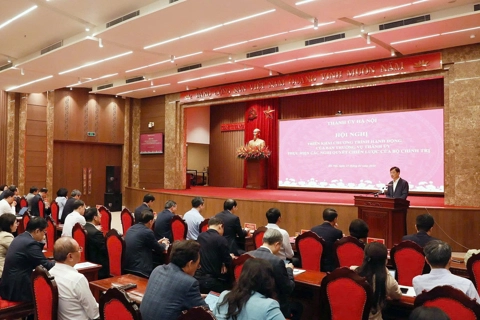
The proposal seeks to support the shift from gasoline-powered vehicles to electric ones, Nguyen Dang Quang, Deputy CEO of Omoda & Jaecoo Vietnam, said at an air quality control conference on January 6.
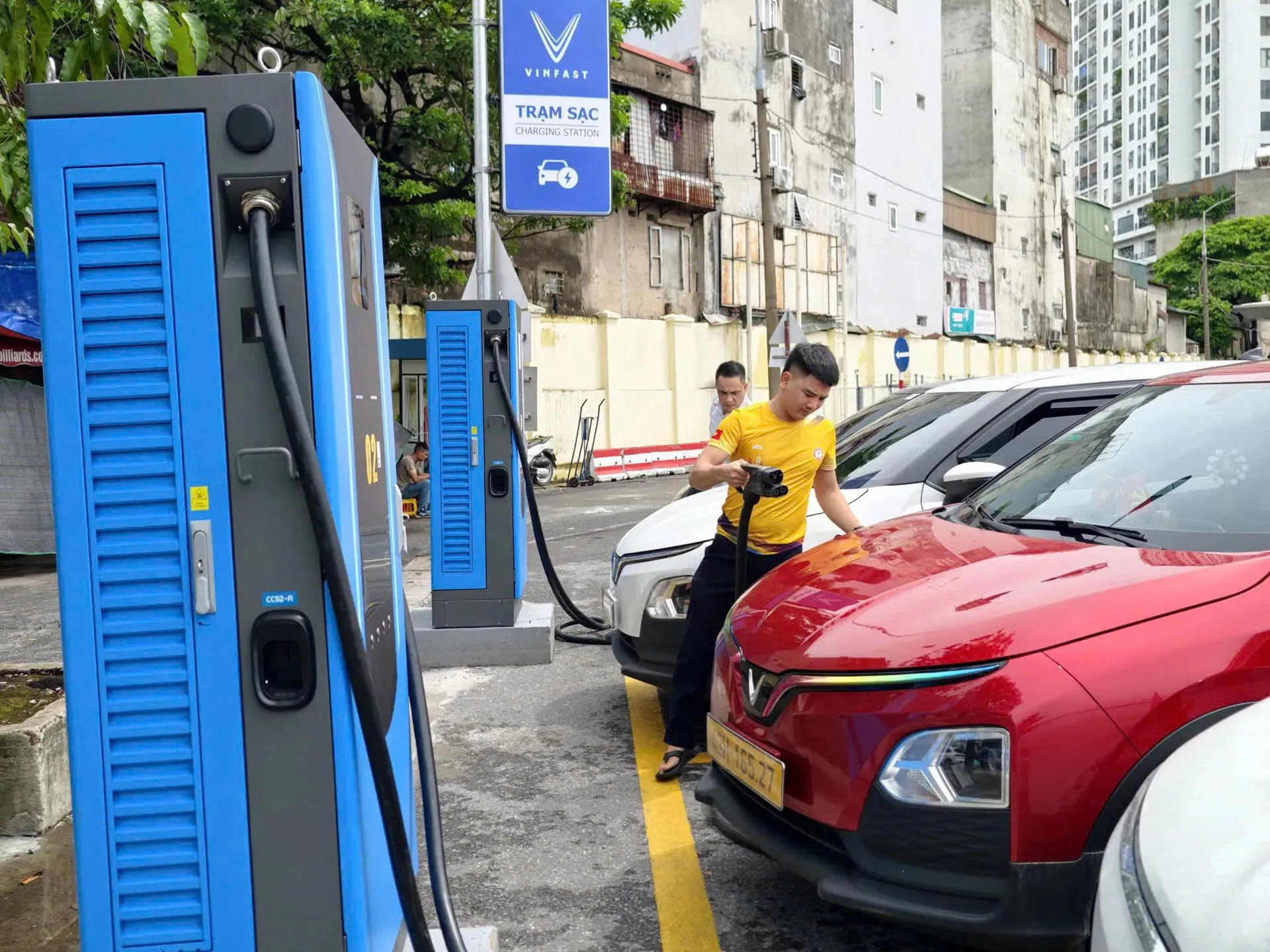
Chargers inside the Giap Bat Bus Station in Hanoi. Photo: Pham Cong/The Hanoi Times
He said land-use incentives and support for infrastructure costs would help attract businesses to invest in the charging network.
Hanoi also plans to pilot the installation of electric vehicle charging stations and battery-swapping cabinets at 39 public parking sites across the city to assess demand, operating efficiency and the potential for wider deployment.
Associate Professor Dam Hoang Phuc, Director of the Automotive Engineering Training Program at Hanoi University of Science and Technology, said charging infrastructure development must reflect vehicle density and usage patterns.
He warned that poor coordination could strain the power grid and limit the returns on infrastructure investment.
Phuc also stressed the importance of electricity pricing, saying clear and reasonable tariffs would benefit both investors and consumers.
International experience shows that infrastructure must come first. Norway leads global electric vehicle adoption thanks to a dense and accessible charging network that gives people confidence to choose greener transport in daily life.
Meanwhile, Nguyen Tuyen, Head of the Hanoi Department of Construction's Transport Management Division, said the city expects to issue official solutions for electric vehicles in the first quarter of 2026.
The department has reviewed and identified 110 potential charging locations across various land-use types, mainly inside Ring Road 3. The biggest obstacle remains the lack of national technical standards for charging stations.
Several domestic and foreign firms have proposed direct investment or pilot cooperation to install charging stations at selected sites or locations assigned by the city. These include Vingroup, LG Group, EVG Group Joint Stock Company and TMT Company.
Surveys show many proposed sites lie along major roads and in central areas, administrative centers, hospitals and parks, offering easy access for users.
Some locations already function as licensed parking areas with available land, which would reduce renovation costs and construction time if charging infrastructure is installed.
Sites near high-demand areas such as hospitals, government offices, residential neighborhoods and tourist destinations are expected to support efficient operation after investment.
Challenges in synchronized infrastructure, policy and implementation
Alongside charging infrastructure for private vehicles, Hanoi is accelerating the electrification of public transport.
According to the Hanoi Department of Construction, by December last year the city had put 23 electric bus routes into operation, with about 367 vehicles.
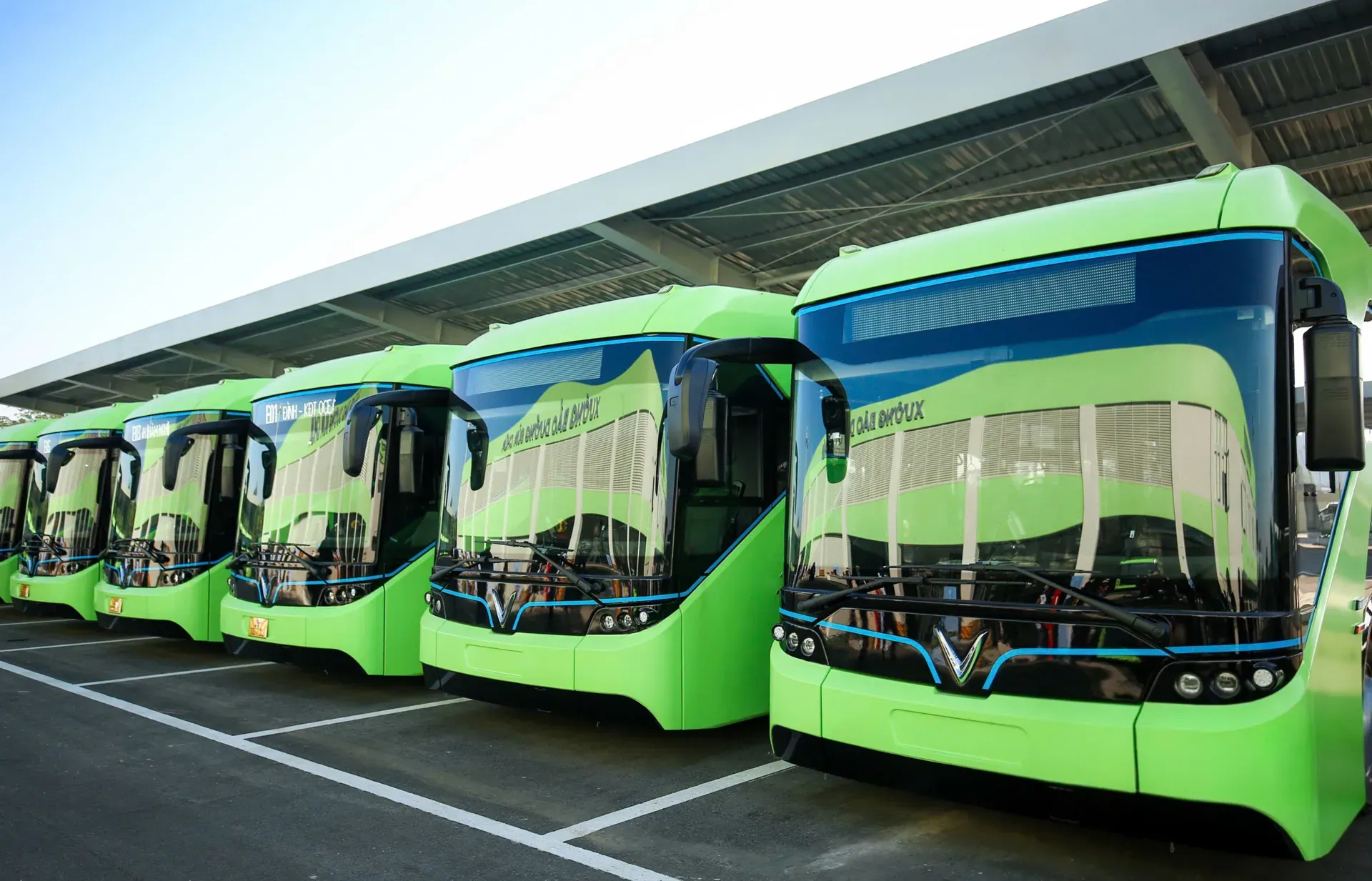
Electric buses put into operation by VinBus, a member of conglomerate Vingroup. Photo: Duy Khanh/The Hanoi Times
In 2026, Hanoi plans to convert around 200 additional buses to green energy. In the taxi sector, the city aims to complete the transition to fully electric and clean-energy taxis by 2030.
From a regional perspective, Associate Professor Nguyen Duc Luong, Head of the Faculty of Environmental Engineering at Hanoi University of Civil Engineering, said Hanoi is following a similar path to many major Southeast Asian cities.
He said solutions already applied in the region have begun to appear in Hanoi and will soon expand more widely.
Luong noted that countries in the region share similar development dynamics, meaning traffic-related emission challenges and control measures often overlap and offer useful references.
He said the most widely promoted solution focuses on building sustainable public transport systems, especially urban rail and bus networks.
“This is a common regional and global strategy to reduce reliance on private vehicles,” he said.
However, Luong stressed that convenience will determine success.
Although many people view public transport as sustainable and affordable, they still face practical barriers, especially weak last-mile connections and limited parking for personal vehicles.
Luong said resolving these issues would significantly increase public transport use.
Across the region, many major cities continue to push the electrification of taxis, motorbikes and buses.
“They all aim to replace most fossil-fuel vehicles with electric ones by 2030,” Luong said, adding that Vietnam follows a similar roadmap. He noted that the main challenge lies in organization and execution rather than a lack of solutions.
Khuat Viet Hung, Chairman of the Members’ Council of Hanoi Metro, said Hanoi is accelerating infrastructure development to meet its goal of public transport accounting for 30% of passenger trips by 2030 and to ease pressure on the urban transport system.
Hanoi currently serves daily travel demand for about 12 million people, including residents, migrant workers and visitors. Rapid population growth has intensified pressure on transport infrastructure and the urban environment, while land availability for transport continues to shrink.
In response, the city has set a clear direction by planning 15 urban railway lines, expanding the bus fleet to about 4,000 vehicles and gradually shifting toward clean-energy transport.
Considerable growth potential remains. Urban rail systems crowd during peak hours but run below capacity at other times. Hung said unlocking this capacity will depend on firm policy enforcement and effective implementation.
Beyond infrastructure, Quang said market support policies must move ahead of demand to build momentum for the transition.
He said Hanoi should encourage production localization through tax incentives and support measures that reduce early-stage investment risks.
Temporary preferential VAT rates, green credit packages for vehicle buyers, especially service operators and small and medium-sized enterprises, and dedicated electricity pricing for home charging would further support a smooth transition, Quang added.
Standardizing and interlinking the charging ecosystem, with integrated data systems, payments and vehicle identification, remains essential to ensure a coordinated and sustainable shift to new-energy vehicles.