Hanoi
Hanoi named in ASEAN smart cities network
Hanoi, Ho Chi Minh City and Da Nang of Vietnam are among 26 cities of 10 ASEAN countries that have been named pilot cities for the ASEAN Smart Cities Network, according to a concept note released recently by the regional bloc.
The concept note, released as leaders from the 10 countries meet in Singapore recently for the 32nd ASEAN Summit, outlines the proposal to establish the ASEAN Smart Cities Network.
An initiative spearheaded by Singapore, the network is envisioned as a collaborative platform where up to three cities per ASEAN country work towards a common goal of smart and sustainable urban development.
In explaining the rationale for the network, the note cited the challenges of rapid urbanization, and its implications on issues like city congestion, water and air quality. Technological and digital solutions can be used to resolve these issues and enhance quality and accessibility of services, it says.
Many ASEAN member states have already designated certain areas as smart cities or launched smart city projects, according to the note. The ASEAN Smart Cities Network will synergize these efforts and bring the smart cities together, “thereby contributing to ASEAN Community-building”.
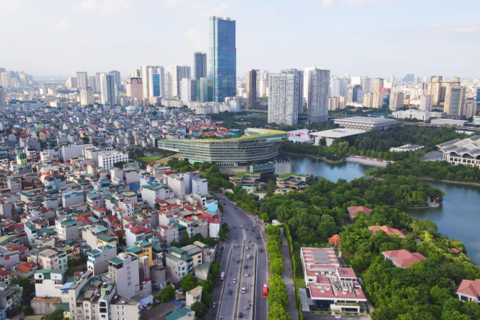
As for Hanoi, the city set the target to turn into a smart city by 2030 in accordance to its revised information and technology strategy in the 2016-2020 period.
Phan Lan Tu, director general of the Hanoi Department of Information and Communications, said that the four priority sectors chosen to build the smart city are health, education, transport, and tourism. Since 2017, all four of these sectors have been developed in combination with the development of e-government and administrative reforms to lay the foundations of a smart city.
Regarding urban transportation, Hanoi has applied iparking to search for parking lots and pay for parking through mobile devices. This application will soon be deployed in all districts of Hanoi. Hanoi’s digital traffic map will be deployed to provide information on traffic status and manage public passenger transport in the city.
Regarding education, electronic school reports and family-to-school contacts as well as an online enrollment system has been put in use by 2,700 schools and universities, with the participation of 250,000 families and 6.3 million page views. The rate of online applications at the three levels of primary, secondary, and high school hit 70.68 per cent.
Regarding health management, Hanoi is the first locality to implement e-documents in its health management system, with 900,000 records so far.
Besides, a database of 7.5 million people has been built to set up an application to serve people, enterprises, and city management.
Meanwhile, Ho Chi Minh City late last year officially announced the project on building the smart city for 2017-2020 with a vision to 2025. Accordingly, the city’s smart city model will be implemented in three stages. The first stage between now and 2020 will focus on building the technology foundation that also includes data centers and open-source data, while the second stage to 2025 will centre on the launch of smart applications in specific areas. The third stage after 2025 will be built on new visions for development.
As for Danang, the city has sped up its development of a smart city through e-government applications that have been successfully applied in recent years.
Danang recently inked a Memorandum of Understanding (MoU) with FPT Group to building the city become a smart city for the 2018-2020 period. The MoU will help the city develop smart solutions in traffic, agriculture, English language training, health care and tourism.
An initiative spearheaded by Singapore, the network is envisioned as a collaborative platform where up to three cities per ASEAN country work towards a common goal of smart and sustainable urban development.

Hanoi set the target to turn into a smart city by 2030
|
In explaining the rationale for the network, the note cited the challenges of rapid urbanization, and its implications on issues like city congestion, water and air quality. Technological and digital solutions can be used to resolve these issues and enhance quality and accessibility of services, it says.
Many ASEAN member states have already designated certain areas as smart cities or launched smart city projects, according to the note. The ASEAN Smart Cities Network will synergize these efforts and bring the smart cities together, “thereby contributing to ASEAN Community-building”.
As for Hanoi, the city set the target to turn into a smart city by 2030 in accordance to its revised information and technology strategy in the 2016-2020 period.
Phan Lan Tu, director general of the Hanoi Department of Information and Communications, said that the four priority sectors chosen to build the smart city are health, education, transport, and tourism. Since 2017, all four of these sectors have been developed in combination with the development of e-government and administrative reforms to lay the foundations of a smart city.
Regarding urban transportation, Hanoi has applied iparking to search for parking lots and pay for parking through mobile devices. This application will soon be deployed in all districts of Hanoi. Hanoi’s digital traffic map will be deployed to provide information on traffic status and manage public passenger transport in the city.
Regarding education, electronic school reports and family-to-school contacts as well as an online enrollment system has been put in use by 2,700 schools and universities, with the participation of 250,000 families and 6.3 million page views. The rate of online applications at the three levels of primary, secondary, and high school hit 70.68 per cent.
Regarding health management, Hanoi is the first locality to implement e-documents in its health management system, with 900,000 records so far.
Besides, a database of 7.5 million people has been built to set up an application to serve people, enterprises, and city management.
Meanwhile, Ho Chi Minh City late last year officially announced the project on building the smart city for 2017-2020 with a vision to 2025. Accordingly, the city’s smart city model will be implemented in three stages. The first stage between now and 2020 will focus on building the technology foundation that also includes data centers and open-source data, while the second stage to 2025 will centre on the launch of smart applications in specific areas. The third stage after 2025 will be built on new visions for development.
As for Danang, the city has sped up its development of a smart city through e-government applications that have been successfully applied in recent years.
Danang recently inked a Memorandum of Understanding (MoU) with FPT Group to building the city become a smart city for the 2018-2020 period. The MoU will help the city develop smart solutions in traffic, agriculture, English language training, health care and tourism.