Hanoi needs to relieve infrastructure strain on downtown
It is imperative for historic urban centers to reduce population pressure and construction activities.
Hanoi's rapid modernization over the past 12 years has intensified population pressure on the metropolitan area, making it imperative to redevelop it to relieve infrastructure strain on the historic downtown, according to the city's People's Committee.
The committee said the rapid increase in population density in the downtown area is overburdening the transportation and social infrastructure, security and public order, and living environment. It is also causing headaches for authorities at all levels as to how to provide education, health care, and social security for residents.
The general planning for capital construction until 2030, with a vision to 2050, approved by the Vietnamese government in 2011, identifies the expanded metropolitan area as the one extending from Ring Road 2 to the Nhue River, including the following districts: Cau Giay, Thanh Xuan, Hoang Mai, Nam Tu Liem, Bac Tu Liem, and Ha Dong.
A corner of Hanoi from above. Photo: Pham Hung/The Hanoi Times |
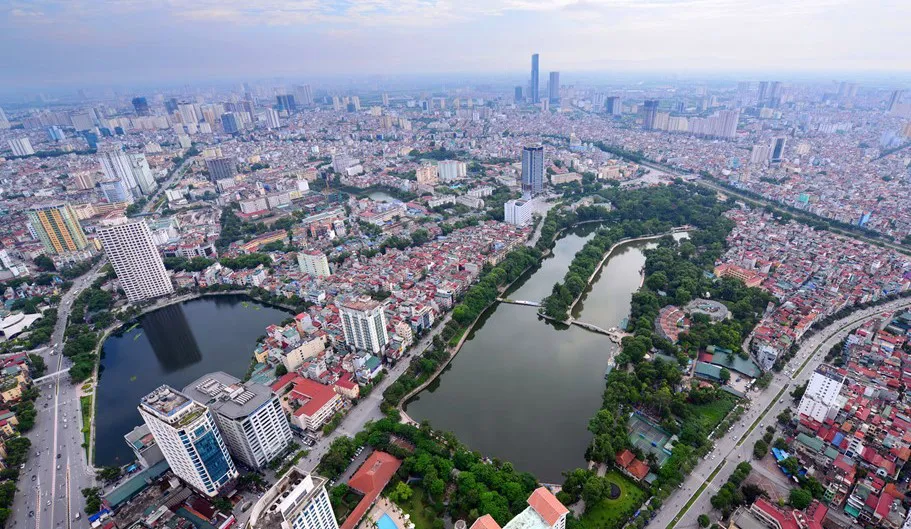
The main function of the area is to relieve infrastructure pressure on the historic downtown area and develop urban centers and new urban areas, the committee said.
Luu Quang Huy, Director of the Hanoi Institute of Construction Planning, said the approved zoning plans in the expanded downtown area have been followed. However, there are still some shortcomings.
"Specifically, the land in this area has changed dramatically in recent times due to new urban areas and construction activity. The infrastructure network has been built quickly but cannot keep up with the population growth. The infrastructure system was not connected, leading to traffic congestion, flooding, and environmental pollution," Huy told The Hanoi Times.
The economic, social, and urban development of districts in the expanded downtown area is constrained by population targets.
Architect Pham Thi Nham, Deputy Director of the National Institute of Urban and Rural Planning under the Ministry of Construction, said it is imperative for historic urban centers to reduce population pressure and construction activities.
"Large-scale projects increase the traffic of motorized vehicles," Nham said.
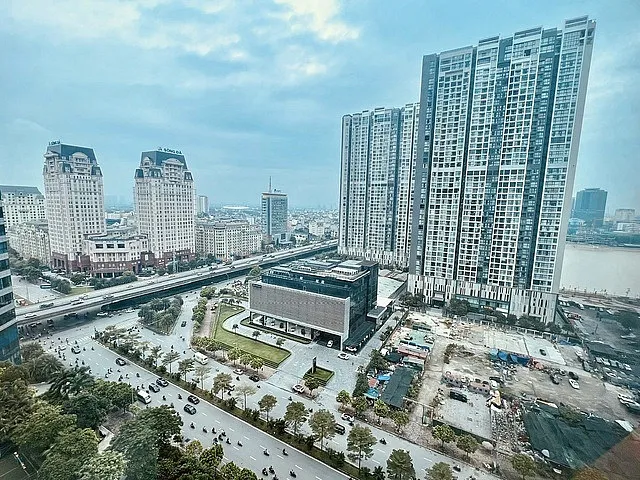
Hanoi has transformed significantly following a rapid urbanization process. Photo: VGP |
Meanwhile, architect Nguyen Viet Ninh said Hanoi needs to reduce infrastructure pressure on historic downtown areas based on a review of population growth projections.
"Reconstructing old apartment buildings by adding more floors will help reduce the density of construction, meet the technical infrastructure, and preserve historical monuments and urban architecture," Ninh told The Hanoi Times.
Citing foreign experience, he added that the redevelopment of old residential areas is carried out carefully not to damage the ancient architecture.
"Take the example of Japan, where the renovation of old residential buildings is done very carefully," Ninh said.
He noted that before reconstruction, the Japanese conducted specific assessments and surveys, and then there were three options for renovation. The first is to preserve and maintain the original condition so as not to damage the originality of the building. The second level is a partial renovation, which will depend on the extent of deterioration and the demands of the people who live there. The third stage is complete demolition.
"Hanoi currently has many old apartment complexes that need to be renovated and redeveloped as soon as possible to relieve pressure on the historic central area. People have a right to good living conditions, and new projects must fit in with the surrounding utility projects," Ninh stressed.