Hanoi pilots intelligent traffic system
An Intelligent transport system is an advanced application that provides innovative services related to different modes of transport and traffic management.
Hanoi will pilot an intelligent transportation system (ITS) in the city between June and December 2024.
Under the project, the Military Industry and Telecommunications Group (Viettel Group) will set up an intelligent traffic operation center at Hanoi Public Transport Management and Operations, and install intelligent equipment at two intersections on Pham Van Bach Street in Cau Giay District.
Intelligent traffic monitoring system at an intersection. Photo: DoubleMQV |
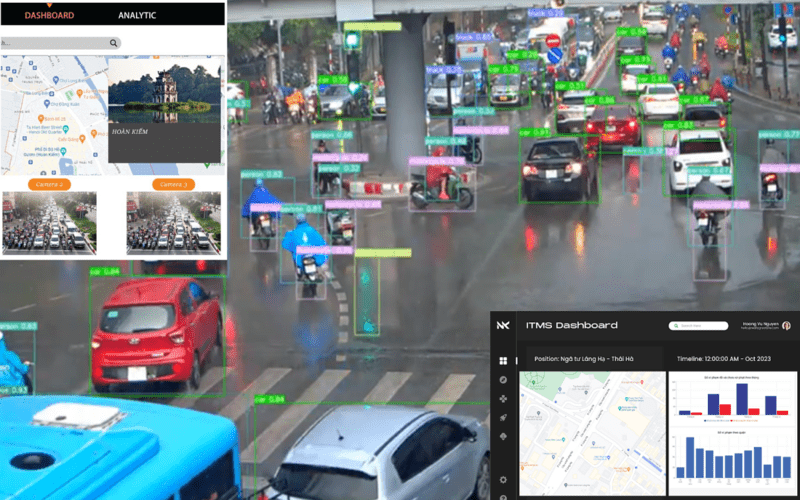
The ITS will monitor the traffic system, provide traffic information, handle violations of traffic order and safety, and manage public transport, incidents, infrastructure, parking, and payment for public transport electronic tickets.
At the Smart Traffic Operation Center, ITS provides real-time information and flexible traffic control solutions to ensure traffic order and safety, reduce travel time and costs, and minimize traffic accidents.
At the two intersections on Pham Van Bach Street, cameras will be installed to measure traffic density along the route and integrate traffic data with mapping applications. The cameras will be used to detect traffic violations and assist Hanoi Police in handling violations.
The Hanoi Department of Transport is in charge of the pilot project and will report the results to the city's People's Committee.
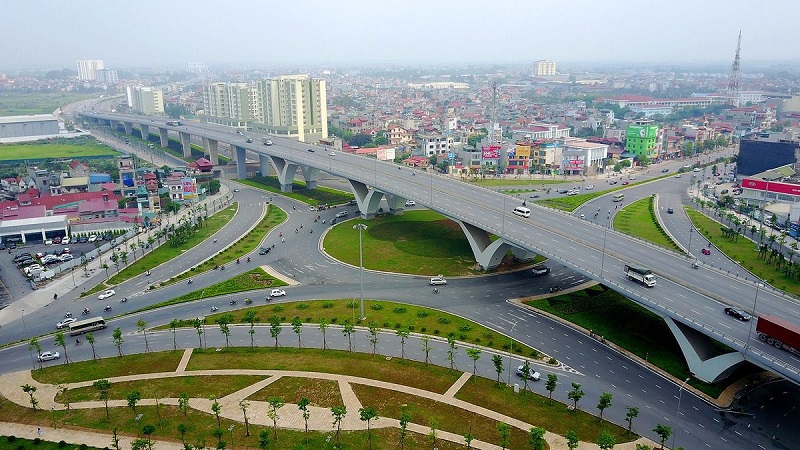
Hanoi is aggressively using technology to manage traffic. Photo: Hoang Ha/The Hanoi Times |
According to Nguyen Phi Thuong, Director of the city's Department of Transportation, developing a smart and sustainable traffic system is a trend in all urban areas around the world.
"A smart transportation system is also an important step in building a smart city. Hanoi has prioritized the development of ITS as a prerequisite for a sustainable transportation network," Thuong told The Hanoi Times.
Previously, the Hanoi Department of Transportation also piloted a vehicle overheight warning system on the Thai Ha-Chua Boc overpass starting December 1, 2022. The signs help detect, classify, and identify oversized trucks and vehicles, and display their license plate number on the electronic board as a warning.
Intelligent electronic signs help reduce congestion at the Thai Ha-Chua Boc flyover in Hanoi. Photo: Duy Pham |
.jpeg)
The groundwork for applying science and technology to traffic management and operations in Hanoi was laid in 2014 when the Hanoi People's Committee tasked the city's Department of Transportation with renovating and upgrading the traffic light control center and peripherals.
According to the department, Hanoi currently has about 2,300 intersections, of which 540 are equipped with traffic lights. Of these, 474 are monitored by the control center at 54 Tran Hung Dao Street. In addition, the city has 579 CCTVs at 149 intersections to monitor traffic, punish violators, and detect non-compliant vehicles.
Intelligent transport applications in Hanoi include a bus search application, surveillance cameras to ensure bus safety and order, software to manage road traffic infrastructure systems, and electronic passes on some bus routes.