Hanoi plans financial incentives to accelerate shift to electric vehicles
Hanoi is preparing a broad package of financial incentives, infrastructure upgrades and regulatory measures to help millions of residents switch from gasoline-powered motorbikes to electric vehicles as part of its long-term air quality improvement strategy.
THE HANOI TIMES — Hanoi will issue new policies in the first quarter of 2026 to financially support residents switching from gasoline-powered vehicles to electric ones, as part of a broader effort to curb air pollution and modernize urban transport.
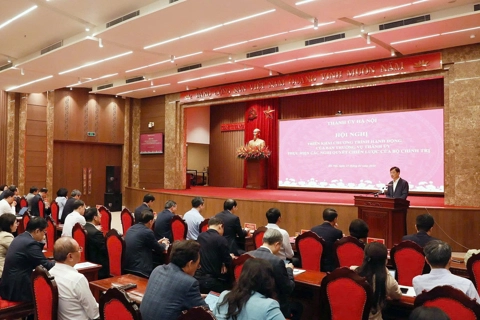
The statement was made by Nguyen Tuyen, Head of the Transport Management Division at the Hanoi Department of Construction, at a conference on air quality control today (January 6).
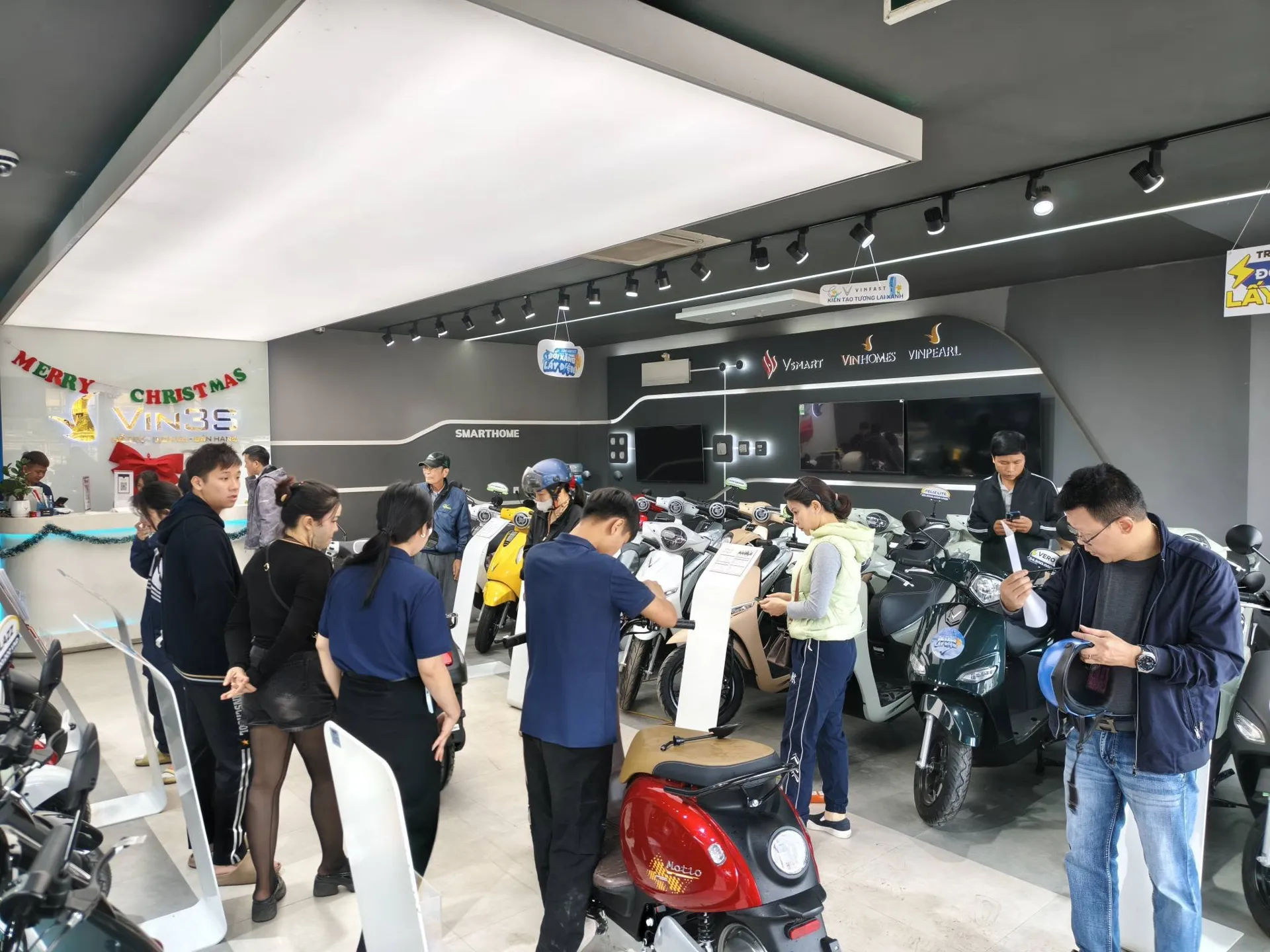
A Vinfast e-motorbike in on Ngoc Hoi Road, Hanoi. Photo: Vinfast Huy Hieu
The move comes as Hanoi intensifies measures to improve air quality, including encouraging electric vehicles and public transport, piloting low-emission zones, and gradually restricting personal vehicles in the inner city.
According to the Hanoi Department of Construction, the capital has about 6.9 million registered motorbikes, along with nearly 1.5 million from other provinces operating regularly. Around 70% of these motorbikes are old models.
Motorbikes account for 95% of all motorized vehicles in the city and generate the bulk of transport-related emissions, including 94% of hydrocarbons, 87% of carbon monoxide, 57% of nitrogen oxides, and 33% of PM10 fine dust.
Data from the Institute of Transport Science and Technology show motorbikes emit about 470,000 tons of carbon monoxide and 38,000 tons of hydrocarbons each year. These emissions equal the combined output of roughly 31,000 and 2,500 large buses, respectively.
To address the problem, Hanoi has adopted a resolution to develop low-emission zones in congested inner-city areas where annual air quality levels remain below national standards.
The city will pilot low-emission zones along Ring Road 1 and in selected wards during 2026–2027. From January 1, 2028, the policy will cover all of Ring Road 1 and parts of Ring Road 2.
From 2030, it will expand inward from Ring Road 3, covering most of the city center. From 2031 onward, the program will apply to all areas that meet low-emission criteria.
Hanoi may also restrict gasoline-powered motorbikes within Ring Road 1 starting in July 2026. While these measures have encouraged interest in electric vehicles, many residents still face barriers due to high costs and limited financial support.
Dao Viet Long, Deputy Director of the Hanoi Department of Construction, said the transition affects millions of people and therefore requires careful preparation.
From the outset, the city has focused on building a clear legal framework, support mechanisms, charging infrastructure, and traffic management plans, he said at a workshop in early December 2025.
Under the current draft resolution, owners of gasoline motorbikes could receive financial support equal to 20% of the value of a new electric vehicle, capped at VND5 million ($190).
Poor households could receive support covering up to 100% of the cost, capped at VND20 million ($761), while near-poor households could receive 80%, capped at VND15 million ($571).
Residents purchasing electric vehicles on installment plans may receive support covering 30% of loan interest for terms of up to 12 months, reducing upfront costs. The city also plans to cover 50% of registration fees for converted vehicles, with full exemptions for poor and near-poor households.
Additional incentives are under preparation for transport businesses that replace their fleets with electric vehicles, including a 30% reduction in bank loan interest for five years, full registration fee exemptions, and lower parking fees.
According to Tuyen, piloting low-emission zones will also help expand public transport.
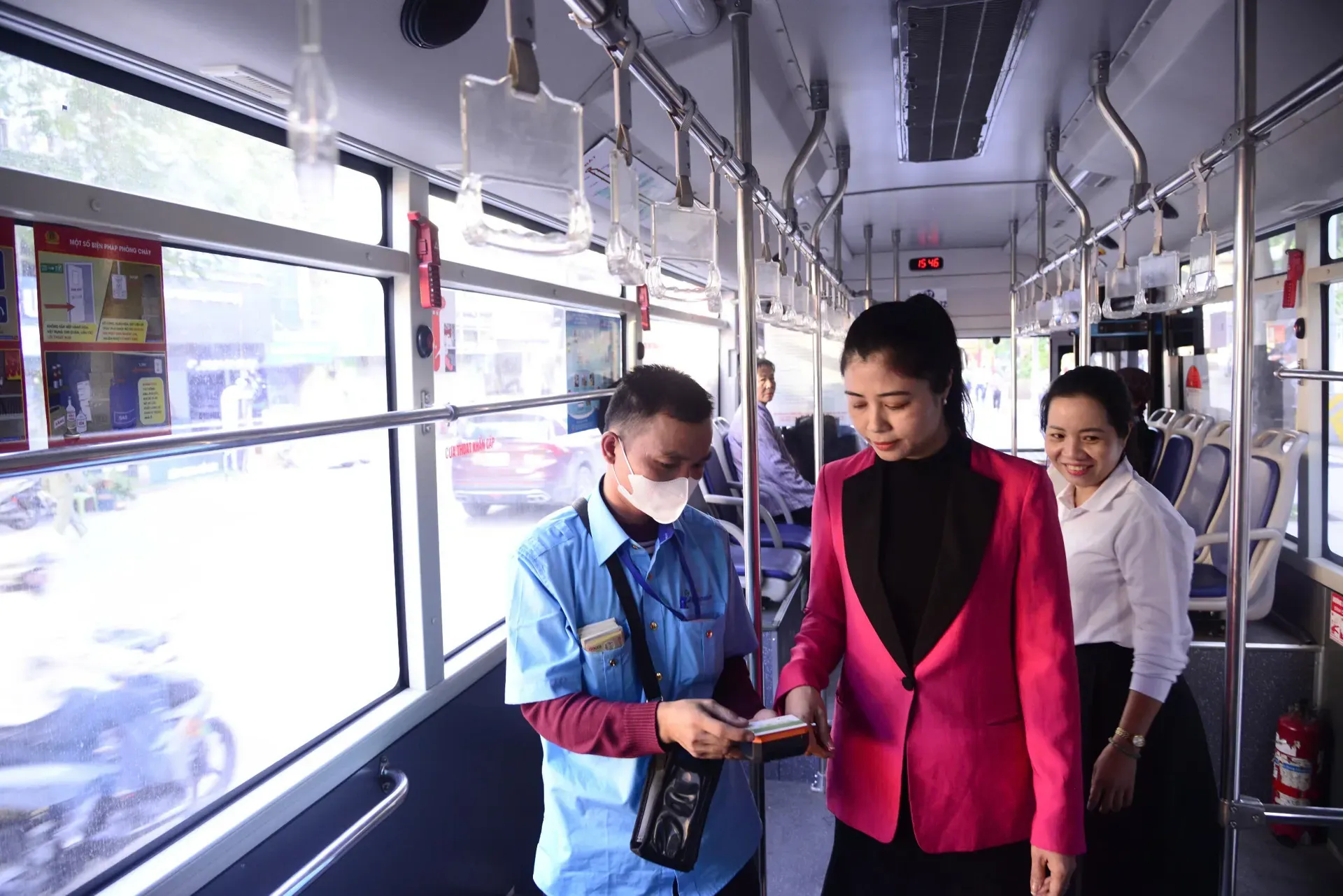
Passengers use public buses in Hanoi. Photo: Pham Hung/The Hanoi Times
Hanoi may introduce mini electric buses to improve links between railway stations and residential areas, encouraging people to shift away from private vehicles, he said.
Public bicycle services are also expanding as a pilot operator has added 500 electric bicycles at rental points, with further deployment planned at railway stations and bus transfer hubs, Tuyen said.
He stressed the need to rapidly build a citywide charging and battery-swapping network, prioritize vehicles meeting EURO4 standards, and strengthen public communication to ensure compliance.
Hanoi is well-prepared to ensure all buses and contract vehicles run on green energy by 2030, the official said.
Technology strengthens air pollution control
Experts said technology will play a decisive role in improving air quality management.
Hoang Duong Tung, Chairman of the Vietnam Clean Air Network, proposed digitizing all emission sources in Hanoi into a single, continuously updated digital map.
The system should include detailed data on each source, such as location, sector, production type, and emission scale. When connected to real-time monitoring systems, it would allow authorities to quickly identify pollution sources and assess their impact.
Tung said traditional reporting methods, which rely on surveys and voluntary disclosures, lack accuracy and timeliness.
He called for periodic emission reporting through digital platforms and automated systems.
Vu Huu Liem, Director of the Center for Agricultural, Natural Resources and Environmental Monitoring, said authorities are already using high-resolution satellite imagery and drones to track emissions across the city.
These efforts have identified 68 construction sites and 14 plastic and metal recycling craft villages as priority monitoring targets, as construction remains a major source of dust pollution.
The long-term goal, Liem said, is to build an early warning system for air pollution by integrating satellite data, drones, and traffic cameras to create a real-time pollution map.
Le Thanh Thuy, Deputy Head of the Hanoi Department of Agriculture and Environment's Environmental Management Division, said the city will implement comprehensive measures to cut pollution.
Within low-emission zones, Hanoi will prioritize green transport infrastructure, including public transport, clean vehicles, pedestrian spaces, bicycles, and charging stations, she said.
Authorities will give priority access to zero-emission vehicles while restricting or banning trucks over 3.5 tons and vehicles that fail to meet emission standards, Thuy added.
AI-powered cameras and expanded air quality monitoring networks will strengthen enforcement, the official said.
“Hanoi will not trade environmental protection for economic growth,” Thuy said.
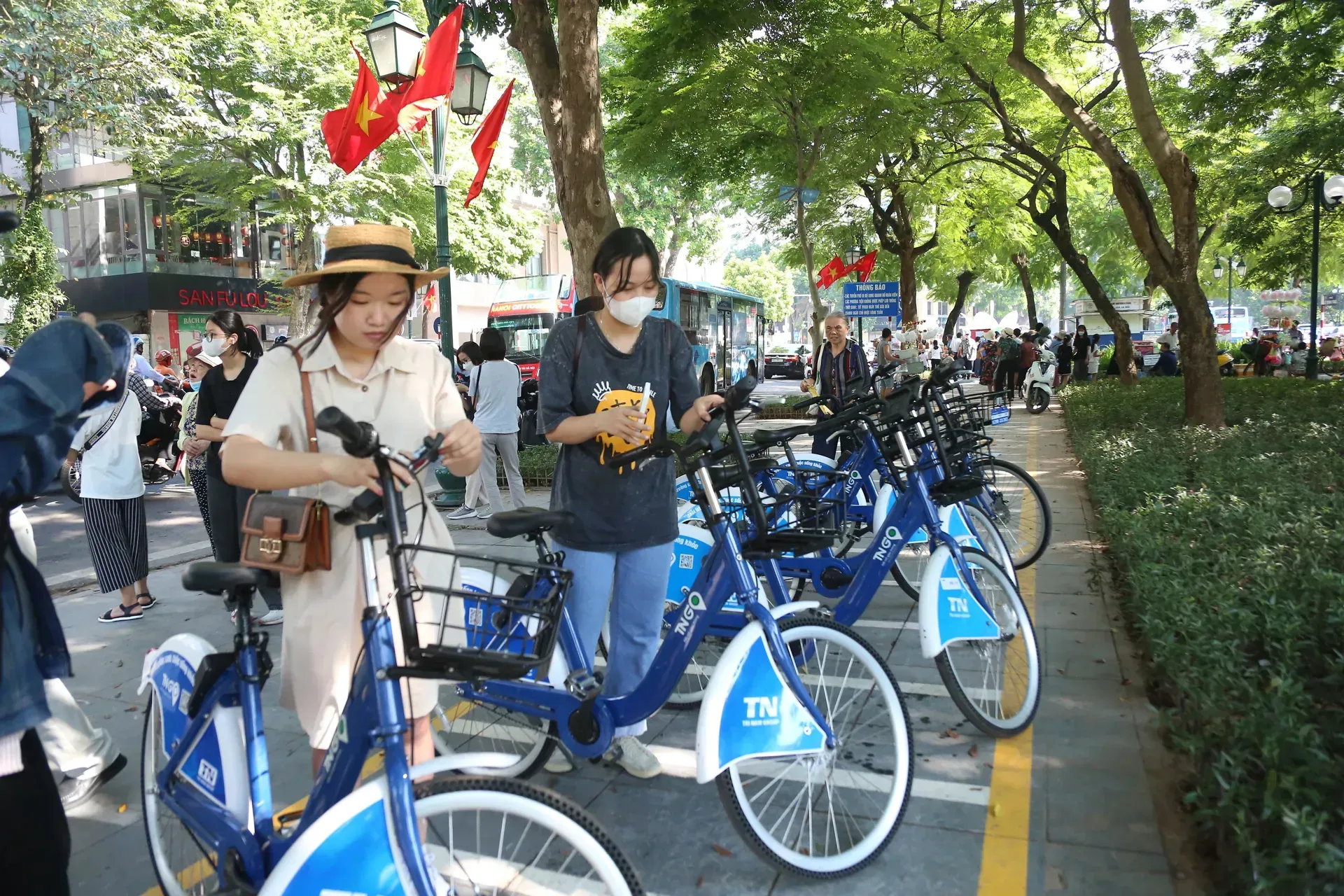
People try to use public bicycles at Hoan Kiem Lake, Hanoi. Photo: Lai Tan/The Hanoi Times