

Hanoi positions itself for regional stature
Today, the capital city of Vietnam celebrates the 68th anniversary of liberation day (October 10, 1954 – October 10, 2022). This milestone has transformed Hanoi into a national hub and a vital metropolis in Southeast Asia, rich in culture and long-lasting characteristics.
Hanoi has been trying to position itself for a better status in the regional rankings in politics, economics, and socio-culture, primarily after being listed in the UNESCO Creative Cities Network (UCCN) in 2019.
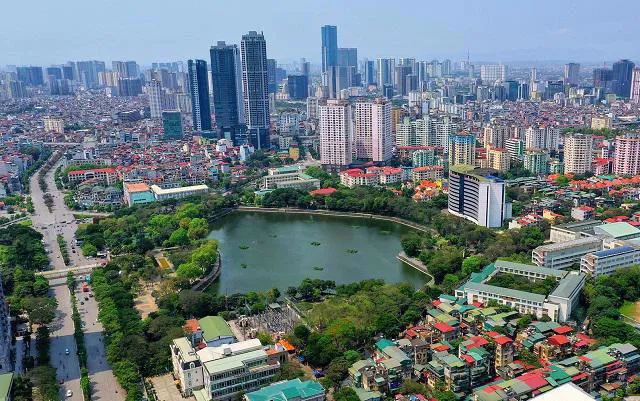
| Part of Hanoi. Photo: The Hanoi Times |
Today, the capital city of Vietnam celebrates the 68th anniversary of liberation day (October 10, 1954 – October 10, 2022). This milestone has transformed Hanoi into a national hub and a vital metropolis in Southeast Asia, rich in culture and long-lasting characteristics.
Although it accounts for only 1% of the country's land area and 8.5% of the population, Hanoi contributes more than 16% of the gross domestic product (GDP) and approximately 19% of state budget revenues.
The city has been implementing targets in Politburo’s Resolution No.15-NQ/TW on orientations and tasks for developing Hanoi by 2030, a vision towards 2045. The capital city is set to become a driving force for the development of the Red River Delta, the northern critical economic region and the whole country toward a city of high competition to develop on par with regional capitals.
“Hanoi has completed each stage of its development journey and has been resolving problems to preserve its traditional cultural attractiveness and maintain a tranquil and secure atmosphere,” Associate Prof. Nguyen Trong Phuc, former head of the Institute of Party History.
In terms of construction, a highlight that cannot be ignored is the change in the city's profile, with more and more modern urban complexes, highways, ring roads, and bridges coupled with public transport systems being built, symbolizing economic growth.
| Culture remains one of the pillars of Hanoi's development strategy. Photo: Thach Thao |
.jpg)
Develop in a modern manner
After being listed among Creative Cities, Hanoi, with a population of 7.9 million and a rich culture, places innovation at its core. The city is adopting a new economic and urban development strategy inspired by creative design suitable to its young population as well as the history of craft villages and the advancement of technology.
As a Creative City in terms of Design, Hanoi envisages embracing sustainable development enriched by empathic design and innovation to benefit society, supporting a network of creative spaces that foster future creative talent in design and technology, and building an ambitious program of creative events that will advance and protect Hanoi’s cultural heritage.
The city participates in projects and strategies within the UCCN to promote creative design thinking and sustainable urban development, exchanges knowledge with Creative Cities of Design, advertises design and innovation across Southeast Asia and builds an innovative educational framework to develop graduates with skills for the new economy.
Hanoi’s top leaders have attempted to turn Hanoi into a “smart city” and “creative city”. The city is expected to become the “Creative City” of Southeast Asia. In addition, Hanoi will mobilize other cities of Vietnam, such as Ho Chi Minh City, Danang, and Hue to join the UNESCO Creative Cities Network, contributing to its overall development.
The status of a creative city is not only a vision and strategy but also one of the foundations for Hanoi to develop other development plans and strategies. Therefore, investing in the right human and material resources for the “Creative City” is also essential.
Creative City is a new story for a new century, representing the brand and image of Hanoi – and the country – that is forward-looking towards inclusion and sustainable development, said British Council Country Director for Vietnam Donna McGowan. This title builds on Hanoi’s legacy as a cultural capital and a City for Peace – a legacy of social inclusion and youth engagement. These create a solid foundation for developing the capital’s cultural industry.
Besides being a creative city, Hanoi has built a smart city and ramped up 5G commercialization. As part of its updated information and technology plan for 2016–2020, Hanoi established the goal of becoming a smart city by 2030.
Hanoi wants to boost its reputation in applications of information technology. Shortly, information technology applications in the city will be improved thanks to new infrastructure components like an innovative operation center, a cybersecurity monitoring center, and shared software systems.
Hanoi has become a dynamic, civilized and modern integrated city but still retains its identity and culture. In this regard, the city stressed the importance of the cultural industry.
By 2025, Hanoi’s cultural sector is expected to play a significant role in the local economy, contributing 5% of the GRDP while preserving and enhancing the city’s reputation as the “City for Peace” and “Creative City.”
By 2030, the cultural sector will essentially take the lead as an economic sector, accounting for about 8% of the city’s GRDP. With the most vibrant cultural scenes, Hanoi will become a significant “Creative City” in Southeast Asia.
By 2045, it is intended to make the cultural sector a leading economic sector and account for 10% of the city’s gross regional product (GRDP). Hanoi’s high standard of living would be built on culture, which would put it on the same level as other major towns and capitals in the area and create a wealth of significant new cultural works.
All these factors would turn Hanoi step by step into a smart and creative city of international stature.







