Hanoi prioritizes development of smart transport
An intelligent transportation system is a tool to realize traffic policies.
Hanoi has prioritized the development of an Intelligent Transport System (ITS) as a key factor in creating a sustainable transport network, according to Nguyen Phi Thuong, Director of the city's Department of Transport.
He said ITS is an advanced application that aims to provide innovative services related to different modes of transportation and traffic management. It enables users to be better informed and make safer, more coordinated, and smarter use of transportation networks.
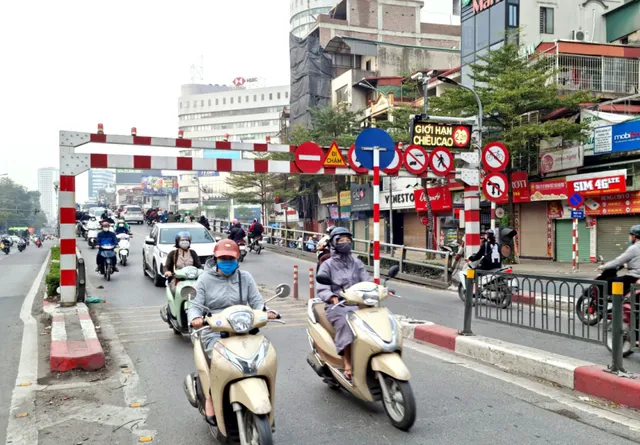
Intelligent electronic signs help reduce congestion at the Thai Ha-Chua Boc flyover in Hanoi. Photo: Duy Pham |
Some of these technologies include emergency calls in the event of an accident using surveillance cameras to enforce traffic laws or signs that indicate speed limit changes. "ITS technology is being used around the world to streamline busy roads, reduce travel time, improve traffic quality, and limit accidents. In Vietnam, some big cities such as Hanoi have deployed AI application solutions in traffic control and piloted smart traffic models such as intelligent traffic management systems and open road ticketing," Thuong added.
The application of science and technology in traffic management and operation in Hanoi laid the foundation in 2014 when the Hanoi People's Committee tasked the city's Department of Transportation to renovate and upgrade the traffic light control center and peripheral devices.
"ITS provides real-time information and flexible traffic control solutions to ensure traffic order and safety, reduce travel time and costs, minimize traffic accidents, protect the environment, creating a smart and safe city," Thuong stressed.
Hanoi currently has about 2,300 traffic intersections, of which 540 intersections are equipped with traffic lights. Of these, 474 are monitored by the 54 Tran Hung Dao Street control center. In addition, the city has 579 CCTVs at 149 intersections to watch traffic, punish violators, and detect vehicles.
Smart traffic applications in Hanoi include a bus search application, surveillance cameras to ensure bus safety and order, software to manage road traffic infrastructure systems, and electronic passes on some bus routes.
The department also piloted a vehicle overheight warning system at the Thai Ha-Chua Boc overpass starting December 1, 2022. The signs help detect, classify, and identify oversized trucks and vehicles and display their license plate on the electronic board as a warning.
| Hanoi seeks ways to manage transport. Photo: Pham Cong/The Hanoi Times |
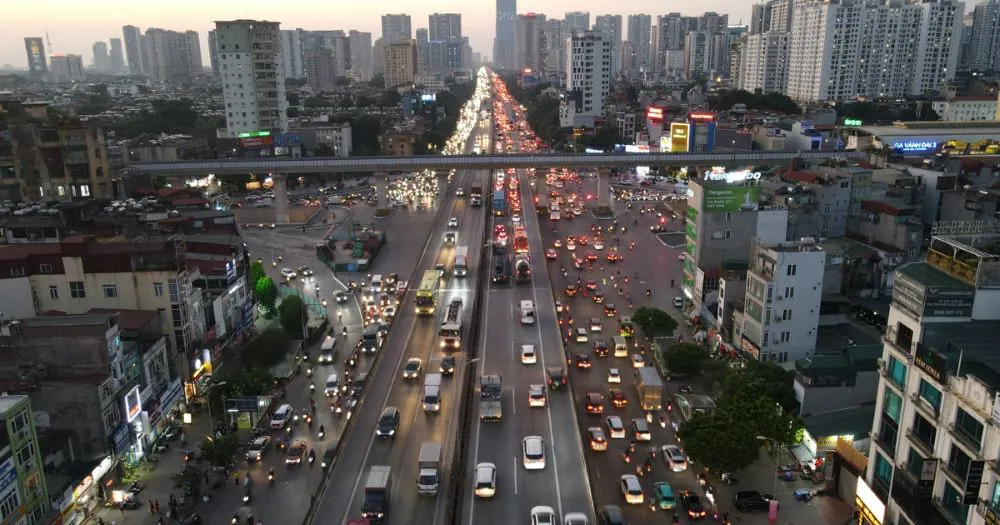
According to the Hanoi Department of Transport, there is currently no comprehensive study on the status and orientation of the application of modern technologies for synchronized traffic management and operation, especially the development of ITS.
"High-quality human resources with qualifications and knowledge in ITS management and operation still cannot meet the demand. On the other hand, most drivers use motorcycles, which makes it difficult to access real-time online traffic information and undermines the effectiveness of ITS," Thuong said.
He stressed that Hanoi needs a strategic direction to develop ITS within 5-7 years. The most important thing is to create a long-term, unified, and sustainable ITS master plan that focuses on addressing the shortcomings of Hanoi's current traffic and future vision.
Hanoi has set a goal to complete the digital transformation of operations in the construction, management, and maintenance of traffic infrastructure systems; create a traffic management database; and equip all expressways and national highways in the city with a smart traffic management and operation system.
"By 2030, it is necessary to establish Hanoi's Smart Traffic Operations Center to integrate at least 10 major functions, including monitoring, control, traffic information, violation handling, public transport monitoring and operation, electronic payment data integration, traffic demand management, freight transport management, traffic infrastructure management. Human resources must ensure effective mastery, use and operation of technological applications of the industrial revolution 4.0," Thuong stressed.