

Hanoi promotes sustainable rice production with SRI and organic practices
Experts affirm that Hanoi’s adoption of the improved SRI model helps reduce costs, boost yields, ensure food safety and contributes to Vietnam’s net-zero emission commitments.
THE HANOI TIMES — The Hanoi Department of Agriculture and Environment has taken measures to develop the improved System of Rice Intensification (SRI) with organic, low-emission practices, bringing clear benefits over traditional methods.
Luu Thi Hang, Head of the Plant Production and Protection Division under the Hanoi Department of Agriculture and Environment, speaks to Hanoimoi Newspaper on the adoption of SRI.
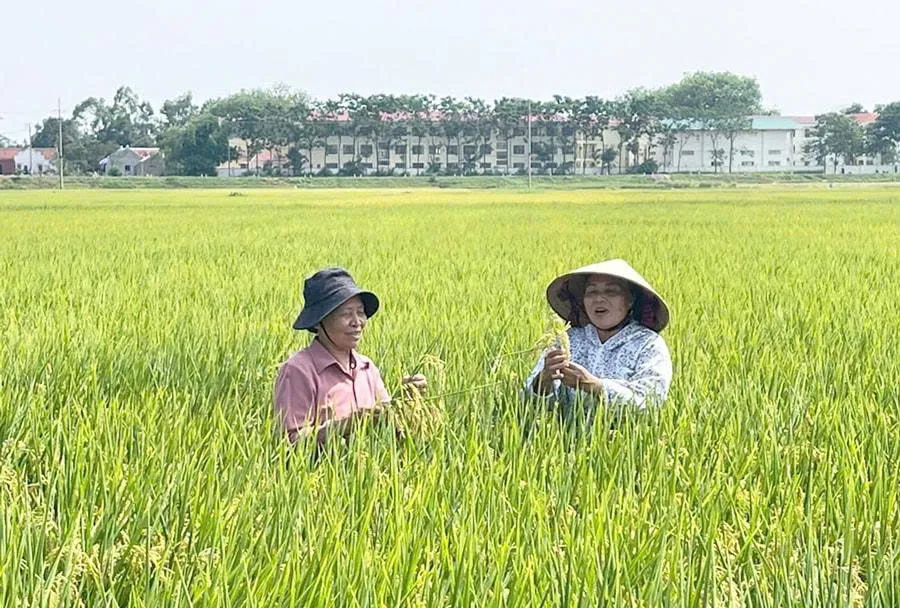
The SRI rice transplanting model helps improve efficiency, yields, and sustainability for Hanoi’s farmers. Photo: Hanoimoi Newspaper
How has Hanoi put the SRI model into effect instead of traditional rice cultivation methods?
Traditional rice farming uses large amounts of water and keeps fields permanently flooded, with heavy reliance on chemical fertilizers, leading to higher greenhouse gas emissions.
Excessive use of nitrogen fertilizer and pesticides has polluted soil and water resources and made rice plants more vulnerable to pests and diseases. In contrast, the improved SRI model applies wider spacing, young seedlings, better water control, weeding, and organic fertilization. These practices cut costs, increase yields, improve grain quality, and reduce environmental impacts.
To date, on what scale has Hanoi implemented this model?
Hanoi has about 150,000 hectares of rice fields, with 80% adopting SRI at different levels. Around 12% follow all five technical principles, while 68% apply some practices.
In 2025, our agency and local authorities introduced transplanting machines combined with SRI techniques for organic, low-emission rice production. A spring pilot program in Me Linh and My Duc areas showed positive results. Farmers received organic fertilizers and training in crop management for each growth stage.
What specific instructions are given to farmers when they join the model?
The biggest change is farming habits. Farmers now use about 0.8 kilogram of seed per 360 square meters of land instead of 1.2 kilograms. Wider spacing saves seed and allows stronger tillering and sturdier plants.
They are guided to replace chemical fertilizers with bio-organic fertilizers, manage water carefully at each stage, and minimize pesticide use. Transplanting machines reduce labor, ensure uniform planting, and improve overall efficiency.
With these new practices, what results have been recorded?
Field evaluations show lower pest and disease pressure. Farmers save 40%-50% on seed costs, while irrigation needs are reduced two to three times per crop, equal to 500–1,000 cubic meters per hectare.
Rice plants are healthier, less prone to lodging, more resilient in harsh conditions, and require fewer pesticides. Yields have risen by 10%-12% compared with traditional methods, adding 0.64–0.78 ton per hectare. Economic efficiency has improved by VND19.8–25.6 million (about $750–969) per hectare.
Rice produced under SRI meets food safety standards, serving domestic and export markets. The model also helps cut CH₄, N₂O, and CO₂ emissions, supporting the Government’s net-zero target for 2050.
Applying SRI with organic and low-emission practices creates opportunities for farmers to join the global carbon market. Proper accounting of carbon credits can bring extra income, reinvestment opportunities, and enhance the brand value of Vietnamese rice.
What difficulties remain in implementation?
The main challenge is changing farming habits. Because SRI is new, many farmers were skeptical at first and reluctant to adopt it.
The model also requires strict water control, which is difficult in low-lying areas that remain waterlogged, reducing effectiveness. Implementation must therefore be flexible and adapted to local conditions.
What are solutions needed to expand SRI and promote mechanization, especially in transplanting?
The Hanoi People’s Council issued Resolution No. 08/2023/NQ-HDND on July 4, 2023, with policies to encourage agricultural development. The city aims for 90% of rice areas to apply SRI, with 15%-20% following all principles by 2030. This is a key step toward green, circular agriculture and supporting Hanoi’s two-digit socio-economic growth target.
To reach this goal, communication on SRI’s benefits must be strengthened so farmers clearly see its effectiveness. Training courses should continue to provide detailed guidance from transplanting to crop care. Mechanization, especially through transplanting machines, must be expanded to reduce labor costs and improve efficiency.
The Department of Agriculture and Environment also seeks to promote organic production combined with SRI, gradually forming stable raw material zones and building the “clean rice of Hanoi” brand.
Thank you for your time!







