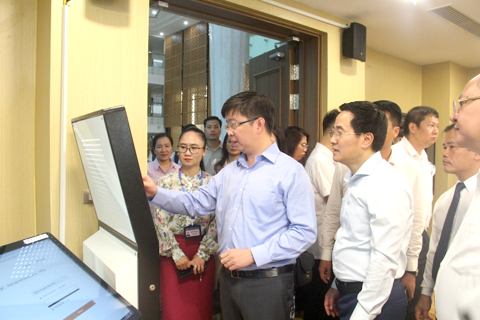
Hanoi pushes for digitalization in healthcare sector
Hanoi's health sector has promoted the application of information technology and digital transformation to build a smart and professional health system for convenient checkups and treatment.
THE HANOI TIMES — When 46-year-old Dao Thi Nhan brought her father to the Hanoi Oncology Hospital early this year, she no longer had to carry stacks of medical papers. Instead, doctors pulled up his health records in seconds on a computer screen. “It saved us so much time,” said Nhan.

Dao Thi Nhan, 46-year-old resident in Phu Dien Ward, Hanoi. Photo: Anh Kiet/The Hanoi Times
Her story shows a positive shift across Hanoi’s healthcare system, where hospitals are phasing out paper records and embracing digital platforms.
The city's changing move is in line with the Ministry of Health's rapid digitalization that has been made through electronic medical records (EMRs) applied nationwide by late 2025, a move officials say will not only ease the burden on patients but also improve accuracy and efficiency in treatment.
"In the past, every time I took my father for esophageal cancer treatment, I had to bring a series of test papers and prescriptions. Now, all I need is a smartphone or citizen ID card," Nhan shared with The Hanoi Times.
Hanoi's health sector has implemented an array of solutions to promote digital transformation in hospital management for a more and more modern healthcare system, according to Dr. Nguyen Dinh Hung, Acting Deputy Director of the Hanoi Department of Health.
These efforts aim to improve the quality of medical examination and treatment services.
"EMRs manage all citizens' health information, including personal data, medical history, test results and prescriptions throughout medical examination and treatment at healthcare facilities," Hung told the Hanoimoi Newspaper.
In reality, EMRs help the medical sector build a complete, accurate and timely health data system to help doctors give timely instructions on disease prevention, predict trends, and make appropriate guidelines.
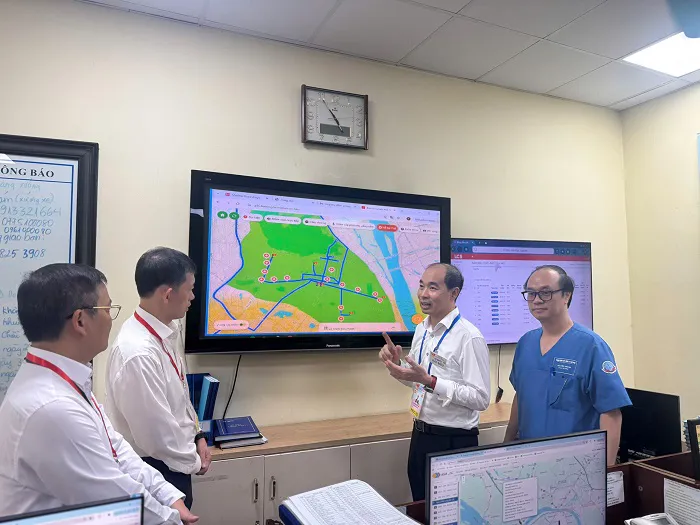
Dr. Nguyen Dinh Hung (second right) checks the 115 Emergency Center with many digital medical equipment serving the 80th National Day Celebration on September 2, 2025. Photo courtesy of the department
He highlighted that the implementation of EMRs is a crucial step in the digital transformation of healthcare, thanks to reducing paperwork and saving costs while benefiting patients, medical facilities and the entire medical system.

Dr. Nguyen Khac Hoang of the Hanoi Oncology Hospital. Photo: Anh Kiet/The Hanoi Times
Sharing the same idea, Dr. Nguyen Khac Hoang of the Hanoi Oncology Hospital told The Hanoi Times that implementing EMRs saves significant time for both patients and medical staff. "Doctors have almost full access to a patient's medical record within minutes on a computer."
EMRs allow quick lookup and support monitoring of disease progression through each treatment, especially for cancer patients who need long-term and close follow-up.
Previously, patients often had to wait until the following day to complete discharge procedures. Now, with digital management in place, patients at the Hanoi Oncology Hospital can quickly and easily complete discharge and payment procedures, making it easier to manage public health records.
"Currently, half of the 42 public hospitals under the Hanoi Department of Health have completed EMRs. All public healthcare facilities in the city accept chip-based citizen ID cards and VNeID accounts in place of health insurance cards for medical services," said Hoang.
An inevitable development trend
Dr. Nguyen Dinh Hung affirmed that the application of digital transformation in healthcare is an inevitable development trend and EMRs help clinic facilities in that approach.
The department has directed all public and private healthcare facilities under its management to urgently implement EMRs, in accordance with the government's directive, with a deadline of September 30, 2025.
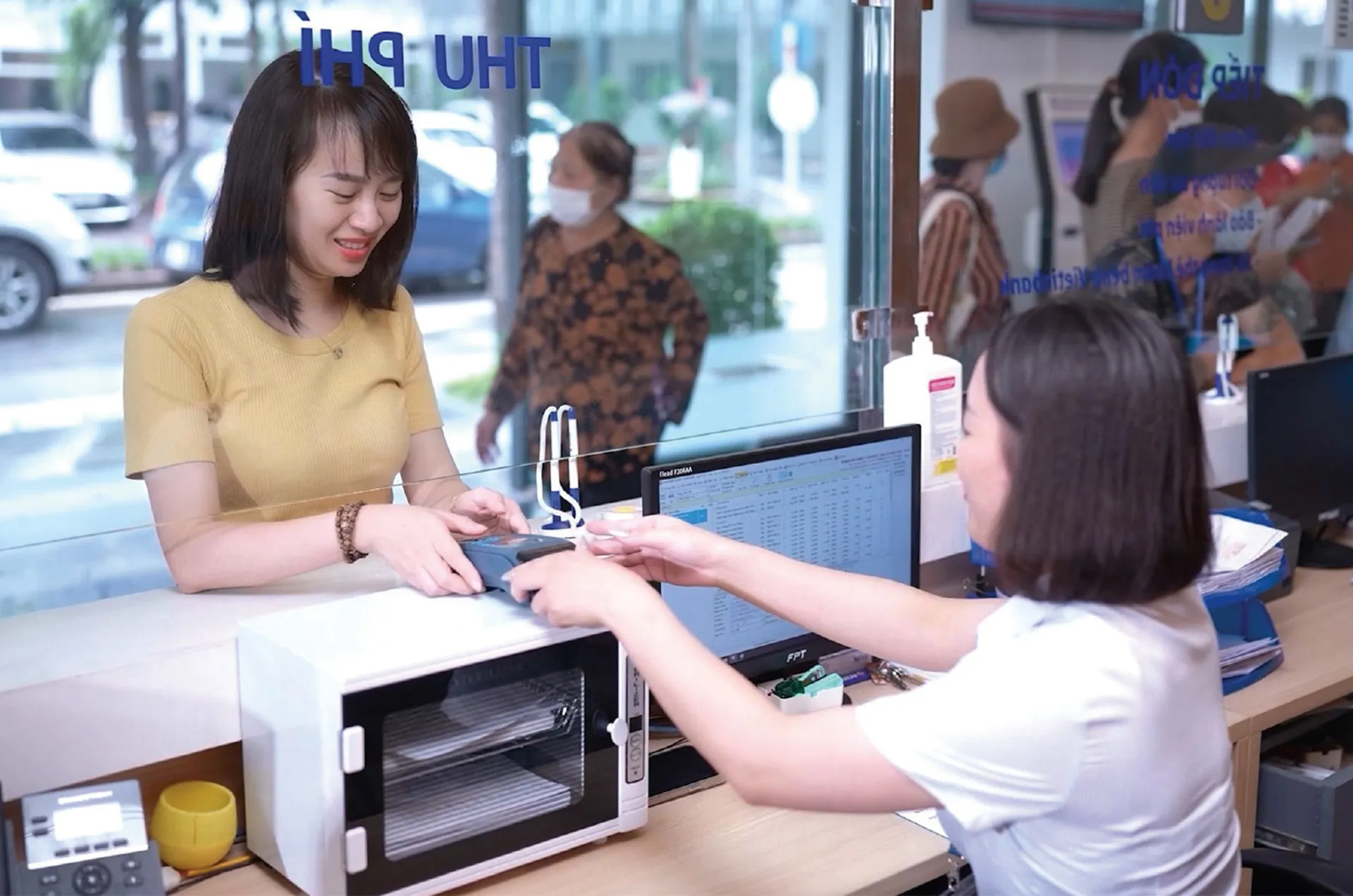
Cashless payment for fees at the Hanoi Oncology Hospital. Photo courtesy of Dr. Nguyen Khac Hoang
Especially, Hanoi's health sector has piloted the application of artificial intelligence (AI) in medical examination and treatment at Saint Paul and Duc Giang General Hospitals.
These include AI for diagnostic imaging in chest X-rays, AI-assisted screening of chest radiographs, AI in gastrointestinal endoscopy at the Saint Paul Center for Advanced Technology and Gastroenterology, and AI-based facial recognition for direct patient check-in at the hospital reception.
According to Dr. Do Minh Tri, Deputy Director of Duc Giang General Hospital, sharing EMRs across the healthcare network is one of the key tasks in the digital transformation strategy of Hanoi's medical sector, in line with national strategies.
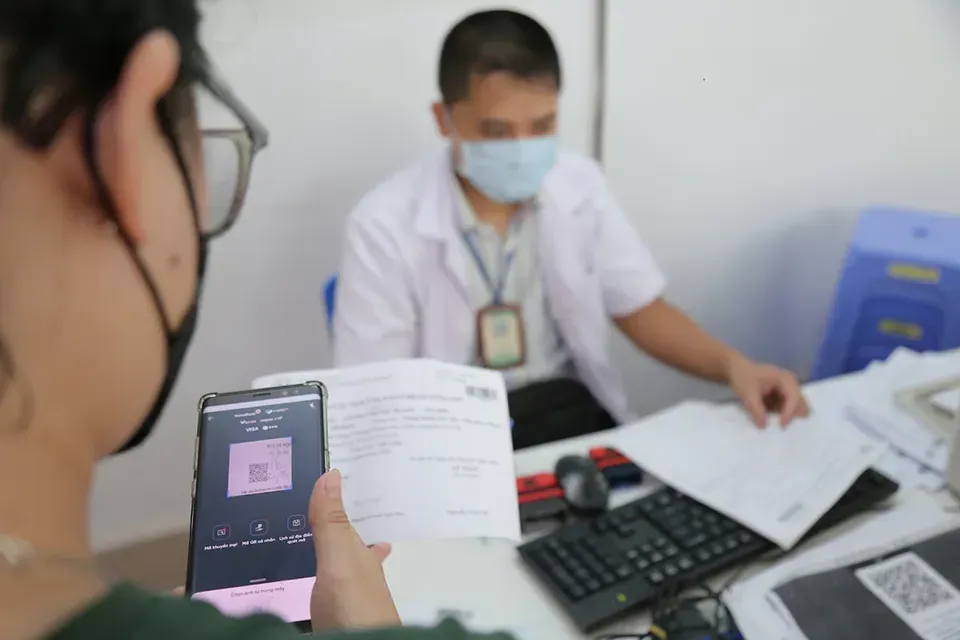
A patient registers for health check-ups using the VNeID application at Duc Giang General Hospital. Photo courtesy of Dr. Do Minh Tri
"We use facial recognition for check-in. Patients' identities are authenticated the first time they register for an examination using a chip-embedded citizen ID card and health insurance card. From the second visit onward, they do not need to bring documents along," said Tri.
The success of digitizing medical records has relieved some of the pressure on Duc Giang General Hospital's medical staff, optimized management and improved the quality of healthcare services.
Healthcare organizations are also encouraged to share medical records, send referral requests, schedule follow-up appointments, and view past test results online, as well as promote telemedicine and e-prescribing.
Those moves would help make possible the government's goal of putting all administrative procedures online and making 80% of administrative records processed digitally by the end of 2025.