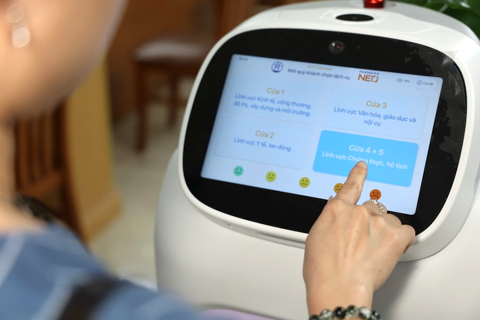
Finance, expertise and tech upgrade essential in two-tier local governance
Closing grassroots skill gaps, boosting funding, and strengthening IT infrastructure are vital for advancing local digital transformation.
THE HANOI TIMES — Stronger government support in funding, workforce training and IT infrastructure upgrades are key for effective implementation of the two-tier local government model, especially in remote areas, according to officials.
Ho Hong Hai, Deputy Director of the ministry's Department of Legal Affairs, made the remarks at a press conference this week, summarizing the findings from the 12 delegations sent to work with 34 provinces and cities between August 12 and August 29.
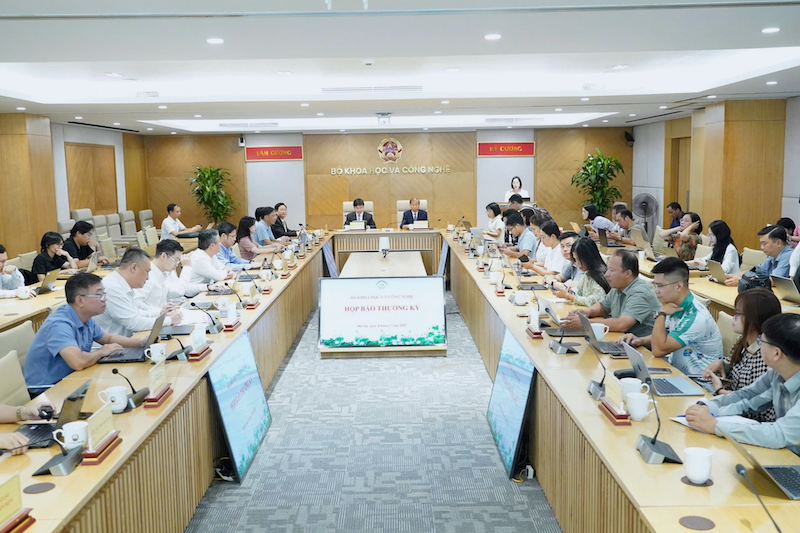
An overview of the press conference on September 4. Photos: Ministry of Science and Technology
According to Hai, provincial governments lack staff specialized in key fields such as telecommunications, internet services, radio frequencies, intellectual property and metrology.
The shortage is even more severe at the commune level, where most localities have no dedicated officials for science and technology.
He noted that many officials and public employees have little knowledge of the areas they are assigned to manage.
“The lack of proper training and practical experience causes significant challenges for local governments when performing administrative duties,” Hai said.
Funding remains another obstacle. The absence of detailed guidelines has left provinces and their communes and wards unable to finance local investment projects.
Technical infrastructure is also lagging, with merged communes and wards lacking synchronized systems.
“Many communes still do not have enough computers or basic office equipment, particularly in mountainous regions,” Hai added.
Administrative procedures are further complicated by data security requirements. Cross-border services and procedures for verifying protected areas after ownership transfers remain especially difficult.
The ministry emphasized the urgent need to complete and effectively use national databases and shared databases across government agencies to streamline administrative services.
Hai proposed that the ministry issue new guidance or amend existing regulations to resolve legal inconsistencies and remove bottlenecks.
Despite these challenges, inspection teams noted progress in administrative reform and digital transformation.
More than 97% of administrative dossiers have been resolved on time. Training sessions on metrology and equipment inspection have been held nationwide.
In intellectual property, some localities subsidize trademark registration fees for small and medium enterprises (SMEs), with over 80% of applications now submitted online.
Several provinces have also built models to protect intellectual property rights for local agricultural products.
In nuclear and radiation safety, authorities regularly inspect equipment, monitor dosage levels and supervise radiation sources in medical facilities.
On the digital infrastructure front, all provinces and cities are now connected to specialized data transmission networks down to the commune level.
The “one-stop-shop” electronic portals have been synchronized with the National Public Administrative Service Portal and many provinces report digitalization rates of administrative dossiers above 90%.
Local authorities have also strengthened human resources by appointing one-stop-shop staff and organizing training in digitalization, science and technology management and digital transformation.
Some provinces have introduced long-term plans to develop IT and science and technology workforces.
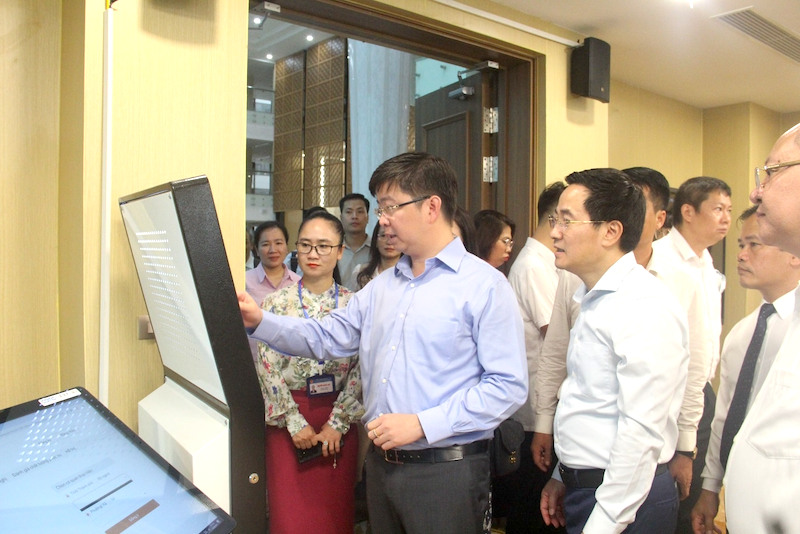
Deputy Minister Bui Hoang Phuong inspects operations at the Dong Anh Ward's Public Administrative Service Center.
Hanoi in focus
In late August, Deputy Minister of Science and Technology Bui Hoang Phuong led a delegation to the Hanoi Public Administrative Service Center, visiting several branches.
He affirmed that the ministry will continue to support Hanoi and other localities in running the two-tier government model, particularly in science, technology, innovation and digital transformation.
To ensure this, the ministry has set up a standing task force and 24/7 online interaction groups to promptly address concerns.
It is also reviewing and revising outdated legal documents to create a clearer and more consistent regulatory framework.
At the same time, the ministry will work with Hanoi to expand the use of science, technology and digital transformation in delivering fully online public services, helping reduce costs and processing times for citizens and businesses.
Training and capacity-building for officials, especially in digital skills, will remain a priority to meet the growing demands of modern governance.