Hanoi draws digital lessons from two-tier governance
Hanoi leaders view Resolution No. 57 as a blueprint for redesigning urban governance rather than digital transformation.
THE HANOI TIMES — Hanoi attributes the initial success of its new two-tier local government model to synchronized leadership, data-driven operations and proactive implementation, three weeks after the system was put into practice, according to Vice Chairman of the municipal People’s Committee Truong Viet Dung.
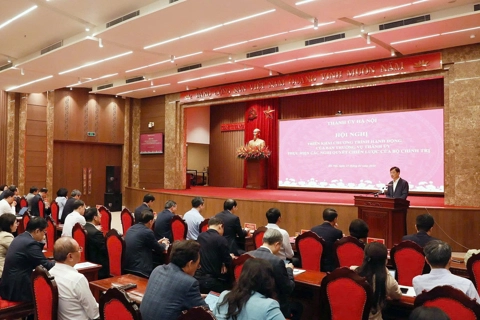
Dung was speaking at the forum titled “Digital Transformation: A Vital Bridge Between Two Tiers of Government,” held in Hanoi on July 23.
He said that since launching the model, Hanoi has handled over 66,000 administrative cases, and the system has operated smoothly and cohesively across all levels.
Interconnected data systems are the “golden key” to administrative reform. Hanoi aims to digitize 100% of its public services and is strongly pushing for end-to-end online processing.
“Digital transformation is not merely a technical issue. It’s about mindset and organizational structure,” he said.

Truong Viet Dung, Vice Chairman of the Hanoi People’s Committee, speaks at the forum “Digital Transformation: A Vital Bridge Between Two Tiers of Government” on July 23. Photos: hanoi.gov.vn
Dung said that Hanoi is the first locality nationwide to establish a centralized public administrative service center comprising 126 offices, 12 branches, and 476 kiosks to assist citizens with administrative procedures.
Leveraging its network of 97 universities and colleges, Hanoi has recruited IT-savvy students to support the digital transformation drive. “We’ve realized that success hinges on having the right people with the right expertise,” Dung noted.
To accelerate progress, Hanoi is launching a “45-day sprint” campaign in collaboration with the Hanoi University of Science and Technology to support digital governance at the grassroots level.
To date, the city has redesigned over 2,000 administrative processes, focusing on around 100 high-demand procedures, including those related to criminal records, birth registration, and social insurance for children under six.
On July 21, Hanoi introduced performance indicators for local units under its new two-tier government model, setting a target to handle at least 80% of administrative procedures online by the end of the month, with 20% to be fully processed digitally.
To address heavy workloads and staff shortages at ward and commune levels, Hanoi has sent city-level personnel to assist local authorities, while legal support teams and youth union members have been mobilized to guide residents and alleviate pressure on the ground.
"We hope central ministries and experts will continue to support Hanoi in redesigning its digital architecture to ensure efficient, synchronized governance,” said Dung.
He reaffirmed Hanoi’s commitment to pioneering digital governance and pledged to develop and share model digital transformation products nationwide.
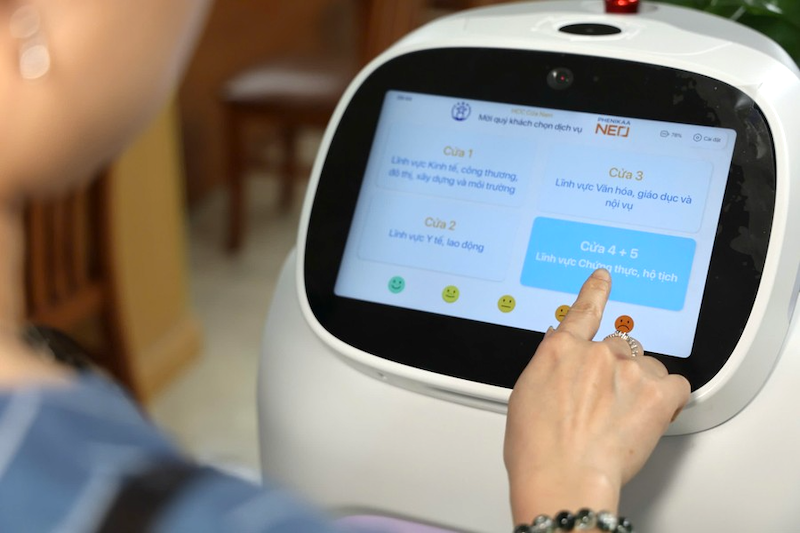
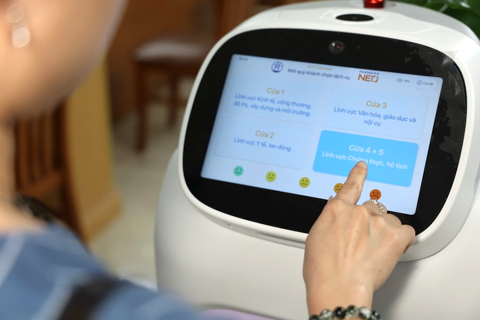
Interface of the Al-powered robot at Cua Nam Ward’s Public Administration Center. Photo: An ninh Thu do Newspaper
In Hanoi's Cua Nam Ward, operations have been restructured to better online services, including the piloting of AI-powered robots to support public service delivery.
Trinh Ngoc Tram, the ward's vice chairwoman, said that community engagement and digital readiness, especially among older residents, have been crucial.
"Many elderly residents are now able to use smartphones to access public services," she said.
She called on Hanoi to prioritize synchronizing local databases with the city’s Intelligent Operations Center (IOC) to build a networked governance system, which would streamline public administration and attract investors across sectors.
Hanoi Deputy Mayor Dung revealed that the city plans to integrate AI into the IOC by September or October 2025 to enhance administrative decision-making and citizen services.
At the seminar, Deputy Minister of Science and Technology Pham Duc Long said that the ministry had identified 25 major issues that arose during the initial implementation of the two-tier model.
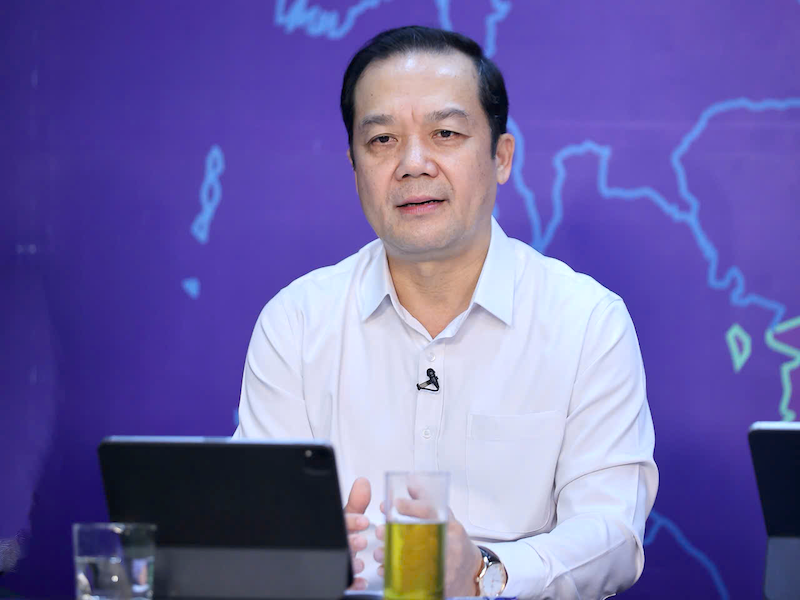
Deputy Minister of Science and Technology Pham Duc Long.
“We will review and address these issues this week,” he said, adding that the government has already allocated funding and resources for the digital transformation drive. Nationwide implementation and cybersecurity measures are underway.
"By the end of the year, we will have synchronized, efficient digital systems that will truly benefit the people," he said.