Hanoi puts digitalization plan into action
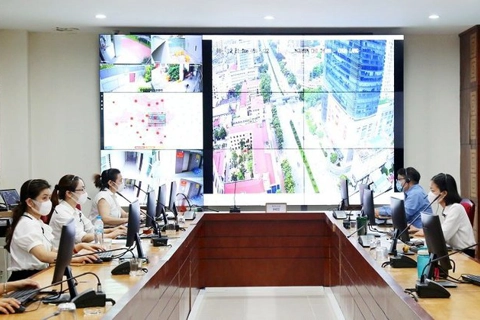
Hanoi is stepping up its efforts to implement the city's plan to go digital by the year 2025.
Hanoi has been actively exploring avenues to implement its digitalization plan and has made notable progress.
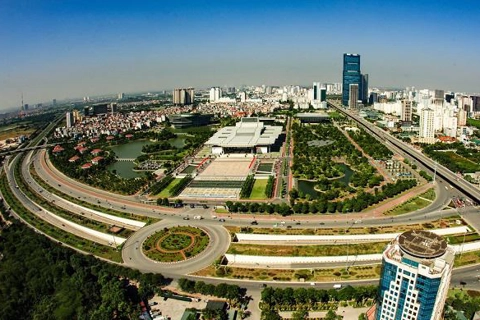
| Hanoi from above. Photo: The Hanoi Times |

One immediate highlight is Hanoi's creation of thousands of community-based digital technology groups, which provide individuals, businesses, and households with basic digital skills training. The result of this proactive approach has been the active involvement of the city's residents in the digital transformation process.
In the transportation sector, Hanoi has introduced GPS devices to monitor the operation of the city's bus system. Radio Frequency Identification (RFID) technology has been used to manage, administer, and inform passengers via audio systems and LED panels on vehicles and in selected waiting areas.
Passengers also benefit from a bus locator application and an online ticketing system.
In addition, Hanoi has implemented traffic infrastructure asset management software and a traffic safety incident and infrastructure damage reporting system (GT247). These initiatives are designed to manage and maintain the city's transportation infrastructure.
In the agricultural sector, the Hanoi Agro-Forestry-Fisheries and Food Traceability System (check.hanoi.gov.vn) have been implemented, and the use of QR codes on mobile devices to trace the origin of OCOP (One Commune One Product) products has been introduced.
These measures enhance the safety and reliability of Hanoi's agriculture, forestry, fishery, and food products. In addition, efforts are underway to establish a common database for the agro-industry.
In the financial sector, Hanoi has developed comprehensive software to monitor the execution of investment projects funded by the state budget. Similarly, sectors including healthcare, tourism, culture, sports, natural resources, environment, planning, architecture, and construction have also made significant progress in their digital transformation journeys.
Experts emphasize that digital transformation is a new and complex area that poses significant challenges for Hanoi, despite the positive results. The city's vast territory and large population make it difficult to build a smart city through digital transformation.
Nguyen Nhat Quang, Vice President of the Vietnam Software and IT Services Association (VINASA), highlights several barriers and obstacles that must be addressed, including the lack of clear concepts, policies, and legal frameworks for digital government, digital economy, and digital society.
Overcoming these challenges and ensuring a change in mindset will enable Hanoi to make rapid progress, Quang said, adding that the lack of an effective and secure investment mechanism is also a major hurdle to implementing specific digital projects.
Without addressing these issues, achieving the city’s digitalization goals set for 2025 will be difficult, Quang said.
Hoang Cong Doan, vice president of the Vietnam Young Entrepreneurs Association, acknowledges that Hanoi's businesses face numerous challenges that hinder the transition process, with financial and human resources being the most significant.
Integrating digitalization in urban development
Dang Duc Mai, Chairman of the Hanoi Informatics and Telecommunications Association, suggests that Hanoi needs to accelerate tasks and solutions to achieve the 2025 goals.
In addition, he said implementing a robust monitoring mechanism is crucial to ensure timely task completion.
By 2025, Hanoi will become a leader in data science and artificial intelligence in the ASEAN region. In digital government development, the goal is to have 100% of administrative procedures available online at stage 4 of the four-stage system, accessible through various means, including mobile devices.
The city expected full connectivity and data sharing between specialized and national databases on population, land, business registration, finance, and insurance.
It aims to achieve a digital economy contribution of about 30% of GRDP by 2025. The target for labor productivity growth is set between 7% and 7.5%. In addition, Hanoi aims to build a robust and thriving innovation start-up ecosystem in the country.
To support the operation of all the city's public services and applications according to the pillars of the digital economy and digital society, Hanoi plans to develop digital infrastructure and build the municipal CLOUD network, a private cloud infrastructure dedicated to the city.
City leaders also emphasized the need to create an enabling environment that encourages businesses to operate digitally and facilitates the creation of successful digital products.
This includes promoting the involvement of large technology companies and other investors in introducing smart technology solutions, such as artificial intelligence and data analytics, to address fundamental challenges in the city.
VINASA's Quang noted that the green and digital transformation process is continuous and ongoing.
"The most important thing is to ensure that the process is economically viable and sustainable. The effectiveness of digital transformation is maximized when it is coupled with appropriate building and management solutions," Quang said.
Immediate actions should focus on promoting the digitalization process in urban development, especially in planning, with the integration of smart technologies in both existing and new infrastructures.
"Regulations should be formulated to create an enabling environment that encourages the active participation of all sectors of society," he said.