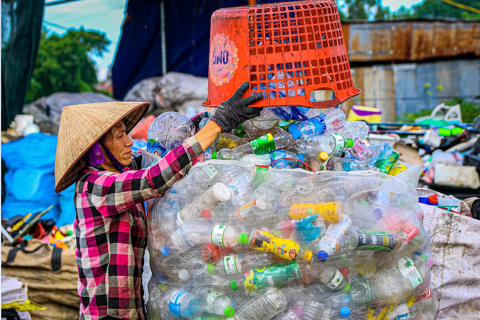
Hanoi’s dirty alleys turn clean as tech and community reshape waste habits
Thanks to smart waste technology and citizen participation, Hanoi is cleaning up its streets and moving toward a more sustainable, livable city.
THE HANOI TIMES — Nguyen Anh Tuan no longer holds his breath when passing Alley 183 on Dang Tien Dong Street. The narrow lane in Hanoi’s Dong Da Ward was once an eyesore, lined with household trash and the stench of rot. “Now it’s clean, with no scattered rubbish,” Tuan said. “It makes a big difference for those of us who live nearby.”
This transformation is no isolated case. In Tay Mo Ward, Le Thi Huong watched the area near Trung Van Secondary School go from a plastic-strewn lot to a tidy public path. “It used to smell terrible,” she recalled. “Now, students can walk through without worry.”
Behind these changes is a coordinated effort by Hanoi’s authorities, sanitation companies, and residents to reform how the capital manages its 7,000 tons of daily waste. With technology, revised routines, and a growing sense of civic duty, the city is turning once-filthy corners into symbols of progress.
Waste no more: a city’s shift in mindset
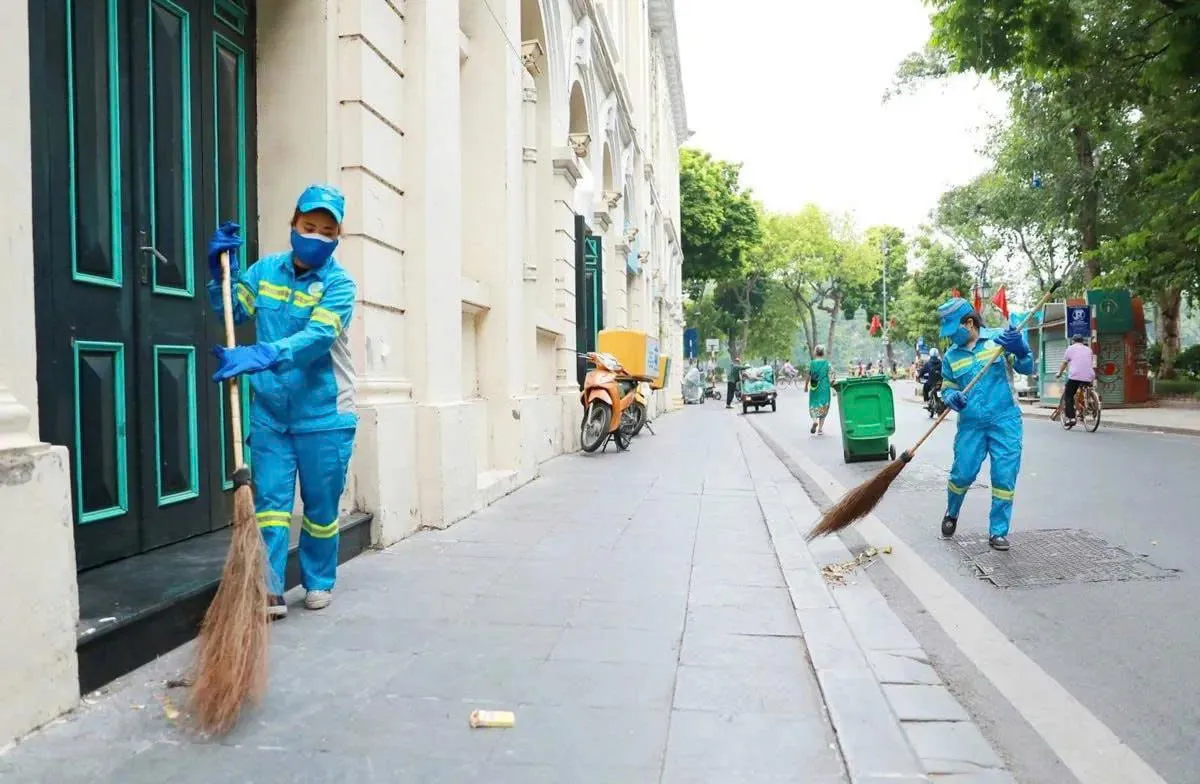
Sanitation workers clean up the area around Hoan Kiem Lake. Photo: Kinh te & Do thi Newspaper
Hanoi is acting on a bold vision to become a green, modern, and livable capital. To do that, the city has removed more than 200 spontaneous dumps and piloted reforms in key districts like Hoan Kiem, Ngoc Ha, Giang Vo, and Bach Mai.
The changes aren’t just cosmetic. A key strategy is rescheduling garbage collection to night hours, which reduces traffic congestion and unpleasant odors. The Hanoi Urban Environment Company (Urenco) has swapped outdated, open carts for sealed, GPS-equipped vehicles and large composite bins to cut down on leakage and smell.
“We used to struggle with heavy lifting and smelly loads,” said sanitation worker Nguyen Thi Hue. “Now we have better vehicles and tools. It’s cleaner, and the work is easier.”
Since switching schedules in 51 out of 73 wards, daily daytime waste volumes dropped from 262 tons to just 67 tons. Pickup points shrank from 141 to 8. Meanwhile, Urenco rolled out 31 new vehicles and added over 2,000 sealed bins, 600 of them in April 2025 alone.
To stay ahead of the city’s annual waste growth from 5 to 10 percent per year, Hanoi has invested in 100 new sanitation vehicles that meet Euro 6 standards or run on electricity. These include road washers, vacuum sweepers, mobile compactors, and dust suppression units.
Launched in June, the vehicles are part of a broader effort to digitize and streamline urban cleaning. A smart monitoring system now operates in 13 inner-city wards, helping managers track vehicle routes and collection points in real time.
Chairman of the Hanoi People’s Committee Tran Sy Thanh said the deployment signals a shift in both operations and attitude. “We’re not just managing waste. we’re building a more livable city,” he said at the launch.
At the same time, enforcement is getting sharper. The city has installed 79 surveillance cameras to deter illegal dumping and plans to add over 200 more. Future initiatives include underground transfer stations and green cleaning solutions, especially around Hoan Kiem Lake.
Still, not all areas are spotless. Longtime problem spots include Thien Duc Hospital in Ha Dong, Alley 148 Trinh Dinh Cuu in Dinh Cong, and the Thanh Cong apartment complex in Giang Vo.
“Sometimes the trash piles up again, especially when it rains,” said Ha Dong resident Do Thi Thao. “But I do think it’s getting better overall.”
Experts warn that while the changes are encouraging, Hanoi still faces long-term infrastructure and policy challenges. “Urbanization has outpaced waste planning,” said Dr. Bui Thi An, Director of the Institute for Natural Resources, Environment, and Community Development.
She emphasized the need to map all collection sites, reform pricing through a “polluter pays” model, and prioritize sustainability in infrastructure decisions.
Dr. Luu The Anh, an environmental researcher at Vietnam National University, told The Hanoi Times that many collection processes are still manual and inefficient. “Until we fully track our emissions and modernize collection, the system will remain under stress,” he said.
Building shared responsibility
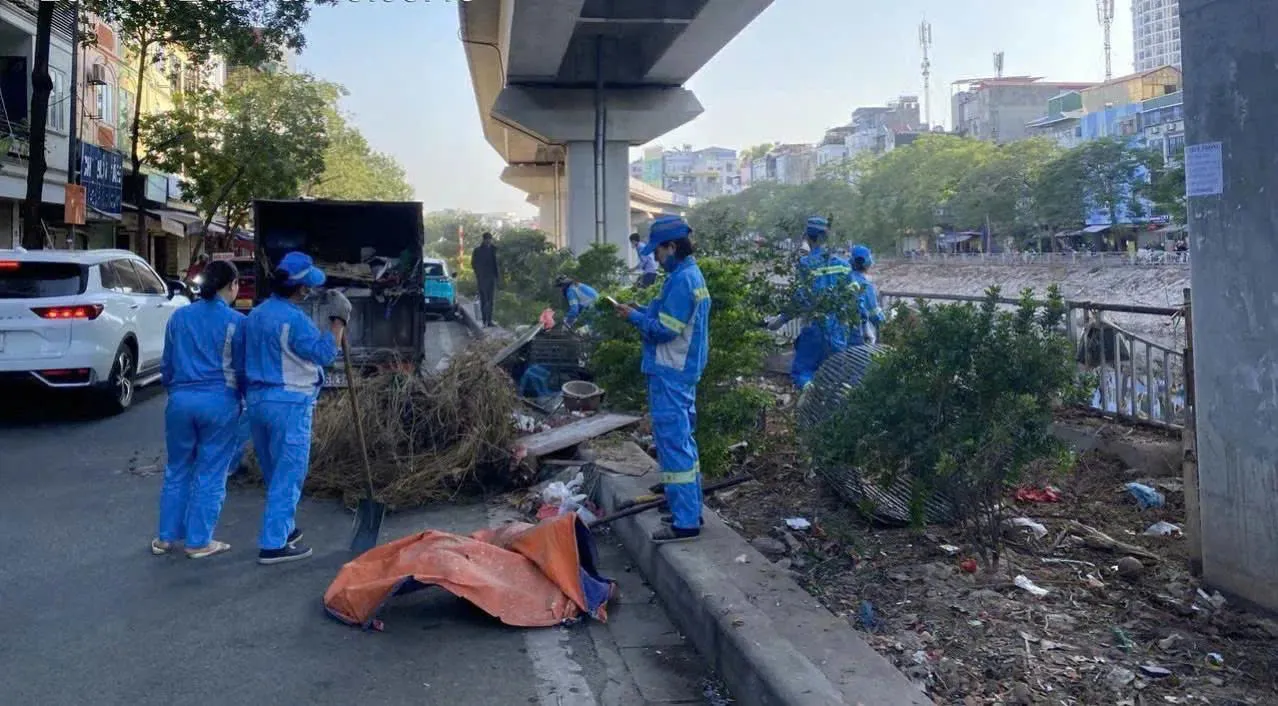
Environmental sanitation workers clean up public areas across the city. Photo: Kinh te & Do thi Newspaper
Vice Chairman Nguyen Trong Dong of the Hanoi People’s Committee said the city remains focused on upgrading its sanitation infrastructure, finalizing procedures to deploy all new vehicles as soon as possible.
Still, officials agree that clean streets require more than technology. They’re calling for active participation from businesses and local communities.
An urged companies to adopt eco-friendly waste treatment solutions and join city-led digital monitoring programs. Meanwhile, Vice Chairman of the Vietnam Urban Planning and Development Association Dao Ngoc Nghiem suggested scaling up grassroots initiatives such as “no-trash streets” and “trash-free neighborhood groups,” assigning cleaning duties to each household block.
“These are not just pilot models. They’re essential,” Nghiem said. “Without community participation, no system can succeed.”
As Hanoi continues its push for a cleaner environment, it is not just machines or policy that will make the difference, but the collective action of millions who call the capital home.
Hanoi’s journey toward a cleaner and greener city is far from over, but the progress is already visible. Once-foul alleys have become walkable again, and modern sanitation vehicles are replacing outdated equipment. The capital is showing that with committed leadership, smart technology, and active public participation, even deeply rooted urban challenges can be addressed.
Difficulties remain, including aging infrastructure, fragmented planning, and the pressures of rapid urbanization. Yet, with every sealed bin, surveillance camera, and community-led initiative, Hanoi is not just cleaning its streets. It is building a culture of shared responsibility and sustainable living that could serve as a model for other cities across Vietnam.