Hanoi’s green canopy shapes urban identity providing shade and evoking memories
Trees in Hanoi are cultural and visual symbols deeply woven into the city’s identity, not just ecological assets.
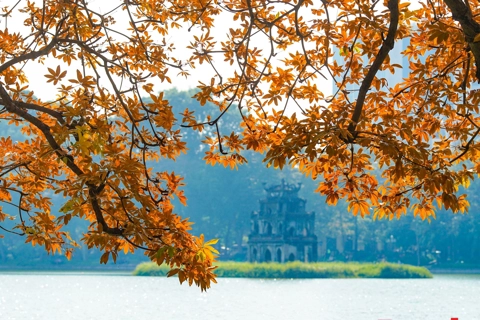
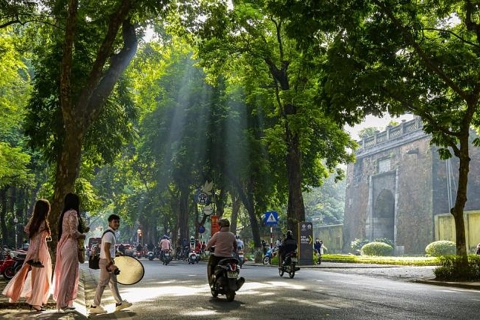
THE HANOI TIMES — On Phan Dinh Phung Street, rows of old trees stretch their leafy canopies over the pavement, white blossoms quietly bloom each season along Phan Chu Trinh, and the tall trunks of black star trees form a straight corridor on Lo Duc. Together, these lush green spaces compose a gentle melody in Hanoi’s urban landscape while providing shade and preserving the vivid memories of this culturally rich city.
Visual ambassadors
As Hanoi shapes its identity as a green, modern, and civilized capital, the city faces the challenge of balancing urban tree planning with expanded urbanization.
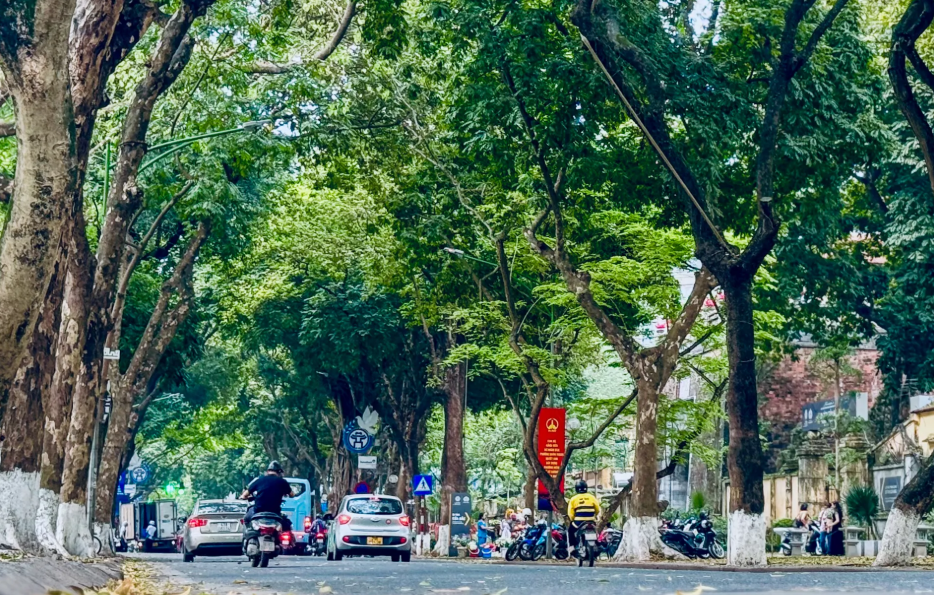
Phan Dinh Phung Street during dracontomelon leaf fall. Photo: Duy Khanh/The Hanoi Times
First-time visitors are often struck by Hanoi's sense of peace and heritage, qualities rarely found in other large cities. Streets such as Phan Dinh Phung, Nguyen Tri Phuong, and Hoang Dieu reflect a natural harmony between modern urban life and lush greenery. Here, trees are more than ecological assets. They are cultural and visual symbols deeply woven into the city’s identity.
Minh Ha, a Vietnamese expatriate from Germany with roots in Hanoi, reminisced about how vivid every street corner and tree was. Many parts of modern-day Hanoi are even more beautiful, boasting colorful, well-spaced, tree-lined streets, becoming favorite backdrops for photography and venues for cultural events, she told the VNA.
In cities around the world, trees serve as visual ambassadors, shaping a city’s identity in subtle yet powerful ways. Examples include Gonçalo de Carvalho Street in Brazil, which is shaded by hundreds of Tipuana trees; the purple jacaranda lanes in Zimbabwe; the ancient baobab avenue in Madagascar; and the vibrant maple-lined roads near Japan’s Lake Kawaguchiko. These streets demonstrate how thoughtful tree planning can transform ordinary roads into destinations in their own right.
Shaping cultural identity
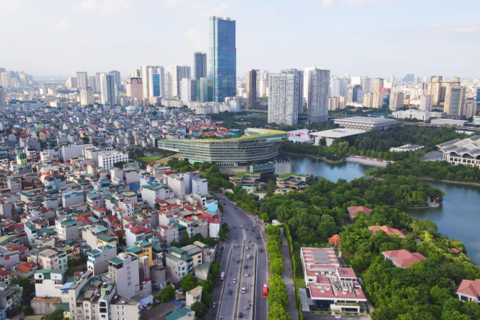
Hanoi is home to around 1.8 million urban trees, which are the city’s “green lungs” and a core part of its landscape and cultural identity. In its development plan through 2030, with a vision to 2050, the capital city envisions reaching 10 to 12 square meters of green space per person.
In recent years, Hanoi's greenery has noticeably improved. New roads, such as Pham Van Dong, Vo Chi Cong, and Vo Nguyen Giap, have been planted with selected trees in modern, natural layouts. Diverse species, such as golden shower trees, dwarf almond trees, date palms, and mountain ebony trees, have been introduced to enrich the urban ecosystem and better withstand the city’s shifting climate.

Rows of small-leaf almond trees planted at the eastern gateway intersection of Hanoi Photo: Anh Tuan/The Hanoi Times
However, experts noted that the main challenge lies not in the number of trees, but in the quality of planning. It’s essential to cultivate distinct landscapes and create green spaces that reflect each area's character.
Dr. Pham Anh Tuan, Chairman of the Vietnam Association of Landscape Architects, suggested Hanoi adopt unique planting strategies for each street and space that draw from local landscape features and weave stories that echo the city’s heritage.
For that reason, it's important to select tree species that are well-suited to the urban environment and replace those that no longer align with safety or design requirements, Tuan told the VNA.
Meanwhile, Professor Ngo Quang De of Vietnam Forestry University pointed out the lack of flowering trees in Hanoi in the winter. He recommended planting species adapted to cooler climates to ensure year-round blooms and vibrant seasonal scenery.
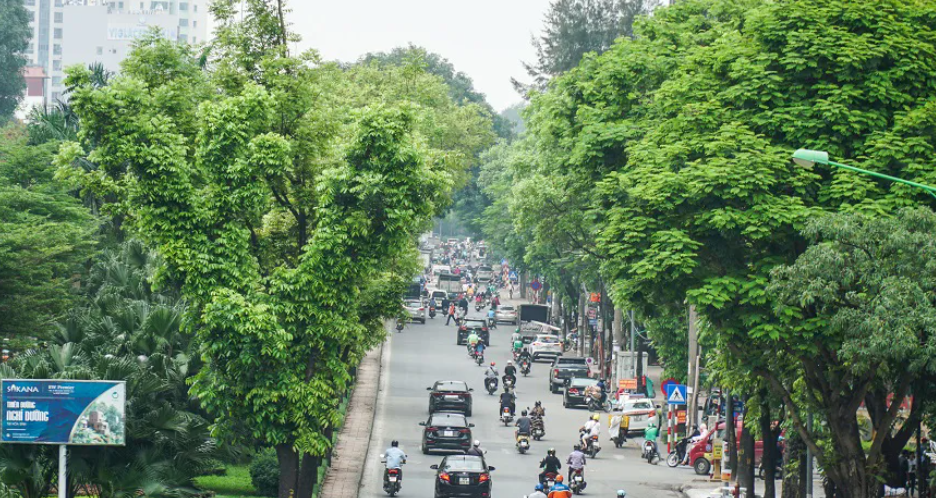
A stretch of Hoang Quoc Viet Street. Photo: Ha Anh/The Hanoi Times
Some have suggested that wider streets with more open space could accommodate large-canopy trees such as chinaberry, dipterocarpus, and golden shower trees. Conversely, narrower streets with slim sidewalks could benefit from smaller trees, vines, or shrub-like plants, such as frangipani, magnolia, or wisteria, to soften the landscape without hindering daily life. Experimenting with symbolic species, such as white tea, red tea, or the rare doi tree (Michelia tonkinensis), could add visual richness and personality to the urban landscape.
Associating each season and neighborhood with signature flower colors like pink trumpet blossoms in spring or fiery red flamboyant trees in summer could create vivid visual memories that deepen residents’ and visitors’ connection to the city.
Inspired by global green urban models, Hanoi can reimagine its streets and riverbanks as walkable, scenic corridors where each season and neighborhood is celebrated with symbolic flowering trees and vibrant charm.
To truly define Hanoi through its greenery, a long-term, integrated strategy involving cultural and tourism planning, cross-sector coordination, and active participation from communities and businesses is essential to create vibrant "green cultural units" across the city.
The approval of the Green Tree, Park, and Lake System Master Plan through 2030 and revisions to the Capital Planning Strategy through 2045 have established a solid legal and planning foundation for green urban growth. Additionally, the 2024 Capital Law promote green investment, encourage privatization of park maintenance, and protect ecological corridors.
Hanoi is expanding its green spaces by aligning local plans and zoning strategies, aiming to plant 500,000 trees by 2025 in ways that reflect each area's identity and cultural memory, where trees like bang and spoonwood are woven into the city’s art, poetry, and daily life.
In the face of climate change and rapid urbanization, choosing a green path is no longer optional - it’s a strategic necessity.
A green Hanoi, where trees provide shade for children, flowers evoke nostalgia for the elderly, and ecological corridors foster sustainable growth, could lay the groundwork for a more livable, meaningful, and human-centered city.