Hanoi’s green shift: A quiet start toward a smarter future
On quiet streets and crowded alleys, the city’s clean mobility odyssey has begun.
THE HANOI TIMES — As Vietnam moves toward its ambitious net zero target by 2050, Hanoi is quietly laying the foundation for a new way of getting around.
While it may not be dramatic or perfect, a long-term shift is beginning to take shape that demands personal habit changes and municipal coordination.

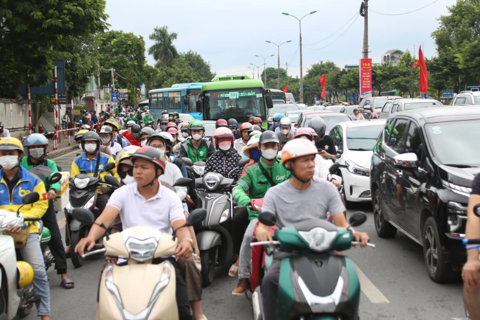
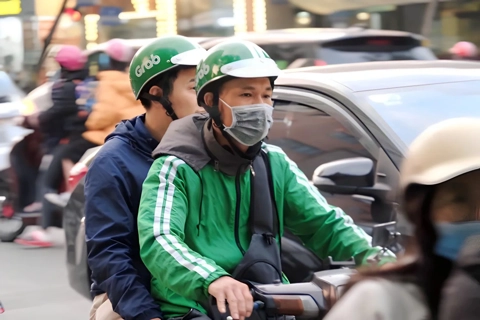
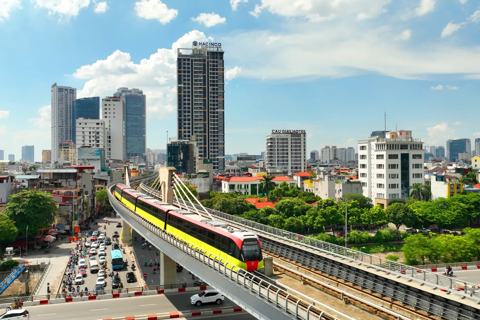
Each morning, Tran Quoc Hung, a resident of Hanoi, starts his day before sunrise. His well-worn, reliable motorbike takes him across the city to deliver packages and pick up clients. "I see the metro up there, moving smoothly and quietly. But down here, I still live on the road."
For many, like Hung, the street is not merely a road but a livelihood, a routine, and a memory. The idea of going electric is appealing, but, as with most transitions, it comes with questions.
In My Dinh, Thanh Khue, 22, rides a compact electric bike to meet clients across the city. "It's light and clean, and I can charge it at home," she said. "Less dust, less noise. That alone is worth it." Still, she keeps her old gas bike in the basement for longer trips or rainy days. "I am adjusting, but I am not quite ready to give it up completely."
Her sentiment is increasingly common. In the past two years, the register of electric bikes in Hanoi has more than doubled. A behavioral shift is quietly underway, affecting not just what people ride but also how they think about movement.
However, that shift is far from simple. Charging stations remain sparse. Many public buildings and older residential areas lack built-in charging points. For households, this often means operating both systems in parallel.
Thu Giang, a 38-year-old mother of two, explained: "Our family keeps one gas bike for weekend trips and one electric bike for daily errands. It saves money, and we pollute less. But, yes, we now manage two systems. We are doing our part, but it is not seamless."
Giang also points out a recurring concern. In some areas, you can cross into a low-emission zone simply by turning a corner. If people do not know exactly where these zones begin and end, it can create unnecessary tension.
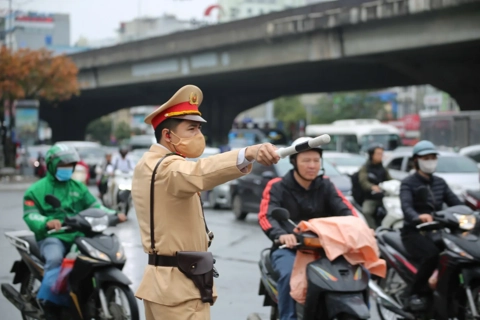
Urban residents have voiced questions about how Hanoi will enforce these areas. The city’s boundaries are complex. Clear communication, public apps, and visible signage are essential to gaining public trust and ensuring smooth adoption.
Online forums have also been abuzz with discussion about switching from gas to electric bikes. While this may seem like a creative shortcut, experts urge caution.
"Technically, it can be done," said Trung Duc, a mechatronics engineer. However, it is not energy efficient, raises safety risks, and lacks proper inspection systems.
Instead of shortcuts, Trung Duc argues for structured, long-term measures. "We need smart vehicle buy-back programs, incentives for low-income earners, and strong recycling systems." The goal is not just to have fewer gas bikes but also to create a smarter, safer ecosystem.
Hoang Duong, CEO of V-Green, a multinational company leading Vietnam’s electric charging infrastructure, supports this view. According to Duong, long-term success will depend on coordinated adaptation from all sides.
Over time, users, urban developers, and apartment management units will modify their practices. New residential projects will increasingly allocate space for electric vehicle (EV) charging, and existing parking zones can be retrofitted with shared charging points. At the same time, individual users will learn to manage charging at home and plan routes accordingly. This shift will be gradual to allow people to adapt.
Compared to Ho Chi Minh City, where green policy is still in the early stages, Hanoi appears to be ahead structurally. The Cat Linh metro line has become a visual symbol of urban ambition.
Electric buses have hit the major roads. Low-emission zones are being mapped and piloted. Conversations about cleaner air and new transportation options are now part of everyday public discourse.
Still, real challenges remain. Informal workers rely on affordable, flexible transportation. Charging infrastructure must be scaled up quickly. Public understanding of green mobility concepts is uneven. Enforcement mechanisms for emissions zones will also require consistent calibration.
Even supporters of the policy worry about how it will be implemented. Hung, a ride-hailing driver, says, "I want to change. But I need to know that I can continue working without interruption. The infrastructure needs to be in place."
That is the heart of the matter." Progress cannot be forced. However, it can be guided. With reliable policy, practical tools, and respect for how people live.
Hanoi’s path to sustainable mobility will not be overnight. It will be an ongoing process that blends technology with daily experience and policy with patience. Cities change not when announcements are made, but when routines evolve.
In this capital of complexity and creativity, even a small shift in how people move can be a step toward something larger. Step by step, that future is already taking shape.