Hanoi’s talent policy signals bold institutional shift toward trust-based public governance
Hanoi’s newly adopted talent attraction resolution marks a strategic turn from traditional personnel policy toward a governance model centered on trust, accountability and measurable results, according to policy expert Nguyen Si Dung.
THE HANOI TIMES — Resolution No. 92, adopted in late January by the Hanoi People’s Council, introduces targeted mechanisms and policies to attract and retain high-quality talent. The resolution articulates Hanoi’s development vision and institutional mindset for a new growth phase, marking the capital’s determination to build competitive, open and credible mechanisms that encourage long-term commitment from talent.
Dr. Nguyen Si Dung, member of the Prime Minister’s Policy Advisory Council and former Vice Chairman of the National Assembly’s Office, shares his analysis with Hanoimoi Newspaper on the resolution’s strategic significance and the conditions required for effective implementation.
How do you assess the need for Hanoi to issue a separate resolution on attracting and retaining talent in the current context?
This resolution responds directly to current development realities and signals a decisive shift in institutional thinking. As competition among major cities intensifies, traditional advantages such as land and capital are increasingly outweighed by intelligence, creativity and leadership capacity.
If Hanoi aims to become a center for innovation and knowledge-based growth, it must attract people capable of designing policy, executing reforms and solving increasingly complex urban challenges.

An electronic production line at the Hoa Lac Hi-Tech Park in Hanoi. Photo: Thanh Hai/The Hanoi Times
Issuing a dedicated resolution shows Hanoi has moved beyond a one-size-fits-all mindset toward tailored policy design aligned with the capital’s unique role. This reflects modern governance: identifying the right problem, choosing the right tools and creating mechanisms that compete on substance within existing legal boundaries.
More importantly, the resolution sends a clear message that Hanoi views talent as a development partner. The city offers opportunity, trust and long-term space for contribution. In this sense, the policy goes beyond personnel management and becomes a strategic decision about Hanoi’s future.
Today’s talent seeks value creation space alongside income. Many capable people leave public administration not because of pay, but due to rigid procedures, risk aversion, limited autonomy and symbolic evaluations. They need authority matched to competence, room to experiment within limits and assessment based on results rather than seniority or paperwork.
Hanoi’s resolution directly addresses this core constraint. It moves beyond financial incentives to focus on building an enabling environment by linking policy to concrete tasks, measurable outputs and flexible mechanisms for assignment, evaluation and the utilization of talent. It also allows capable individuals to participate directly in major city-level projects.
While no single document can create an open system, a policy that places trust, responsibility and results at its core establishes a solid foundation for long-term talent commitment and performance.
In modern governance, talent represents a strategic resource. When placed in key areas, capable individuals create spillover effects by improving standards, thinking and system capacity.
Hanoi’s focus on science and technology, digital transformation, urban planning, public administration, education and healthcare reflects a clear understanding of future growth drivers. Decisions in these areas affect millions of residents and businesses for decades.
Targeting the right fields allows Hanoi to shift from incentive-based competition to competition based on institutional capability. When talent occupies the right positions, it solves immediate problems while building long-term advantages that sustain the capital’s attractiveness in global knowledge competition.
The policy links incentives to outputs and commercialization results. What does this reflect about Hanoi’s talent management thinking?
This marks a fundamental shift. Traditionally, public-sector incentives tied rewards to degrees, positions and tenure, while real contributions proved difficult to measure. That approach weakened motivation and encouraged risk avoidance.
Hanoi’s new model treats talent as a co-creator of public value. Allowing benefit-sharing from research outcomes and commercialization recognizes intellectual contribution as a form of capital. While common in the private sector, this approach represents a breakthrough in public governance.
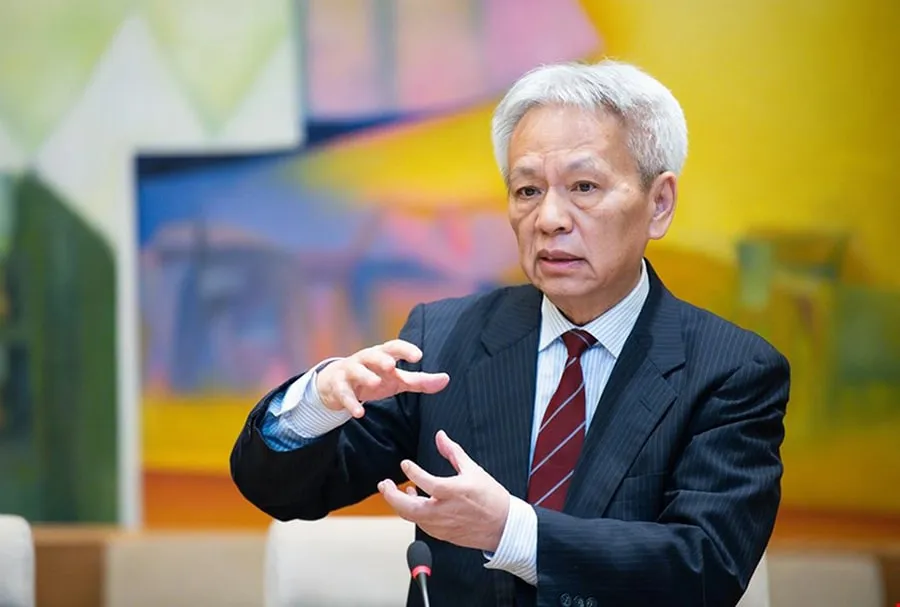
Dr. Nguyen Si Dung, member of the Prime Minister’s Policy Advisory Council.
Linking incentives to concrete outputs also creates a natural filter. Capable individuals gain motivation to contribute, while those seeking symbolic benefits struggle to remain. Institutionally, this shifts management from controlling people to managing results and value creation.
The policy also embeds incentives within a broader ecosystem. Housing reduces settlement pressure, education and healthcare support family stability, while working conditions, creative space and access to data and technology directly affect performance.
This reflects a modern governance view that talent operates within a social ecosystem, not in isolation. Rewards differ by responsibility and impact, ensuring fairness through contribution rather than equality in form.
High pay matters, but trust, authority and professional environments matter more. Many capable people accept lower income if their skills are respected, ideas heard and results evaluated fairly. Authority here means permission to experiment, take responsibility and be judged by outcomes.
Hanoi’s challenge lies in balancing incentives and empowerment. Financial rewards must remain competitive but tied to accountability and results. The city must also maintain a transparent, professional workplace where capable individuals receive trust and space to innovate.
When material incentives align with institutional trust, talent identifies its success with the city’s success. This alignment ensures long-term commitment.
Hanoi plans to establish selection and evaluation councils. How should oversight be designed to avoid formalism?
Evaluation must center on results and accountability, not profiles or perception. Each recruited individual should carry defined tasks, clear goals and measurable outputs. Selection councils must assess what problem the candidate can solve for the city.
Council composition should ensure diversity and relative independence, combining administrators, technical experts and practitioners. These bodies should operate continuously, monitor progress and decide whether to continue, adjust, or end policy application based on outcomes.
Oversight must include transparency and feedback. Evaluation results should remain verifiable, with channels for employers, colleagues and beneficiaries to reflect on performance.
If Hanoi operates these councils as genuine professional institutions, with results as benchmarks and accountability as safeguards, selection mechanisms will build public trust in a fair and effective civil service.
How can Hanoi build an organizational culture that truly values talent?
Hanoi must shift toward a culture that measures value creation rather than procedural safety. Leadership must institutionalize respect for competence through consistent actions, protecting initiative and responsibility-taking.
Organizational culture grows from how systems treat contributors, not from slogans. Leaders who defend innovation and accountability gradually replace risk avoidance with collaboration and learning.
Work should organize around cross-sector teams, projects and measurable outcomes. When goals and results drive cooperation, differences in ability or perspective become strengths rather than threats.

Two students of Viet Duc High School in Hanoi perform their chemical experiment. Photo: Nam Du/The Hanoi Times
The city must view the presence of talent as a chance to raise system standards, not personal competition. An open, debate-driven environment allows talent policy to become an internal engine of reform.
Success depends less on incentive size than on three core factors.
First is consistency between policy promises and actual practice. Many systems offer attractive policies on paper but trap talent in outdated structures and procedures.
Second is authority matched with responsibility and results. International public-sector talent accepts risk when institutions provide trust and clear action space.
Third is organizational culture. Effective civil services respect expertise, encourage policy debate and treat difference as a resource.
For Hanoi, the key risk lies in letting new policies become constrained by old habits. Reform must address people and systems together. Only then will talent policy drive genuine governance upgrading.
If implemented correctly, the resolution will help Hanoi build a new generation of officials, experts and managers guided by competence, outcomes and responsibility rather than tenure.
The deeper expectation is a shift in governance logic—from managing people to enabling value creation. When talent receives trust, system-wide capacity rises. That represents the most durable gain.
This approach offers valuable institutional lessons for other localities. The key lies in policy philosophy: linking talent attraction with governance reform, flexibility with accountability and incentives with outputs.
At a national level, Hanoi’s experiment may provide practical input for civil service reform. A successful pilot creates evidence for broader institutional change.
Viewed this way, Hanoi’s talent policy tests a new governance model centered on capability, results, trust and responsibility. If successful, it will stand as a meaningful contribution to Vietnam’s public-sector reform trajectory.
Thank you for your time!