Hanoi’s To Huu Museum honors poet’s legacy at 105th anniversary
The To Huu Museum in Hanoi will celebrate the 105th birth anniversary of Vietnam’s revolutionary poet with exhibitions and tributes that highlight his intertwined political and literary legacy.
THE HANOI TIMES — The To Huu Museum in Hanoi will mark the 105th birth anniversary of the revolutionary poet on October 3 with a ceremony attended by Party and State leaders and the opening of the exhibition “Stamps and Poetry: To Huu’s Imprints over the Years.”
Since its establishment in October 2020, the museum has welcomed thousands of visitors, from students reading poems and writing calligraphy inspired by his works to researchers studying his political and literary legacy.
The upcoming anniversary adds new significance to a space that preserves the intertwined life of a poet and politician who used verse as a weapon of revolutionary struggle.
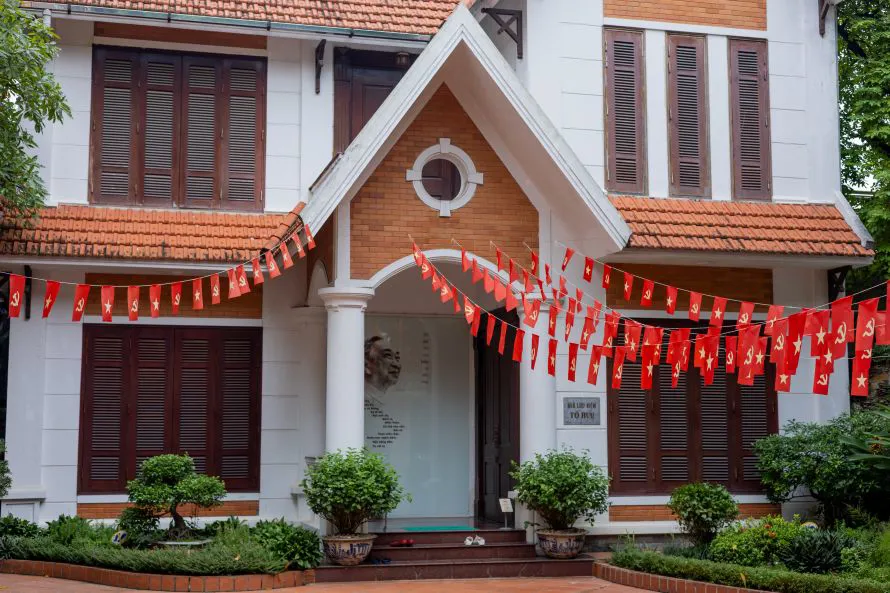
To Huu Museum is located at Building D9, Thang Long International Village, Dich Vong Ward, Hanoi. Photos: Ngo Minh/The Hanoi Times
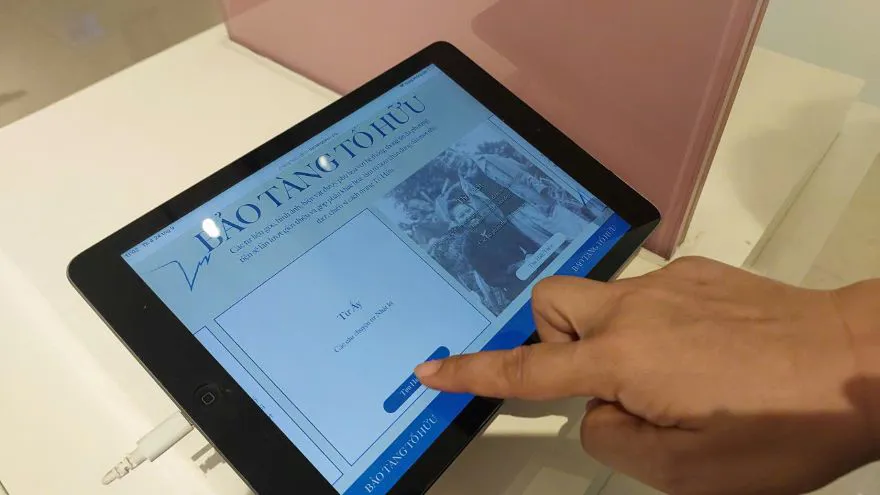
Located at Building D9, Thang Long International Village in Dich Vong Ward, Hanoi, the To Huu Museum offers visitors a multi-dimensional experience through manuscripts, images, memorabilia, and audio-visual displays.
Unlike many museums, it employs an automated commentary system with translations in several languages, quoting only To Huu’s own poems, memoirs, contemporaries and family members, rather than curators’ opinions.
Museum deputy director Pham Kim Ngan said that the place is special for not using comments and opinions of museum staff but completely quotes the poet's poems and memoirs, along with statements from the poet's contemporaries and the children's sharing about him.
“Each artifact has its own value and story, clarifying To Huu's personality and career. Personally, I find the red shoes of To Huu's first daughter very special, bringing me many emotions, because these shoes represent the deep love between father and daughter, husband and wife,” said Ngan.
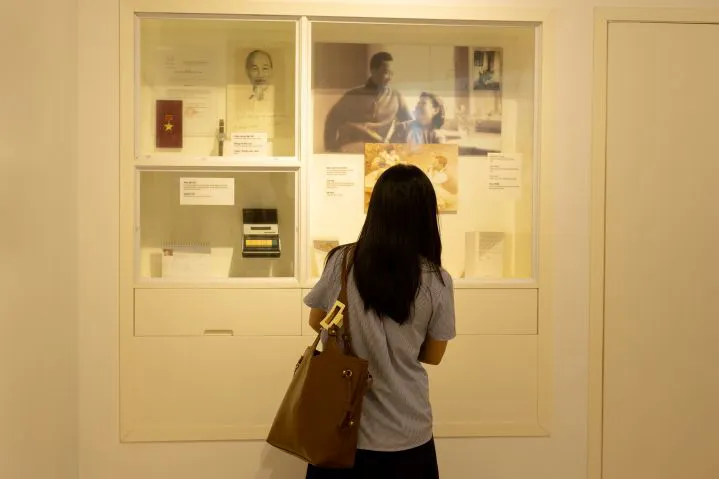
The museum consists of two main sections. The first displays his life and career through seven poetry collections tied to Vietnam’s revolutionary periods. With original documents, artifacts, and a multimedia system, it shows how his works became an endless source of motivation for soldiers and citizens alike.
The second section recreates part of the family home at 76 Phan Dinh Phung Street, where To Huu lived from 1960 until his death in 2002. Visitors can see the living room where he welcomed colleagues and artists, and the desk where his last translated poem remains open.
Born Nguyen Kim Thanh in 1920 in Hue, To Huu embraced communist ideals early, becoming leader of the Democratic Youth Union before joining the Indochinese Communist Party in 1938. Arrested by French colonialists in 1939, he was imprisoned in the Central Highlands until his escape in 1942.
His revolutionary and literary careers developed side by side. Over decades, he held senior political positions and was recognized with the Ho Chi Minh Prize for Literature and Arts in 1996 and the Gold Star Medal, the nation’s highest honor.
To Huu once described his life as inseparable from poetry and the Party: “All my life, I strive for the cause of national independence and communist ideals. Along with revolutionary activities, I write poetry. For me, the Party and poetry are lifelong love.”
For his family, the museum serves not only as a memorial but also as the fulfillment of his wife Vu Thi Thanh’s wish to safeguard his legacy. Eldest daughter Nguyen Thanh Hoa recalled that after To Huu’s death in 2002, her mother carefully preserved his manuscripts and memorabilia.
“She wanted a space for children and grandchildren to remember him, and also to share aspects of his personality with the wider public,” said Hoa.
Among the most moving exhibits are the red newborn shoes To Huu bought before his first child’s birth in 1955. While he was away on a work trip, his daughter grew too quickly to wear them. He kept the shoes in a box for decades, a symbol of longing and paternal love.

Youngest daughter Nguyen Minh Hong described him as a devoted father despite his demanding public life.
“At the museum, there are many family photos without him because he was always behind the lens. He cut our hair himself and cared for us in small, daily ways,” she told The Hanoi Times.
“He gave us freedom to choose our own paths, whether in literature or science. When we made mistakes, he listened first rather than scold. From him, I learned mutual respect within the family,” she added.
Beyond honoring a national figure, the museum is designed as a learning space. Students regularly visit to read his poems, practice calligraphy, and reflect on the revolutionary spirit that shaped modern Vietnam.
For visitors, the museum offers history lessons, providing an intimate portrait of a man whose verses fueled the nation’s struggles while shaping its cultural identity. Through artifacts, recreated living spaces and stories preserved by his family, To Huu emerges not only as a poet and politician but also as a husband, father, and human being.
As Hanoi prepares to celebrate his 105th birth anniversary, the To Huu Museum stands as both a cultural landmark and a living classroom, ensuring that the poet’s voice, woven into the fabric of the nation’s history, continues to resonate with generations to come.