Hanoi's traffic jams cost at least $1 billion a year
Traffic congestion in Hanoi causes economic losses, increases logistics costs, worsens air pollution, and reduces productivity.
The Hanoi Times — Traffic congestion in Hanoi causes annual economic losses of US$1 billion to $1.2 billion, said Dau Anh Tuan, Director of the Legal Department of the Vietnam Chamber of Commerce and Industry (VCCI).
He said that traffic congestion severely impairs productivity, increases logistics costs, and reduces business competitiveness.
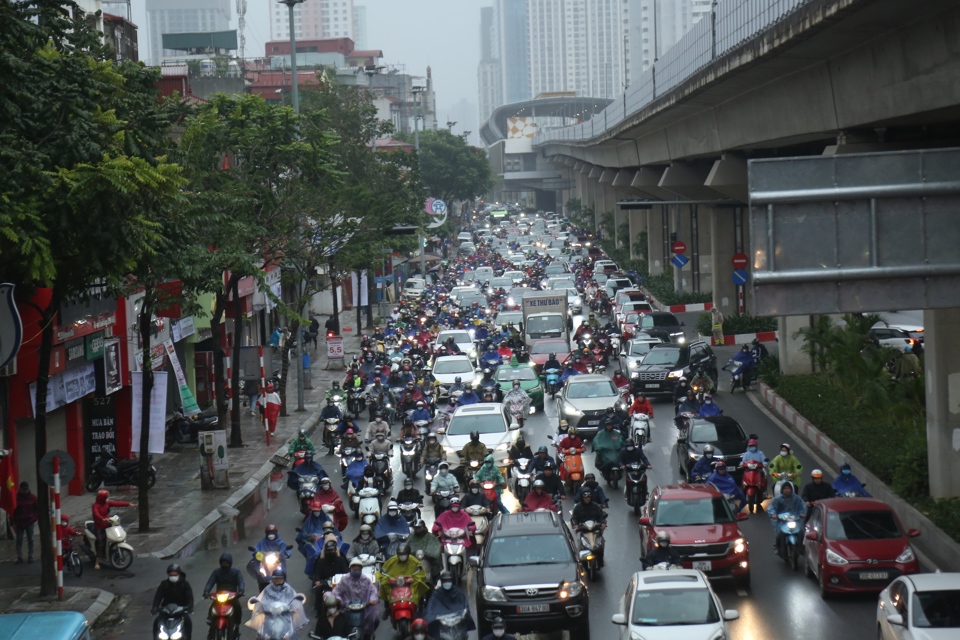
A street in Hanoi during rush hour. Photo: Pham Hung/The Hanoi Times
A VCCI survey found that workers in Hanoi spend an average of 30-60 minutes per day in traffic congestion, resulting in lower productivity and higher operating costs. Logistics costs in Hanoi are 15-20% higher than in Ho Chi Minh City, largely due to congestion and inadequate infrastructure, posing a significant challenge to the capital's economic growth.
Congestion and urban challenges
Hanoi is struggling with an overburdened transport infrastructure, driven by a rapid increase in the number of private vehicles. In 2024, the city had 7.6 million motorcycles and over one million cars, with the number of vehicles growing by 8-10% annually. However, road expansion has not kept pace with this growth, resulting in severe congestion on key routes. At the same time, the public transport system remains underdeveloped and unable to cope with the growing number of commuters.
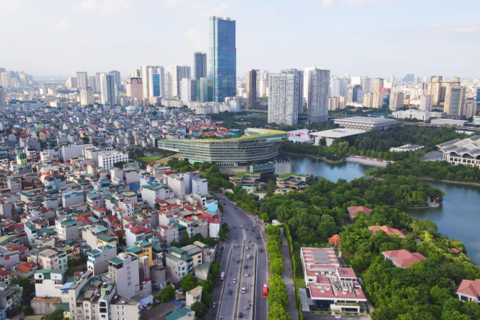
In addition to traffic congestion, Hanoi faces a lack of green space, parking, and social infrastructure. The city center is densely populated, while satellite neighbourhoods have yet to attract a significant number of residents and businesses. This imbalance further strains existing infrastructure, exacerbating congestion and driving up operating costs.
"Hanoi must continue to streamline administrative procedures and remove unnecessary regulatory barriers," Tuan told the workshop titled "Promoting the Highest Economic Growth in 2025 and Striving for Double-Digit Growth in 2026-2030" last week.
These efforts should aim to cut administrative processing times by at least 30% by 2025, allowing businesses to reduce operating costs and become more competitive."
Tran Dinh Thien, former Director of the Vietnam Institute of Economics, said that despite Hanoi's potential in science and technology, unresolved traffic congestion and ineffective urban planning could threaten the city's long-term economic sustainability.
Besides economic losses, traffic congestion poses serious environmental and public health risks. Hanoi's air pollution has reached alarming levels, with vehicle emissions a major contributor. Prolonged traffic congestion wastes fuel and increases toxic emissions, affecting air quality and public health.
Environmental expert Hoang Xuan Co said traffic congestion is a major contributor to Hanoi's worsening air pollution. Emissions from millions of idling vehicles increase levels of fine particulate matter (PM2.5), which has a significant impact on lung health. Without effective measures to control traffic and improve public transport, the situation is likely to worsen.
Solutions
Experts and businesses have proposed several solutions to mitigate the economic losses caused by congestion. One of the key recommendations is to accelerate major transportation projects, including the expansion of ring roads, expressways and interprovincial highways. It's also important to invest in the public transport network to increase public transport ridership to 30% by 2030 and reduce dependence on private vehicles.
Urban planning reform is another key measure. Nguyen Ngoc Quang, an urban planning expert, said Hanoi must focus on decentralizing urban areas by developing suburban districts and satellite cities to relieve pressure on the downtown area. A sustainable city cannot continue to expand in a fragmented manner, but requires a strategic cluster-based urban model integrated with a modern public transport system.
Technology also plays a critical role in solving traffic congestion. Hanoi has approved the Smart Traffic Management Initiative, which aims to establish a centralized traffic management center this year. With an existing and expanding intelligent transportation system (ITS), the city hopes to optimize traffic flow, reduce travel time, and minimize congestion.