Hanoi GRDP growth expands by 8.16% in 2025
GRDP per capita in 2025 at current prices reached VND179.2 million (US$7,467), up 10% from 2024.
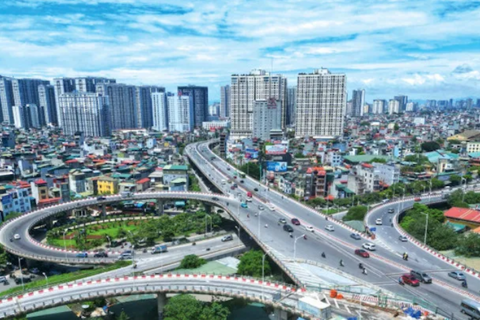
THE HANOI TIMES — Hanoi recorded strong economic momentum in 2025, with its gross regional domestic product (GRDP) growing 8.16% and the city’s economic scale reaching US$69 billion, the second largest nationwide.
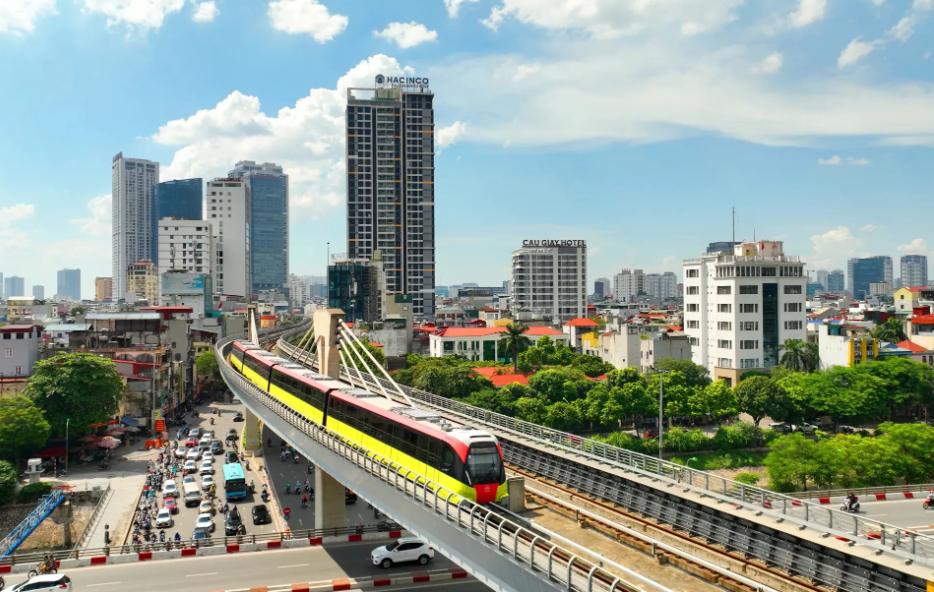
Nhon - Hanoi Railway Station metro line. Photos: Pham Hung/The Hanoi Times
According to the Hanoi Statistics Office, the city’s GRDP growth in the first quarter reached 7.41% compared with the same period last year, followed by 8.13% in the second quarter, 8.85% in the third quarter and 8.15% in the fourth quarter.
Growth in 2025 reflected relatively balanced contributions from all three economic sectors, including services, industry and construction and agriculture, forestry and fisheries.
In agriculture, despite adverse impacts from natural disasters and climate change, the sector recorded growth of 3.55%, the highest level in the past five years and contributing 0.07 percentage points to overall GRDP growth. This outcome reflected a shift toward an agricultural economy model, wider application of modern technologies and a focus on sustainable development.
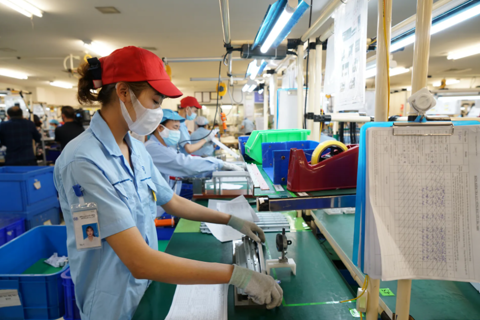
Industrial production showed a clear recovery and emerged as a bright spot of the economy. The industrial production index in 2025 increased by 7.2%, the highest rate since the Covid-19 pandemic, highlighting the effectiveness of policies supporting businesses, promoting technological innovation, digital transformation and modern, green industrial development.
Overall, the industry and construction sector was estimated to grow by 7.46% year on year, contributing 1.59 percentage points to GRDP growth.
The services sector continued to serve as the main pillar of the capital’s economy, recording full-year growth of 8.83% and contributing 5.89 percentage points to overall GRDP growth. Total retail sales of goods and consumer service revenue in 2025 reached VND962.9 trillion (US$40.1 billion), up 12.7% from the previous year.
Tourism also posted impressive growth across visitor numbers, revenue, accommodation capacity and tourism products, alongside stronger promotion efforts. These results reinforced Hanoi’s position as a leading regional and global destination, with several major international awards.
“This shows that Hanoi’s economic structure continues to be strengthened toward balance and sustainability,” said Nguyen Thuy Chinh, Deputy Head of the Hanoi Statistics Office.
In addition, GRDP per capita in 2025 at current prices reached VND179.2 million (US$7,467), up 10% from 2024.
Alongside production growth, major macroeconomic balances remained stable. Total state budget revenue collected in the city in 2025 was estimated at VND704.1 trillion ($29.3 billion), exceeding the revised estimate by 37% and rising 42.6% year on year.
Foreign direct investment also surpassed the annual plan, reaching $4.4 billion, about 1.5 times higher than the previous year and ranking fifth nationwide.
The city’s economic structure continued to shift strongly toward services, the digital economy, financial technology and green and sustainable development, Chinh said.
Public investment was accelerated, with a focus on removing procedural bottlenecks. State budget investment managed by local authorities reached a nationwide high of VND94.2 trillion (US$3.9 billion), up 29.9%.
According to the statistics authority, the 2025 results provide an important foundation for a new phase of development that is sustainable, modern and deeply integrated.
In 2025, around 43,600 enterprises were newly registered or resumed operations, exceeding the number of firms exiting the market by 13.8%. This positive signal reflects renewed economic vitality and healthier restructuring within the business sector.
Average CPI growth in 2025 stood at 3.63%, indicating effective price management and inflation control. Price increases remained within target levels, supporting macroeconomic stability and easing pressure on residents and businesses, despite external market fluctuations and domestic factors such as public service prices in healthcare and education.
Meanwhile, social investment continued to expand, with participation from the public sector, private sector and foreign-invested sector. Improvements in the business environment and administrative reform helped the city maintain its appeal to investors and create additional momentum for future growth.
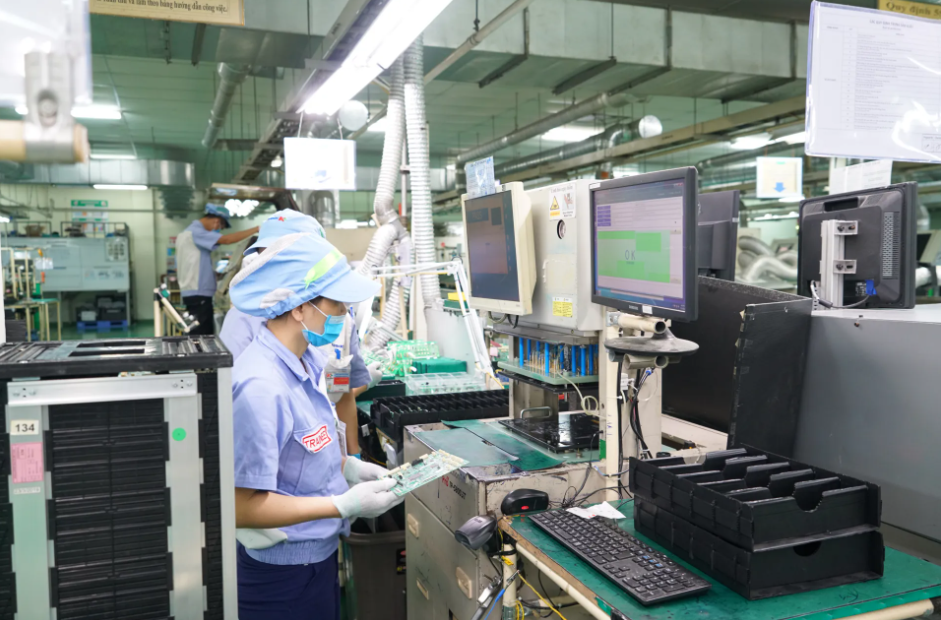
Production activities at Quang Minh Industrial Park in Hanoi.
Double-digit growth target for 2026
Entering 2026, the first year of the 2026–2030 socio-economic development plan, Hanoi is renewing its development mindset and focusing on growth quality, targeting over 11% GRDP growth and moving toward sustained double-digit expansion.
Prime Minister Pham Minh Chinh said the goal requires maximizing existing growth drivers while developing new ones, with growth based on quality, innovation and productivity. Priority sectors include industry, construction, wholesale and retail, accommodation and food services, transport and entertainment, supported by public investment and faster implementation of major infrastructure projects.
Hanoi is restructuring its economy by prioritizing services through digitalization, expanded e-commerce and tourism development, while shifting industry toward information technology, key industrial products and stronger investment in high-tech zones, research and development, healthcare, high-quality education and green urban development.
Accordingly, the city plans to establish three national-level tourism zones and three to five city-level zones, develop new tourism products and enhance craft village value through standardized data, traceability systems and e-commerce platforms.
It also aims to foster around 5,000 innovative startups, prioritizing artificial intelligence, semiconductors, supporting industries and the green economy, alongside cooperation with global technology corporations.
In addition, improving the investment and business environment remains a priority through effective implementation of the 2025 Capital Law, the Capital Master Plan, administrative reform, digital transformation and green growth.
Nguyen Hoang, Chairman of the Hanoi Supporting Industries Business Association, said the city’s 2026 targets of 11% GRDP growth and 9.5% industrial growth create a major opportunity for supporting industries to achieve a breakthrough and contribute more strongly to national growth.
| “The year 2025 marks solid recovery for Hanoi's economy with broad-based progress in the digital economy, urban development and social welfare. Robust growth and budget revenue reinforced the city’s role as a leading economic and social center and laid a firm foundation for sustainable development.
Continued institutional reform and improvements to the business environment are expected to boost entrepreneurship, attract investment and accelerate the shift toward a more efficient, technology- and innovation-driven economy, supporting faster growth momentum in 2026,” Tran Dinh Thien, member of the Prime Minister’s Economic Advisory Group and former Director of the Vietnam Institute of Economics. |