Hanoi sees alternative to private vehicles in metro lines
The capital plans to build 14 metro lines totaling 610km by 2065.
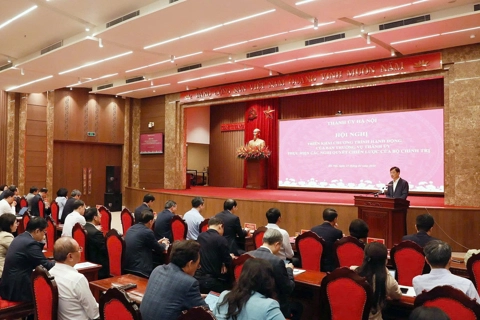
Hanoi authorities expect the development of metro lines to be the key solution to curb private vehicles in the future and make urban transportation green and smart, a workshop heard this week.
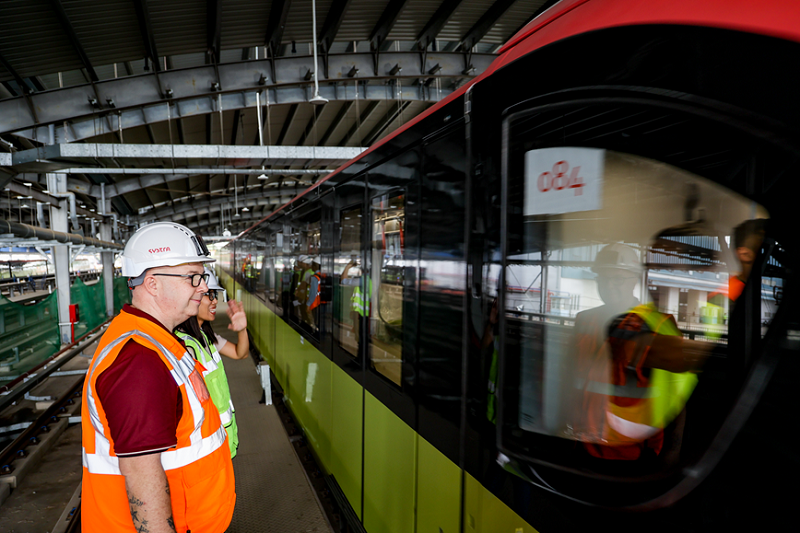
| Foreign specialists assist the test run on the Nhon-Hanoi Station metro line. Photo: The Hanoi Times |
According to Le Xuan Rao, Chairman of the Hanoi Union of Science and Technology Associations (HUSTA), the next step is to develop route plans by estimating the number of metro passengers compared to other public transport.
"Many cities around the world have come up with science-based solutions and well-planned scenarios to phase out private vehicles in urban areas," he said.
"Metro projects often require huge investments, so priority should be given to building the lines in metropolitan areas (before extending them to the suburbs)."
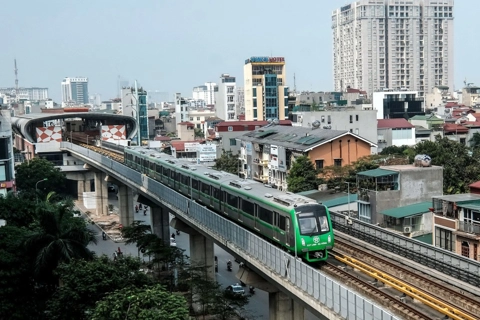
At present, Hanoi has only one metro line in operation, the Cat Linh-Ha Dong, which was commissioned in November 2021.
The city government expects to build 13 more metro lines by 2065, with a total length of 610km. The Nhon-Hanoi Station line is currently in trial operation and is expected to be fully operational by the end of this year.
After more than a year of operation, the Cat Linh-Ha Dong metro has marked a great progress for the public transport sector, said Vu Hong Truong, Chairman and General Director of Hanoi Railways Company.
According to him, the average daily ridership on weekdays is 35,000-36,000, and on Saturdays and Sundays it is around 24,000-26,000 passengers per day. During rush hours, the average number of passengers is 6,000-8,000 per hour and about 70% of the passengers are monthly commuters.
"Many people admit that they walk to the stations, which is good for their health. But we need a wide range of interchanging means, including buses and taxis, to make going to the metro station more convenient," Truong said.
"In addition, we should have a clear regulatory framework that regulates incentives for investors and facilitates better development of TOD-style public transport. Meanwhile, ticket prices should be kept stable," he added.
| Passengers waiting to board the Cat Linh-Ha Dong train. Photo: Pham Hung/The Hanoi Times |
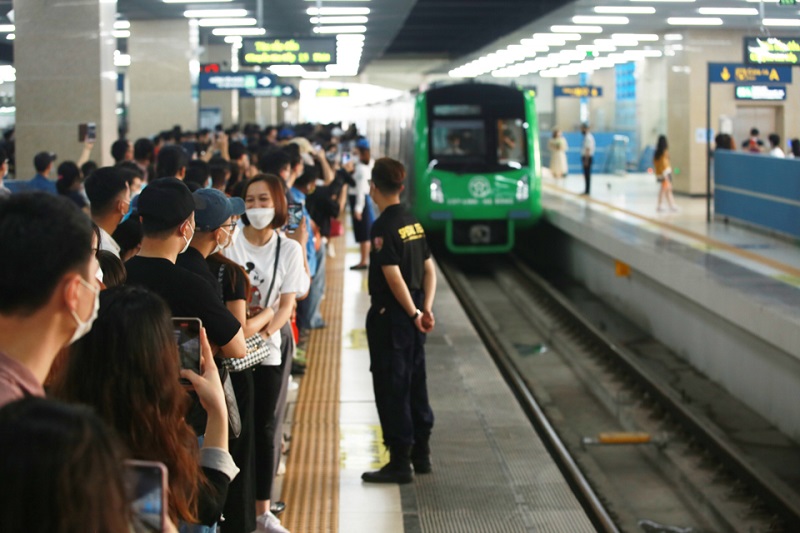
Despite its convenience and ease of use, the Cat Linh-Ha Dong metro line has not lived up to public expectations.
According to Nguyen Van Thai, an official from the Hanoi Metropolitan Railway Management Board, the line is not well connected with other lines in the master plan, such as Nhon-Hanoi station, to create a closed network of mass transit for people.
The key point, he said, is to determine the transfer terminals between lines before construction begins.
"Hanoi needs a technical ticketing system for all metro lines that can be used for all types of public transport in the future," said Thai. "The biggest obstacle in mass transit projects is land clearance or land requisition."
Land clearing should be a stand-alone project so that land is acquired before the main project starts, he added.
Another problem is funding, as the construction of a metro line requires a huge amount of capital, according to Le Hong Son, deputy chairman of the Hanoi People's Committee.
He said Hanoi could seek funding through public-private partnership (PPP) deals and official development assistance (ODA) loans.
But TOD (Transit Oriented Development) model will be the key to the problem for its advantages, he said.