14TH NATIONAL CONGRESS OF THE COMMUNIST PARTY OF VIETNAM
Log in
Hanoi

Hanoi should expand green space for sustainable urban development: Experts

Hanoi needs to develop green belt through urban agriculture solutions.

The importance of green space, one of the models to ensure sustainable urban development, has been clearly stated in the Master Plan for the Capital Construction to 2030, with a vision to 2050. Experts stressed that Hanoi should expand green space for sustainable urban development.

The Master Plan was approved by the Vietnamese Government in 2011 in Decision No. 1259/QD-TTg which  set the orientation for Hanoi's urban development. Accordingly, the metropolitan areas are separated from towns in the suburbs by a green belt.


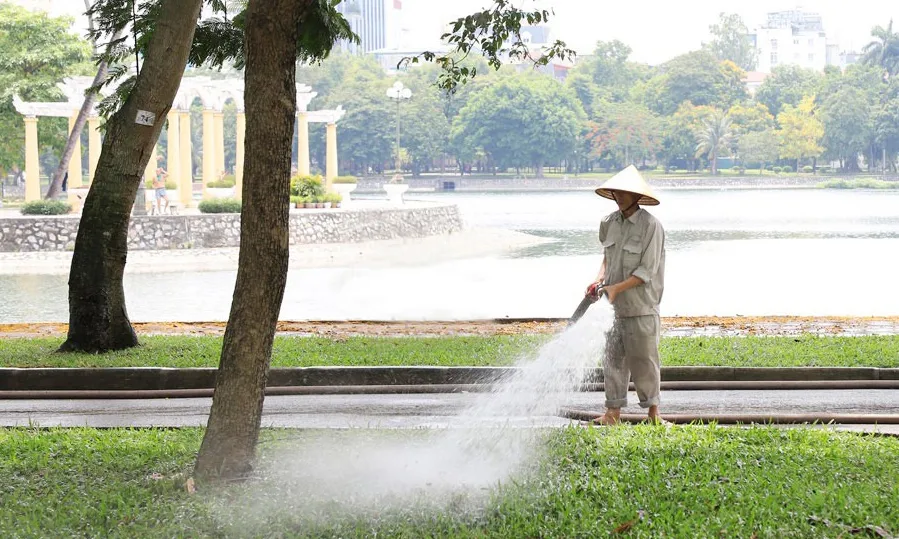
A worker is watering lawns at Thong Nhat Park in Hanoi’s Hai Ba Trung District. Photo: Do ​​Tam

Architect Vu Hoai Duc from Vietnam National University- Hanoi, told Hanoimoi that a green belt will be built along the Nhue River in Ha Dong District.

After more than 10 years of implementing the above-mentioned decision, the central urban area has developed rather strongly, while the construction of satellite towns have remained behind schedule.

“Though Hanoi has accelerated renovation of the parks, the efficiency is not as expected. The green belts are mentioned in the zoning plans, but the detailed planning has not been completed,” Duc said.

He noted that the creation of a green belt has not really progressed. Although there are green spaces in some urban centers, no parks have been built in the area planned to build the green belt.

Echoing Duc, Director of the Hanoi Department of Planning and Architecture Nguyen Truc Anh acknowledged that green belt planning in Hanoi has not been focused.

"There are many projects to develop new urban areas in Hanoi, but there are no large-scale park construction projects. Therefore, in the overall adjustment process of Decision No. 1259/QD- TTg, the Government should mention solutions to encourage the development of ecotourism, high-tech agricultural production and natural conservation areas," Anh said.

"It is necessary to take into account the formation of a green belt by developing urban agriculture solutions. Tay Tuu flower village, or Canh orange and Dien grapefruit, famous brands of Hanoi, can become a component of the future green belt, in addition to parks, trees and lake. The tributaries of rivers, lakes and ponds should be protected. In fact, the development of parks, trees and lakes should come from society's private resources," proposed architect Vu Hoai Duc.


Reactions:
Share:
Trending
Most Viewed
Related news
Hanoi health sector targets digital leap under new Party resolution

Hanoi health sector targets digital leap under new Party resolution

Hanoi sets 2026 as a breakthrough year for healthcare reform, accelerating digital transformation, restructuring hospital networks and tightening food safety management under Politburo Resolution 72.

Hanoi launches state-backed innovation hub to drive digital economy

Hanoi launches state-backed innovation hub to drive digital economy

The new innovation center is designed to connect policy, technology and talent, aiming to accelerate digital transformation, support startups and position the capital as a global testing hub for emerging technologies and creative industries.

ASEAN youth showcase climate innovations at Hanoi exhibition

ASEAN youth showcase climate innovations at Hanoi exhibition

Young innovators from Vietnam and across ASEAN presented practical climate solutions in Hanoi, highlighting grassroots initiatives tackling plastic waste, renewable energy and sustainable livelihoods.

Hanoi issues action plan to implement 14th Party Congress resolution

Hanoi issues action plan to implement 14th Party Congress resolution

The goal is to turn policies into outcomes under the principle of “less talk, more action, effective results to the end, all for the capital and its people.”

ASEAN youth chart next phase of climate action in Hanoi

ASEAN youth chart next phase of climate action in Hanoi

Home to more than 680 million people, many in vulnerable coastal and low-lying areas, ASEAN is on the front line of climate change, facing rising seas, fiercer storms, prolonged droughts and accelerating biodiversity loss that endanger the region’s economic resilience and social stability.

Hanoi launches sweeping overhaul to unlock state economy growth

Hanoi launches sweeping overhaul to unlock state economy growth

Hanoi has unveiled an ambitious five-year plan to reform governance, mobilize public assets and restructure state enterprises, aiming to turn the state economy into a powerful engine of sustainable growth.

Hanoi puts people first in implementing four strategic Party resolutions

Hanoi puts people first in implementing four strategic Party resolutions

Hanoi launches comprehensive action plans to implement Politburo Resolutions 71, 72, 79 and 80, prioritizing people-centered reforms in education, healthcare, culture and state economic development.

Vietnamese families blend Tet travel trends with enduring traditions

Vietnamese families blend Tet travel trends with enduring traditions

More young Vietnamese families choose travel over staying home during the Lunar New Year holiday, seeking fresh experiences while keeping core traditions intact.