

Hanoi sidewalks: More meaningful than just space
Nowhere in the world does the sidewalk offer such bustling social spaces as in Hanoi that contribute in part to Hanoi's culture.
Sidewalks in Hanoi are not only the safe path for pedestrians but the confluence of numerous social and cultural influences.
| Sidewalks in Ly Thuong Kiet Street, Hanoi. Photo: Lai Tan/ The Hanoi Times |
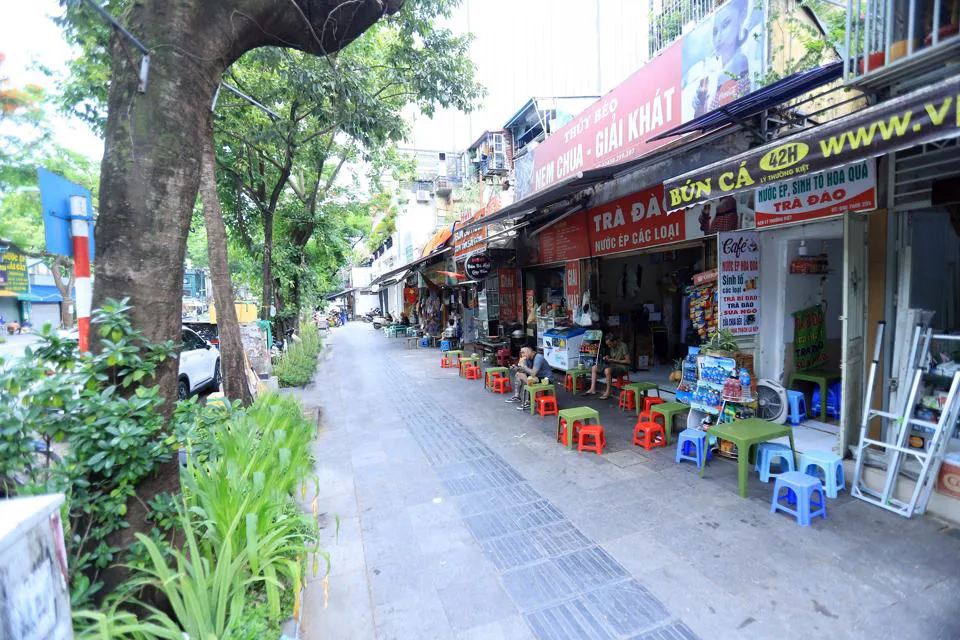
It would be unfair to assume that sidewalks are only meant to be used to get from one place to another. Sidewalks in Hanoi present a surprisingly iconic culture of Hanoians.
Beyond the original purpose of ensuring traffic safety, sidewalks, which are paved throughout the city, provide living and cultural spaces, and livelihoods.
According to cultural researcher Phung Hoang Anh, the sidewalks of Hanoi are home to a vibrant, multifaceted social life. Due to the city’s fast urbanization, the purposes of walkways are quite varied. “The locals benefit significantly from sidewalk commerce,” Anh spoke to The Hanoi Times.
Economist Nguyen Minh Phong stated that the sidewalk economy is a synonym of the informal economy. Additionally, this is a reserve resource of subsistence.
Obviously, the economic values of sidewalks should be exploited flexibly, with changing purposes throughout the day to avoid traffic congestion in areas near residences, schools, hospitals, or plants, experts said.
| Pathways in Phan Boi Chau Street, Hanoi. Photo: Vu Cuc/ The Hanoi Times |
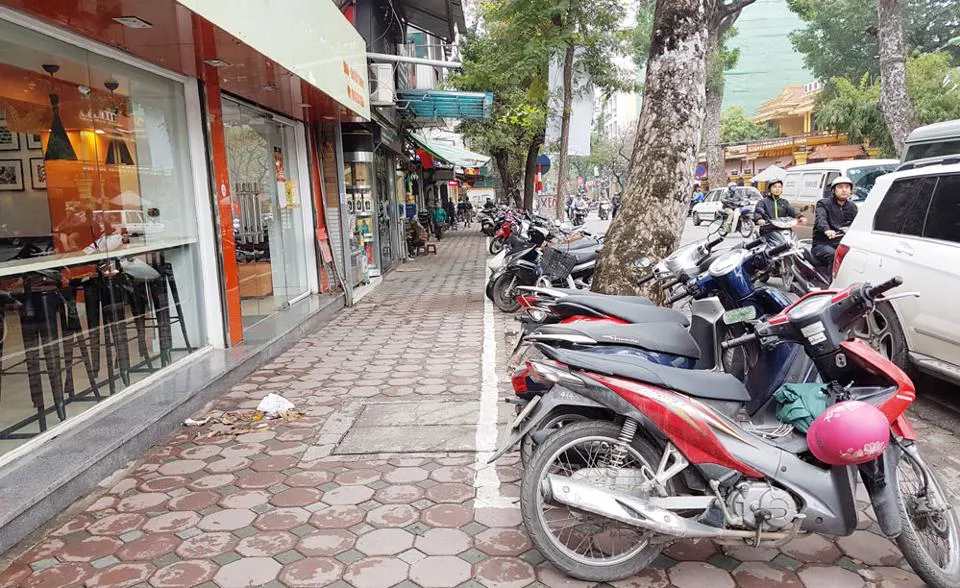
“Business on the sidewalk, including street vendors and small shops, is gradually becoming a part of the culture and a feature of the urban economy,” Architect Le Nguyen Huong Giang told The Hanoi Times.
She takes South Korea, Japan, and Thailand as examples of sidewalk business models, noting that many urban economies have sidewalk culture, showing locals’ living habits and demand for street food as well as the way they enjoy it.
Local experts said that the economy of sidewalks, though controversial, is still significant for densely populated urban cities like Hanoi. For that reason, in 2021, Hanoi piloted renting sidewalks for businesses in the Hoan Kiem District, which houses the Old Quarter, a French architectural legacy, one of the favorite places for visitors in Hanoi.
Accordingly, sidewalks will be rented for business on five streets, namely Hai Ba Trung, Ly Thuong Kiet, Tran Hung Dao, Le Phung Hieu, and Phung Hung.
“I am really sorry if one-day sidewalk stores in Hanoi are all shut down,” remarked Dinh Thu Huong, a local. Although occasionally the stores compromise food safety and hygiene, most of them give Hanoi a very distinct feature that tourists find appealing, she added.
Not to mention how convenient it will be for shoppers, who will not need to get off their bicycles, motorcycles, or vehicles to buy their favorite foods as they would if they had to go to markets or supermarkets. However, to benefit from sidewalks, proper management is required.
Pham Van Tung from Hoan Kiem District expressed a similar viewpoint, claiming that urban dwellers' penchant for buying is the reason sidewalk shops exist. To purchase something, they simply need to pull over to the side of the road. As a result, there is a two-way interaction with the sidewalk economy. Additionally, the growth of tourism is essential for the sidewalk economy, he emphasized.
The aforementioned illustrates the vibrancy, richness, and complexity of the cultural life on sidewalks. The importance of sidewalks in Hanoi culture is therefore enormous.
| Walkways in Phan Dinh Phung Street, Hanoi. Photo: Pham Hung/ The Hanoi Times |
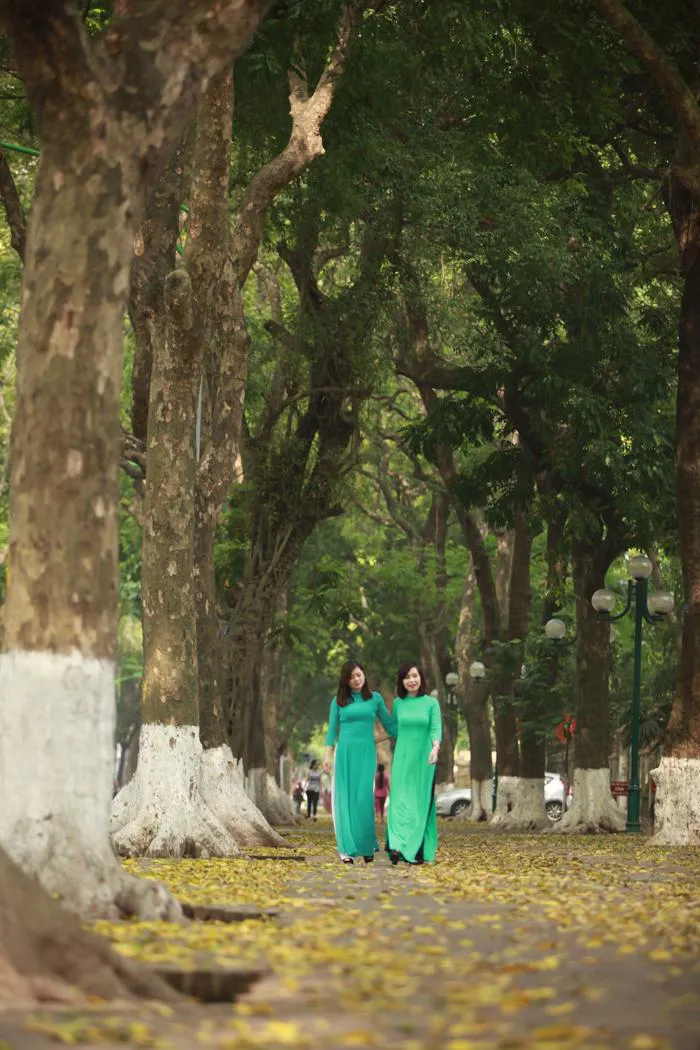
Historians claim that the fact that Hoan Kiem Lake and Trang Tien Street become sidewalks on weekends is a common cultural element in Hanoi, dating back to the French colonial period. In the city, these sidewalks are considered the first to be built in "Western-style".
According to Nguyen Thi Phuong Cham’s book “Sidewalks in Hanoi Today from A Cultural”, the French administration leased out the sidewalks for people to open stores. When a number of opulent hotels started to outdoor cafés. These establishments were well-liked, and possibly it was because of them that the name "sidewalk coffee" originated.
"The sidewalk economy will be with Hanoi for a long time to come," she said.







