Log in
Hanoi

Hanoi speeds up construction of largest waste-to-energy plant

The waste-to-energy station will make an important contribution to the city’s garbage treatment.

Hanoi’s authorities will actively remove difficulties for the completion of the waste-to-energy station in Soc Son district, the largest of its kind in Vietnam, and put it into operation as soon as possible.

The information was announced by Vice Chairman of municipal People's Committee Nguyen The Hung while inspecting the construction progress of the project at the Nam Son and Soc Son waste treatment complexes earlier this week.

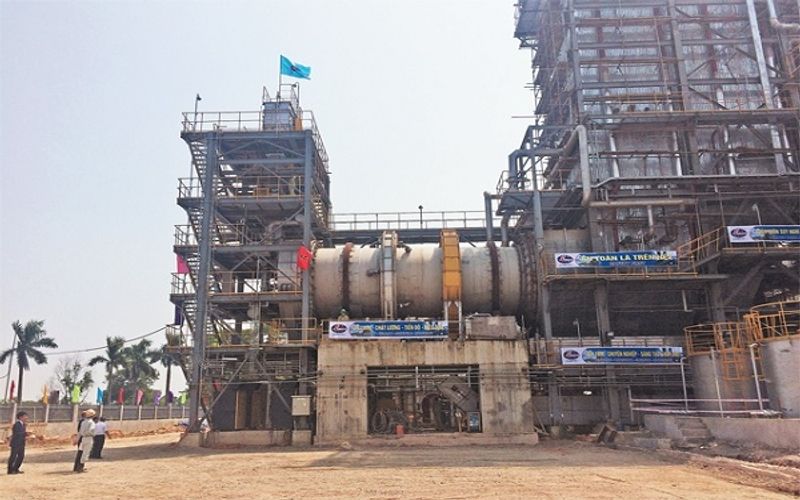
 Nam Son solid waste treatment plant (Soc Son district) uses modern technology. Photo: VGP

Specifically, Mr. Hung requested Thien Y Environment Energy Joint Stock Company, the project's contractor, to speed up the works and coordinate closely with relevant units to ensure job safety and Covid-19 prevention.

Besides, relevant units need to overcome unfavorable weather conditions to ensure that the works advance as scheduled and the project is put into operation in October 2020, the deputy mayor said.

Regarding the site clean-up work, Hung asked the Soc Son District People's Committee to expedite the payment of bonuses for the rapid progress of the site clean-up, as well as financial support for the temporary residence of households that moved voluntarily off the construction site.

To ensure socio-economic objectives, security, order and environmental sanitation of the city during the Covid-19 pandemic, the municipal People's Committee has assigned the Department of Transport to urge immediate maintenance and repair roads in the surrounding areas of the works.

The Hanoi Department of Finance has been asked to arrange funding for the above-mentioned urgent tasks.

The project, which costs about VND7 trillion (US$301 million), was approved by the Hanoi People's Committee at the end of 2017 and executed by the Chinese contractor.

The plant will have a processing capacity of 4,000 tons of waste per day to help treat litter collected from urban districts. It is said to use advanced European waste-to-energy technology to obtain an estimated amount of electricity of 75 MW per hour.

Hanoi currently discharges an average of 6,000 tons of waste per day. When the project is put into operation, it is expected to reduce waste pollution that affects the lives of local residents and be cost-effective.

Stressing the importance of waste treatment in a large city like Hanoi, the municipal government has invested heavily to modernize waste collection and treatment in recent years.

The waste-to-energy plant will make an important contribution to the city’s garbage treatment. The application of the technology can reduce the volume of waste buried in landfills which have become unsustainable as they lead to leakage of hazardous elements and leachate into the environment.


Reactions:
Share:
Trending
Most Viewed
Related news
Hong Van Commune rises as Hanoi’s emerging model for community-based tourism

Hong Van Commune rises as Hanoi’s emerging model for community-based tourism

Blessed with natural beauty, strengthened by deep cultural heritage and supported by its residents, Hong Van Village is emerging as one of Hanoi’s most distinctive tourism destinations. From ecology and agriculture to handicrafts and festivals, this Red River village is shaping a dynamic vision of sustainable community tourism for the capital.

Hanoi unveils digital heritage journeys to connect tradition with modern urban life

Hanoi unveils digital heritage journeys to connect tradition with modern urban life

Hanoi has launched a new digital heritage program that brings centuries-old cultural assets into a modern, interactive format. By mapping key monuments and creating themed journeys, the city aims to help residents and visitors explore its deep-rooted identity through fresh, engaging experiences.

Hanoi launches two-wheel electric vehicles to expand green urban mobility

Hanoi launches two-wheel electric vehicles to expand green urban mobility

Hanoi has introduced two-wheel electric vehicles for the first time in its transport network, offering residents a new green mobility option and marking a key step in the city’s smart-transport development.

Thai AirAsia launches new Hanoi–Luang Prabang route to boost regional travel

Thai AirAsia launches new Hanoi–Luang Prabang route to boost regional travel

Thai AirAsia has opened a new direct Hanoi–Luang Prabang route using Fifth Freedom traffic rights, creating a faster and more convenient link between two major heritage destinations in Vietnam and Laos.

Hanoi orders strong air-pollution measures and warns schools to adjust schedules

Hanoi orders strong air-pollution measures and warns schools to adjust schedules

Hanoi has issued new directives requiring schools to restrict outdoor activities and consider suspending classes when air quality drops to hazardous levels, while launching a sweeping crackdown on pollution sources across the city.

Hanoi – Vientiane ties set pace for bilateral cooperation

Hanoi – Vientiane ties set pace for bilateral cooperation

The two sides have inked two city-level agreements and eight agreements covering areas such as Party building, economic and investment cooperation, agriculture, health, education and people-to-people ties.

Hanoi completes tunneling for four underground stations of 2nd metro line

Hanoi completes tunneling for four underground stations of 2nd metro line

The completion marks a major step forward for the four-kilometer underground section of the metro line.

Rooftop solar push to boost Hanoi's green ambition

Rooftop solar push to boost Hanoi's green ambition

Rooftop solar in industrial zones has the foundations to become a new driver of Hanoi’s energy transition.