Hanoi stands firm on digitalization effort
The move would help enhance the quality of handling administrative procedures for citizens and businesses.
Hanoi remains committed to advancing digitalization and progressing toward the development of a smart city, as evidenced by the upcoming pilot of the city's Public Administration Service Center.
| Vice Secretary of the Hanoi Party Committee Nguyen Thi Tuyen at the meeting. Photos: Pham Hung/The Hanoi Times |

Vice Secretary of the Hanoi Party Committee Nguyen Thi Tuyen underlined this view at a city’s meeting on September 4.
“The pilot project to establish the Hanoi Public Administration Service Center aims to enhance the quality of handling administrative procedures for citizens and businesses,” said Tuyen, noting this initiative is key to effectively implementing the directives from central authorities and reinforcing Hanoi's leadership in the national digital transformation process.
She stressed that during the project's implementation, the relevant agencies are expected to review their functions to avoid any overlap between the center and the city’s departments when it becomes operational.
Tuyen also highlighted the need to recruit highly qualified staff with information technology expertise for the center.
It is also crucial to establish specific mechanisms to attract top talent, Tuyen said.
“A detailed transition plan needs to be developed to ensure that the provision of administrative services to citizens and businesses remains uninterrupted during the center's setup phase,” Tuyen said.
She also called for greater scrutiny of administrative procedures and the strengthening of public awareness campaigns for citizens and businesses.
She also called for investment in modern technologies to ensure that the center can operate effectively once it opens.
Explaining the project in more detail, Deputy Chairman of the Hanoi People’s Committee Ha Minh Hai noted that the new model would address existing shortcomings of the traditional "one-stop shop" model and remove bottlenecks in the delivery of online public services.
| Vice Chairman of the Hanoi People's Committee Ha Minh Hai. |
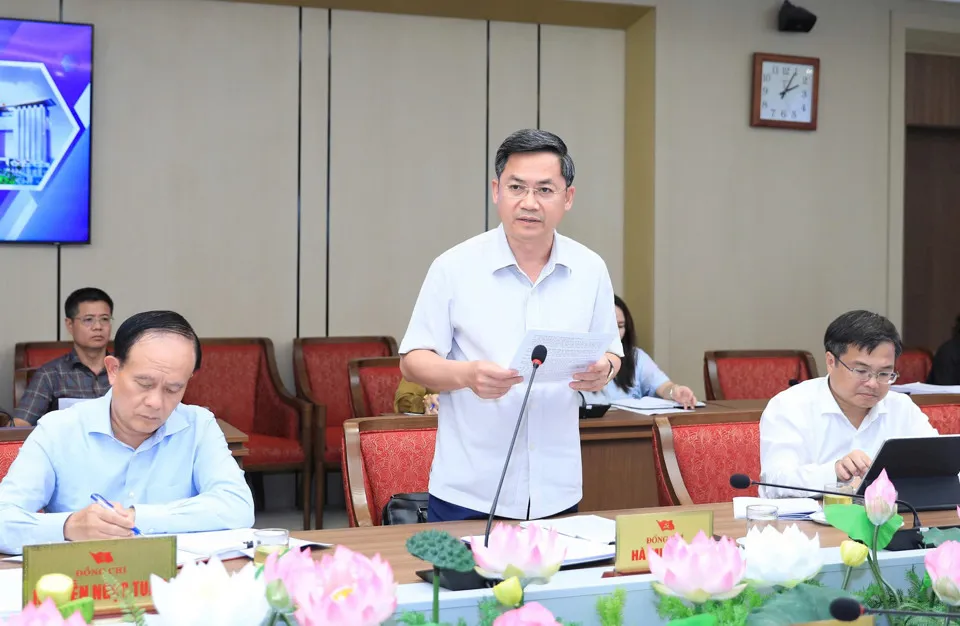
He further emphasized that this model aligns with international and domestic trends, and several key lessons emerged from the experiences of public service centers in countries such as Singapore, France, Australia, Russia, and China.
First, these countries put citizens and businesses at the core of their administrative service design, ensuring easy access and more efficient investment.
Second, these centers operate independently of agencies with decision-making authority over administrative procedures, minimizing face-to-face contact between civil servants and citizens and reducing petty corruption.
Third, administrative services are delivered regardless of geographical boundaries, allowing citizens to complete procedures wherever it is convenient for them. Fourth, the professional approach of these centers helps balance workloads across sectors, improving efficiency and reducing waiting times for service users.
Lastly, digitization plays a significant role in enabling citizens and businesses to access services online without having to visit government offices, thus improving transparency, reliability, and the overall user experience.
According to Hai, Hanoi's Public Administration Service Center will operate under the guiding principle of putting citizens and businesses at the center, ensuring the services are directly responsive to their needs.
He added that the center will not replace the functions of government departments but instead take on certain administrative tasks that the state does not need to perform directly, allowing government bodies to focus on regulation and management.
“Information technology and digital transformation will serve as the primary tools for implementing this modernized "one-stop" model, ensuring seamless coordination between all levels of administrative procedures, regardless of geographical boundaries,” he stressed.
The Center will adhere to the regulations and directives of the central government and the Hanoi Party Committee to ensure the successful implementation of a unified public service delivery system, he concluded.