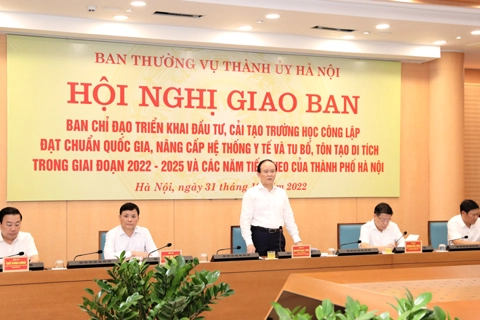
Hanoi expects revised Capital Law for further development in next decades
Finalizing the revised Capital Law would set the platform for Hanoi’s development in the next ten years and beyond.
Hanoi expects the finalization of the revised Capital Law, which could set the platform for Hanoi’s development in the next ten years and beyond.
| Secretary of the Hanoi Party Committee Dinh Tien Dung. Photos: Thanh Hai |
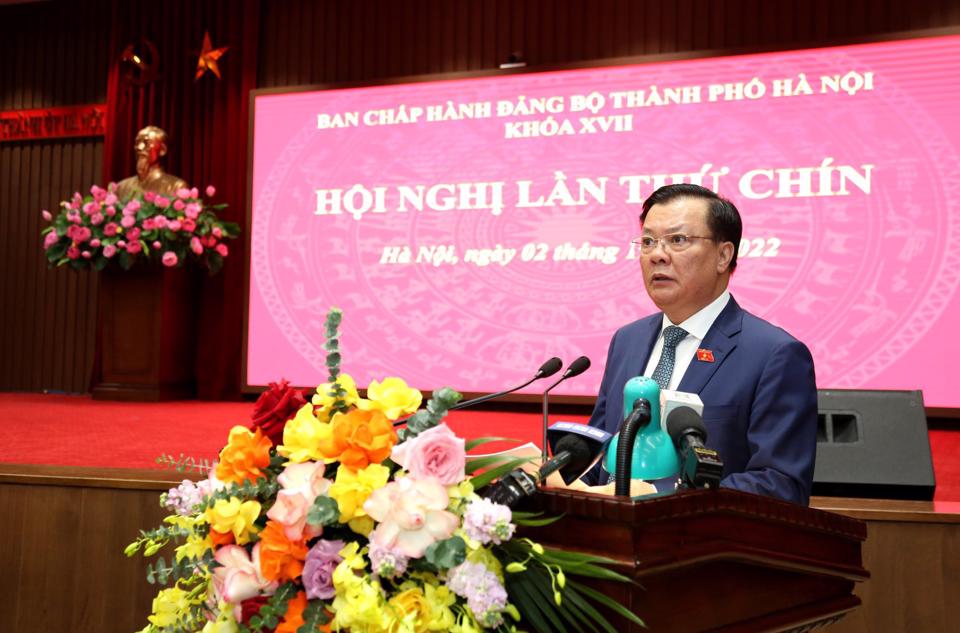
Secretary of the Hanoi Party Committee Dinh Tien Dung delivered these remarks at the ninth municipal Party Committee congress held today [November 2], which discussed special mechanisms for Hanoi to create breakthroughs in urban development and promote digitalization and modernization.
"The key issue is to draft a regulation for the operation of the urban administration model, streamline the political system to achieve greater efficiency while endowing the city with more authority and flexibility to resolve development bottlenecks actively," Dung said.
He added that the local authorities are working on measures to serve the people and businesses best, eventually creating the driving forces for the city's development.
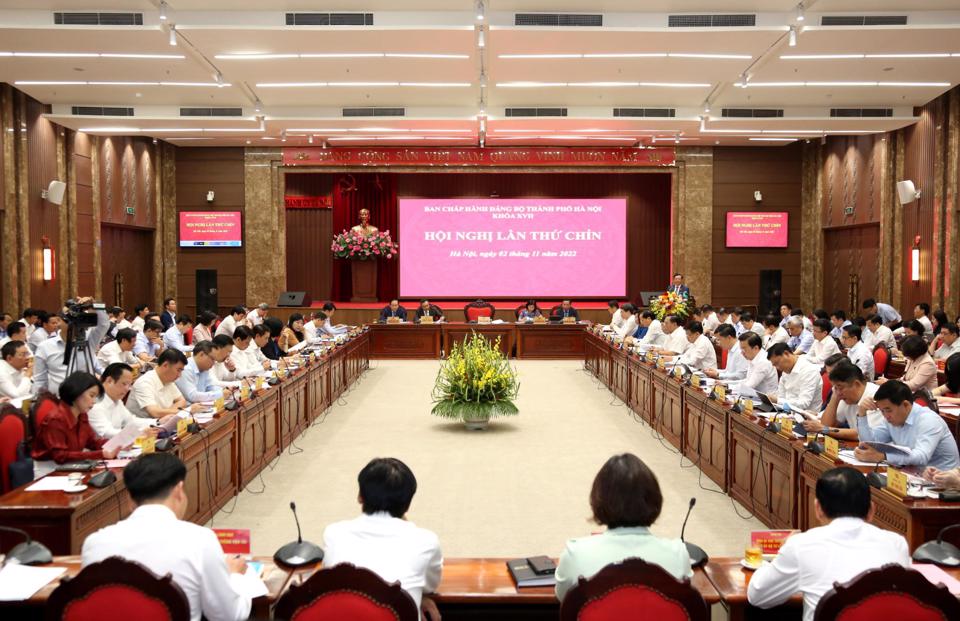
| Overview of the meeting. |
The law will streamline the city's apparatus towards more remarkable modernization, efficiency, and professionalism and attract a high-quality workforce for its development.
"It will improve financial-budgetary capacity, mobilize resources for Hanoi's development, develop urban technical and transportation infrastructure, and promote agro-ecosystem, modern agriculture, and civilized farmers," Dung said.
He said the law would also support Hanoi's cultural and educational development and mobilize science, technology, and innovation capacity for growth.
"It will help the city develop a modern health system and comprehensive, inclusive, and sustainable social welfare, promote the linkage of the Capital Zone, making it a key economic center," Dung said.
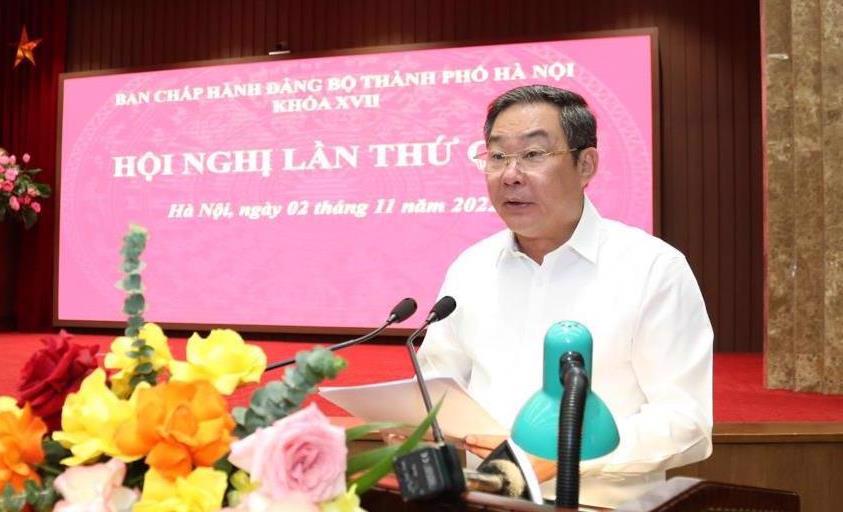
| Vice Chairman of the Hanoi People's Committee Le Hong Son. |
Taking a pioneering role in digitalization
On the target of building a smart city by 2025, with a vision to 2030, Vice Chairman of the Hanoi People’s Committee Chu Xuan Dung said the city is drafting a resolution on digitalization and smart city development.
Dung noted the target is for Hanoi to become a green, smart and urban city by 2025, for which the city would be among the leading cities/provinces in digitalization.
By 2030, as a smart city, Hanoi will gradually connect with the network of smart cities in the region and the world while maintaining its pioneering role in digitalization.
Hanoi would form a database of vital economic sectors that public agencies contribute, develop innovative services for the benefit of the people and businesses, and utilize data as a new resource for socio-economic development.
To realize these targets, Hanoi will set up a platform for digitalization by finalizing legal frameworks on digitalization and promoting digital infrastructure, and databases. The city would also cooperate with domestic and foreign partners to promote innovation in digital platforms, supporting the development of digital businesses, payment, and workforce.
“Digitalization and development of smart city is the responsibility of the entire political system and the whole society, for which leaders of each agency in Hanoi are responsible for their respective digitalization process,” Dung said.
“The people and businesses are the center and driving forces for digital transformation and smart city development. Hanoi’s authorities would encourage the public to join the process of investment, management, supervision, and operation of smart city,” he added.
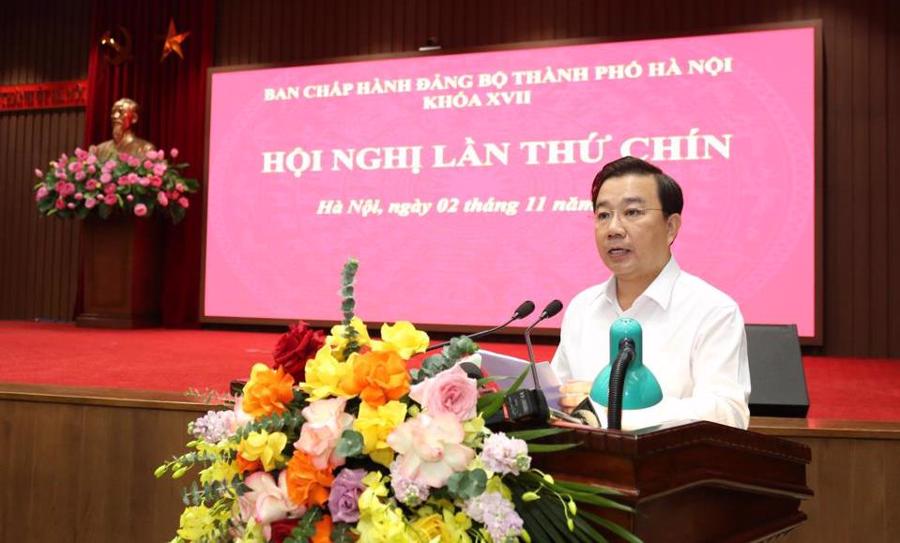
| Vice Chairman of the Hanoi People’s Committee Chu Xuan Dung. |
Focusing resources on upgrading the drainage system
On measures to prevent flooding in the city, Vice Chairman of the Hanoi People’s Committee Duong Duc Tuan said climate change has caused direct impacts on Hanoi, such as high frequency of storms and rain in a short period, with the amount of rainfall higher than expected.
Tuan, for his part, acknowledged that investment in the drainage system had fallen short of expectations, saying that rainfall of up to 70 mm per hour would cause 11 points of flooding; and 100 mm per hour, 30 points of flooding.
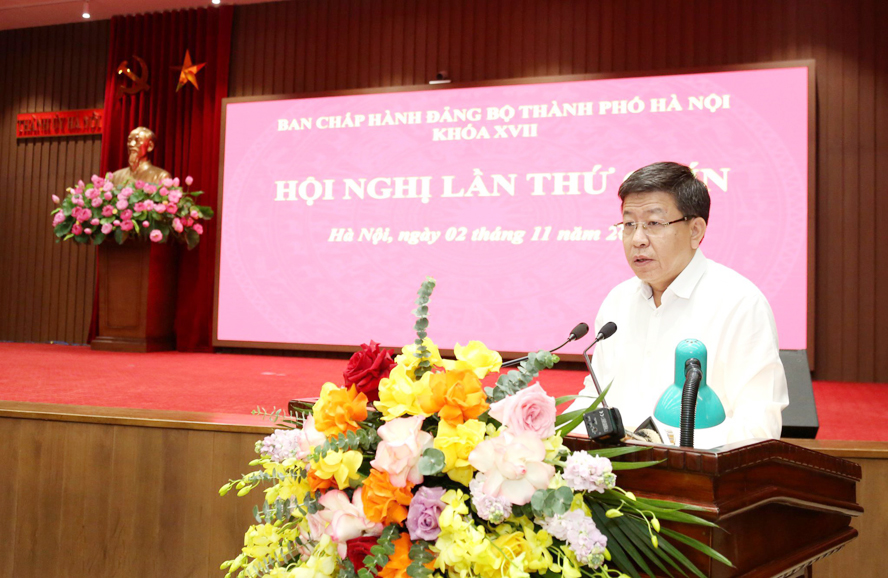
| Vice Chairman of the Hanoi People’s Committee Duong Duc Tuan. |
To solve these problems, Tuan hoped that the city would pour part of its resources into the drainage system and solve the flooding situation in the west and southwest of the city by improving the drainage capacity of the La Khe canal.