Hanoi plans to have 3,000 cooperatives by 2030
The capital city expects to have high-quality agricultural products to feed ten million of its residents.
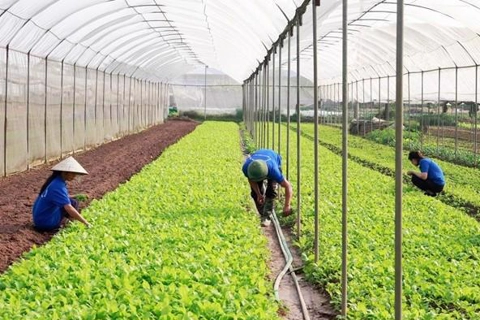
Hanoi targets to set up more than 3,000 cooperatives by 2030, including 250 hi-tech agricultural cooperatives.
The goal is included in an action program on innovation and development of collective economic efficiency in the new period, which was released on February 2.
More specifically, Hanoi strives to establish about 100 new cooperative groups and 100 cooperatives annually by 2030, increasing the total number of cooperatives by 2025 and 2030 to nearly 2,500 and over 3,000, respectively. By 2045, the city would have about 450 to 500 new cooperative groups and seven to 10 cooperative unions.
To achieve this goal, Hanoi will continue to promote the dissemination of the 2012 Law on Cooperatives and improve the capacity of cooperative resources, adopt preferential policies, and apply scientific and technological advances for the development of cooperatives.
Hanoi expects to have 250 hi-tech agricultural cooperatives by 2030. Photo: Dinh Hiep |
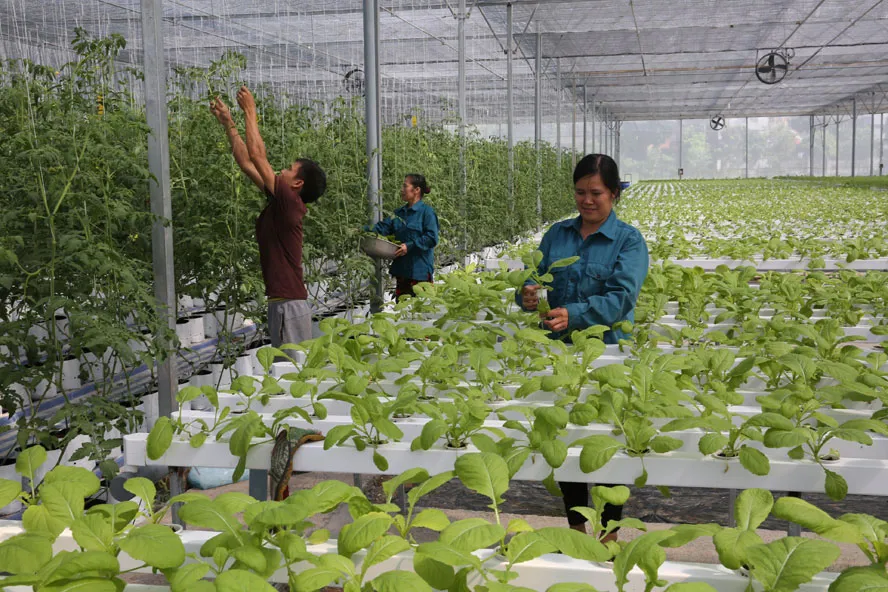
The city will also encourage enterprises’ investment and product consumption for the cooperatives; support cooperative models linking production, processing, and consumption of agricultural, forestry, and fishery products in value chains and models with the application of high technology in concentrated commodity production areas.
According to the Hanoi People's Committee, the city now has 1,393 cooperative groups, 1,254 of them engaged in agriculture and most of the rest in handicraft production. Cooperative groups address many difficulties that the family economy cannot, such as shortages of capital, supply of tools, techniques, production expertise, and market competitiveness.
By the end of 2022, the city had a total of 2,374 cooperatives, an increase of 143% compared to the number of the previous five years, forming up to 20 cooperative unions. Of those, eight operate in agriculture, and 11 others are in non-agriculture sectors.
Many cooperatives have been reformed in terms of organization and operation, and many effective new models have emerged, creating jobs and regular incomes for employees and fulfilling tax obligations.
Hanoi is the country's city with the most cooperatives (9.9% of the total). The operational efficiency of cooperatives is improving through the diversification of their business areas. Therefore, cooperatives have made important contributions to the overall development of the capital, building new rural areas, restructuring the economy and agriculture in the countryside, and promoting the development of domestic enterprises.
However, some limitations remain, including the number of cooperatives and the total capital of the collective economic sector still represents a small proportion of the economy. The scale of most cooperatives remains small, some are slow to adapt to market mechanisms and urbanization, and they have limited supply and demand linkages.
Aware that the cooperatives play an important role in the socio-economic development of the capital city, Hanoi aims to increase the contributions of these economic models to its economic growth, especially in agricultural economic restructuring and in building new-style rural areas.
The cooperatives will develop in diverse forms, on the basis of promoting the application of science and technology in management, production, and business towards developing high value-added products and services, and traditional key products associated with effective supply chains.