Hanoi targets 700 backyard slaughter points for closure after tainted pork scandal
The move responds to public concern after health inspectors uncovered diseased pork being funneled from unlicensed slaughterhouses into some wet markets in the capital.
THE HANOI TIMES — Hanoi has unveiled its most sweeping food safety campaign in decades: a citywide roadmap to eliminate more than 700 backyard slaughter points by September 2025.
The move responds to public concern after health inspectors uncovered diseased pork being funneled from unlicensed slaughterhouses into some wet markets in the capital.
A decisive shift
Under a directive issued in July, the Hanoi People’s Committee instructed the Department of Agriculture and Environment to review every small-scale slaughter facility in the city, categorize those operating illegally or failing to meet hygiene standards and enforce closures under a strict timeline.
The order marks a shift from sporadic crackdowns to a coordinated strategy. Local ward and commune authorities have been made fully responsible for identifying slaughter points, dismantling unlicensed operations, and ensuring they do not reappear after removal.
Backyard slaughtering has long been a feature of Hanoi’s food landscape, rooted in traditions of fresh, same-day meat supply. But as the city urbanized, these small facilities, often tucked behind homes or in alleys, failed to keep pace with food safety standards.
Most lack wastewater treatment, veterinary supervision or cold storage. Health experts warn they create fertile ground for diseases like African swine fever, which devastated Vietnam’s pig population in 2019 and continues to pose a risk to livestock and consumers alike.
Officials estimate that more than 700 such slaughter points still operate in the capital, supplying meat to neighborhood markets and eateries. The informal network is deeply entrenched, providing livelihoods for hundreds of households but complicating the city’s ability to regulate food safety.
Public patience snapped in early July when inspectors raided several sites and seized over four tons of pork later confirmed to be infected with African swine fever. The meat had been distributed to major markets including Phung Khoang and Minh Khai, and in some cases supplied restaurants and food stalls.
Police arrested five individuals on charges of violating food safety regulations. Investigators said the group purchased dead or diseased pigs at cut-rate prices, slaughtered them overnight, and sold the meat at wholesale markets for profit, a practice that had allegedly gone unchecked for years.
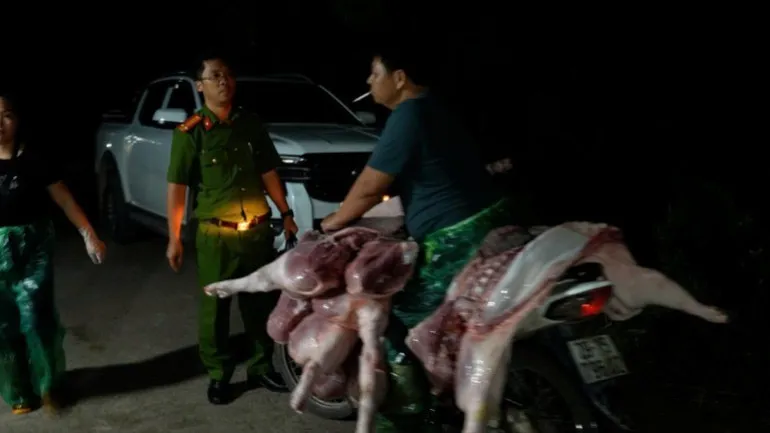
City police inspect the transport of slaughtered pigs destined for market sale. Souce: nhandan.vn
The scandal underscored longstanding warnings from food safety advocates and gave new urgency to the city’s crackdown.
Building modern alternatives
Hanoi’s roadmap does more than shut down unsafe operations. The city is fast-tracking investment in centralized, hygienic abattoirs designed to meet national and international standards. Officials are revising zoning plans for these facilities to align with consumption patterns and ensure access for both urban and suburban districts.
According to Nguyen Dinh Dang, head of Hanoi’s Livestock, Fisheries and Veterinary Sub-Department, the city had already approved a network of industrial and semi-industrial slaughter and processing facilities under Decision No. 761/QD-UBND in February 2020.
“We have eight industrial slaughter and processing plants, eight centralized slaughter facilities, and 13 smaller-scale sites approved,” said Dang.
“Our role is to maintain strict inspection protocols for quarantine, slaughter control, and veterinary hygiene at all of them.”
Dang emphasized the urgency of tightening oversight. “Stronger management is vital to reduce disease risks and restore public trust. It requires close coordination between agencies and local authorities to detect and strictly handle violations.”
To ease the transition, authorities are considering subsidies and support packages for small-scale operators willing to relocate to centralized facilities or exit the trade. Private investment will also play a key role, reflecting Hanoi’s push to modernize food infrastructure without straining the city budget.
Enforcement will be paired with public education campaigns urging consumers to buy only inspected meat and report illegal slaughtering. Authorities are also stepping up inspections at wet markets to intercept unverified meat before it reaches customers.
District and commune officials face new accountability measures: failure to address illegal slaughtering in their jurisdictions could trigger disciplinary action. This top-down pressure, combined with heightened public scrutiny, is expected to drive faster compliance.
Toward a safer food system
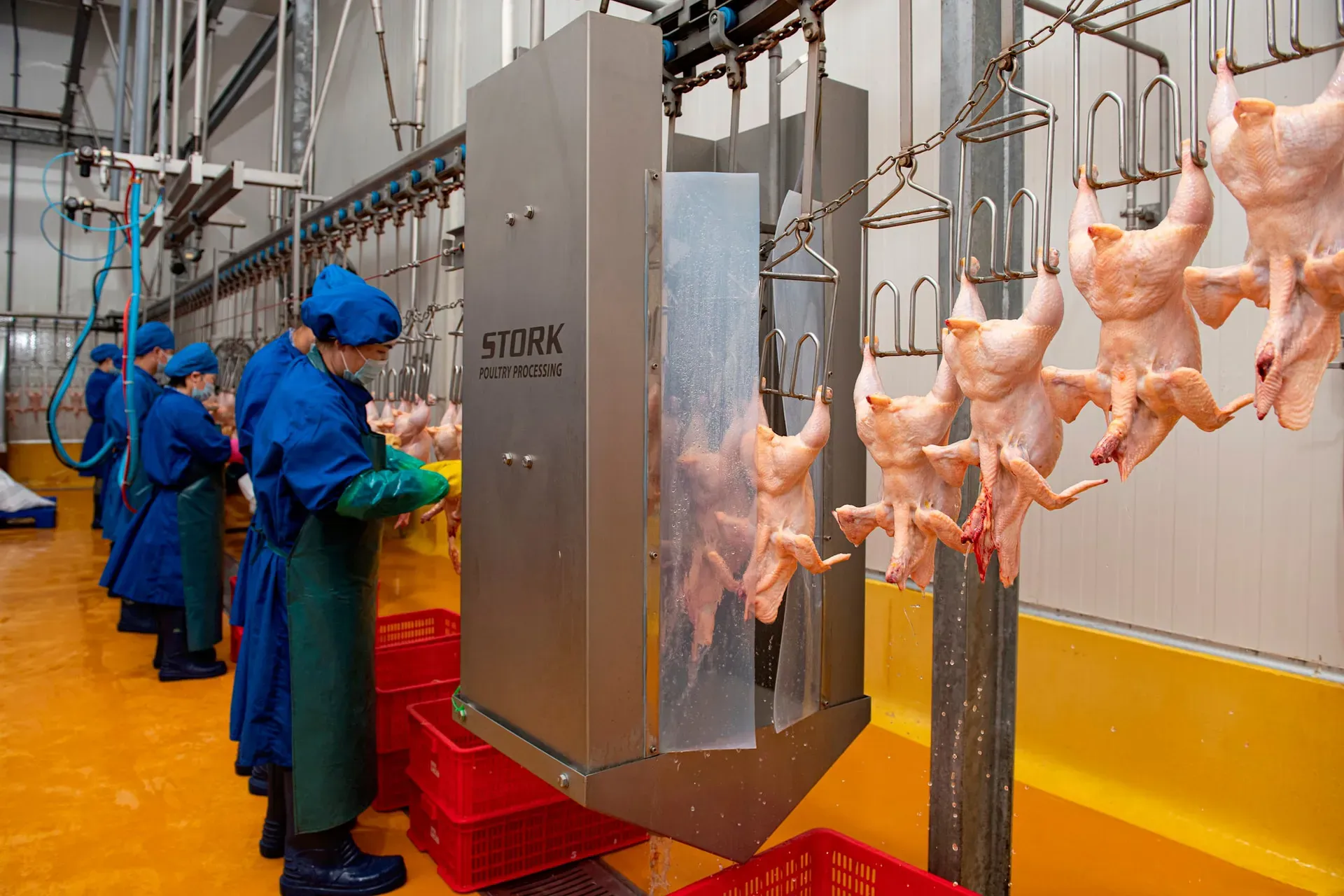
An industrial-style animal slaughter facility in Hanoi. Source: Trong Tung/kinhtedothi.vn
City leaders see the plan as part of an urban development agenda, one that links food safety to environmental protection and public health. By phasing out backyard slaughtering, Hanoi hopes to reduce pollution, curb disease transmission, and restore consumer trust in local meat supply chains.
However, challenges remain as closing hundreds of facilities within a year will require coordinated enforcement and sustained investment. Balancing strict regulations with the livelihoods of affected households is another hurdle.
But with the memory of diseased pork scandals fresh in the public mind, Hanoi’s aggressive timetable signals resolve. As warning seals go up on backyard gates and modern abattoirs rise on the city’s outskirts, the capital is betting on a cleaner, safer food future, one in which unregulated slaughterhouses finally fade into history.