Hanoi targets hi-tech farming to make up 70% of total agricultural production value
Hanoi expects to build a sustainable and modern agricultural sector, focusing on large scale production with high productivity, quality and competitiveness.
Hanoi seeks to increase the share of hi-tech farming to at least 70% of total agricultural production value in the city by 2025, according to Nguyen Van Suu, vice chairman of the Hanoi People’s Committee.
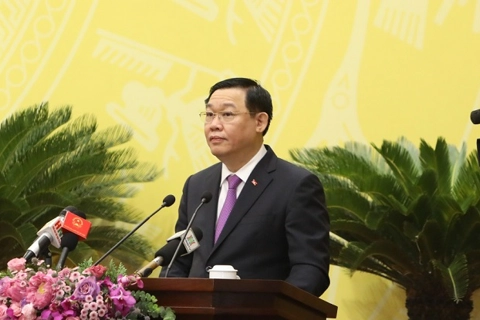
| Secretary of the Hanoi Party Committee Vuong Dinh Hue at the meeting. Photo: Thanh Hai. |
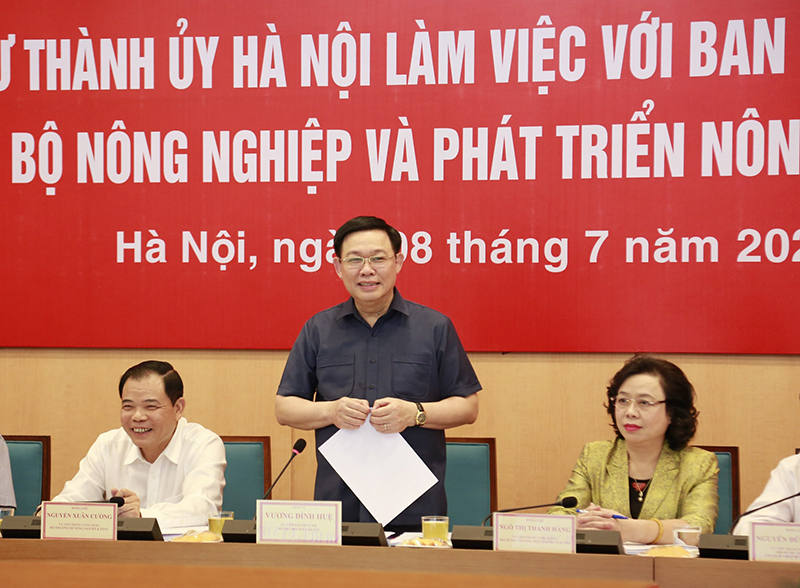
Additionally, agricultural production is set to maintain an average growth rate of 2.5% annually, which has been achieved over the last five years, said Suu at a meeting discussing measures to develop the agriculture sector on July 8.
Hanoi expects to build a sustainable and modern agricultural sector, focusing on large scale production with high productivity, quality and competitiveness, Suu informed at the meeting.
The official said 60% of rice fields would be used for cultivation of paddy of higher quality for more economic efficiency by the end of 2020.
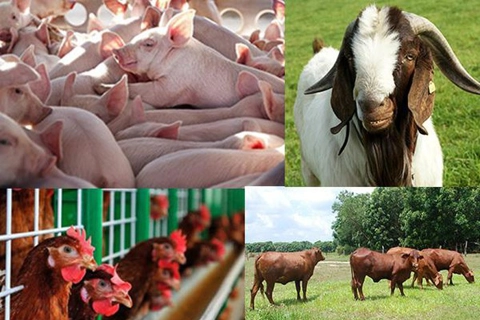
Additionally, the Hanoi People’s Committee has issued a new plan on raising of high quality cattle of Wagyu or Charolais breeds, targeting a supply of over 3,000 tons of high-quality beef to the market every year, Suu added.
Hanoi would also form 60 concentrated aquaculture farms with a combined area of 7,229 hectares, taking the total area for aqua-farming to 22,900 – 24,000 hectares and meeting 45% of demand for fishery products in Hanoi.
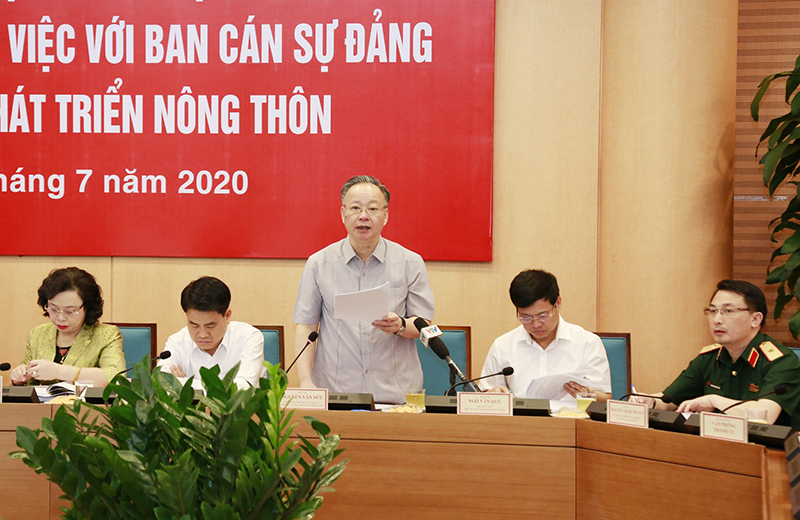
| Vice Chairman of Hanoi People's Committee Nguyen Van Suu (standing). Photo: Thanh Hai. |
This would help raise the income per capita of people living in the rural areas in Hanoi to VND65 million (US$2,819), a significant increase from the VND51 million (US$2,212) in 2019, along with reducing the poverty rate in rural areas to below 1%.
Suu requested the Ministry of Agriculture and Rural Development (MARD) support the city in restructuring the agricultural sector; build an international wholesale market for agricultural products at Yen Thuong commune, Gia Lam district; call for greater investment in poultry farming; accelerate pig herd repopulation; and develop hi-tech farming areas, among others.
Secretary of the Hanoi Party Committee Vuong Dinh Hue said the agriculture sector has significant meaning to the city’s economic growth.
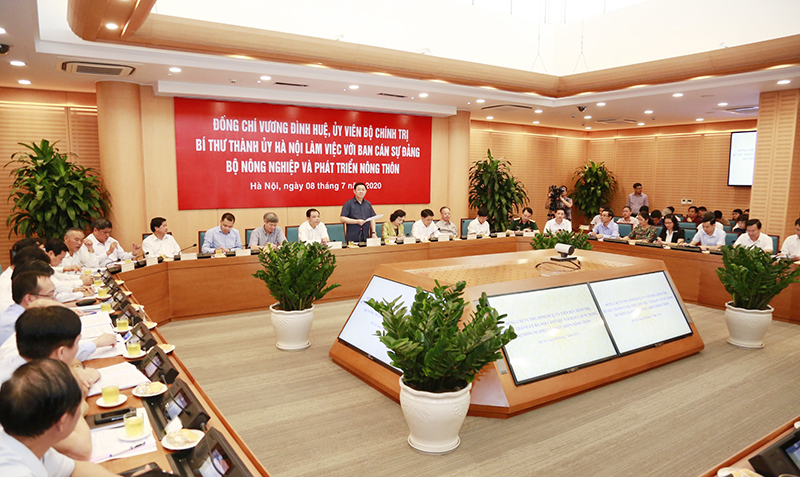
| Overview of the meeting. Photo: Thanh Hai. |
As of present, agricultural land for production in Hanoi covers 58.3% of total land area or 195,800 hectares. Of Hanoi’s population of 8.09 million, over 4.1 million are rural dwellers. Those working in the agriculture sector of Hanoi make up 40.2% of the total and workforce of the capital city or 2.2 million.
While the sector holds huge potential for development, Hue pointed to a number of shortcomings preventing it from further growing, including the significant gap in income level between people in rural and urban areas; low efficiency in land using; low productivity; among others.
Minister of Agriculture and Rural Development Nguyen Xuan Cuong expected Hanoi to become self-sufficient in terms of food for nearly 10 million people and more importantly, to turn into a hi-tech agricultural production hub of Vietnam.
Hanoi’s farmers should master high technologies from the Industry 4.0 and attract more investment and high-quality personnel into agricultural production, a key step to ensure rapid and sustainable growth in the sector, he added.