Log in
Hanoi

Hanoi targets using recycled construction waste in all public projects

The city aims to collect 90% of all construction waste generated in urban areas and ensure that it is treated in accordance with environmental standards.

THE HANOI TIMES — By 2030, all publicly funded construction projects in Hanoi will be required to use recycled materials instead of natural resources, according to the city's recently approved plan.
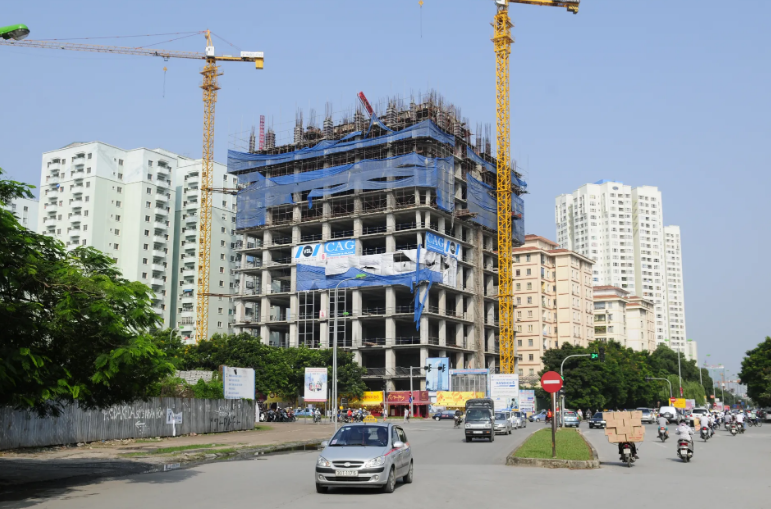
A construction site in Hanoi. Photo: Hai Linh/The Hanoi Times

This requirement is outlined in the city government's approval of the 'Master Plan on Construction Waste Management in Hanoi to 2030'. While the use of recycled materials is encouraged in privately funded construction projects, it is mandatory for public projects.

In the decision issued on June 8, the city aims to ensure that 90% of all construction waste generated in urban areas is collected and treated in compliance with environmental standards. Of this, 60% is to be reused or recycled into products and materials using appropriate technology.

Construction waste includes soil, stones, broken bricks, plant debris, and substandard materials generated during design, site preparation, and construction.

Hanoi has the second-highest demand for construction materials in Vietnam after Ho Chi Minh City. A study conducted in 2022 by the University of Transport and the Hanoi University of Natural Resources and Environment, published in the Journal of Natural Resources and Environment, reported that Hanoi generated over 4,000 tons of construction waste in 2021. This figure is expected to increase to over 9,400 tons by 2025. 

Regarding treatment sites, Hanoi will continue to use two existing locations until 2026: the 6.5-hectare area at the Phap Van–Cau Gie interchange in Hoang Mai District and the Nguyen Khe landfill in Dong Anh District.

By 2030, the city plans to raise the solid waste treatment and recycling capacity to between 4,180 and 4,780 tons per day.

To promote the use of recycled construction materials, project developers must prioritize the recycling and reuse of waste on-site. In addition, landscaping for transportation and other infrastructure projects must use the arable layer of soil that has been peeled off.

Projects that use recycled materials from construction waste and protect the environment must be prioritized in bidding.

Furthermore, the city will refine policies and regulations to encourage the use of recycled construction waste products, such as crushed materials and unglazed bricks.

Hanoi has already promoted the recycling of construction waste and invested in collection and crushing equipment. A pilot project has been implemented to crush construction waste and reuse it as the foundation material for the Ring Road No. 3 stretch from Mai Dich to Nam Thang Long.

However, these pilot programs and their replication still face challenges due to the lack of a comprehensive legal framework and technical standards for implementation.
Reactions:
Share:
Trending
Most Viewed
Related news
Hanoi's bus fleet will be fully green by 2030

Hanoi's bus fleet will be fully green by 2030

04 Jun, 07:24

Replacing buses with green ones is an important step in Hanoi’s push for sustainable public transportation, especially as local people show increasing interest in electric vehicles and metro lines.

Hong Van Commune rises as Hanoi’s emerging model for community-based tourism

Hong Van Commune rises as Hanoi’s emerging model for community-based tourism

Blessed with natural beauty, strengthened by deep cultural heritage and supported by its residents, Hong Van Village is emerging as one of Hanoi’s most distinctive tourism destinations. From ecology and agriculture to handicrafts and festivals, this Red River village is shaping a dynamic vision of sustainable community tourism for the capital.

Hanoi unveils digital heritage journeys to connect tradition with modern urban life

Hanoi unveils digital heritage journeys to connect tradition with modern urban life

Hanoi has launched a new digital heritage program that brings centuries-old cultural assets into a modern, interactive format. By mapping key monuments and creating themed journeys, the city aims to help residents and visitors explore its deep-rooted identity through fresh, engaging experiences.

Hanoi launches two-wheel electric vehicles to expand green urban mobility

Hanoi launches two-wheel electric vehicles to expand green urban mobility

Hanoi has introduced two-wheel electric vehicles for the first time in its transport network, offering residents a new green mobility option and marking a key step in the city’s smart-transport development.

Thai AirAsia launches new Hanoi–Luang Prabang route to boost regional travel

Thai AirAsia launches new Hanoi–Luang Prabang route to boost regional travel

Thai AirAsia has opened a new direct Hanoi–Luang Prabang route using Fifth Freedom traffic rights, creating a faster and more convenient link between two major heritage destinations in Vietnam and Laos.

Hanoi orders strong air-pollution measures and warns schools to adjust schedules

Hanoi orders strong air-pollution measures and warns schools to adjust schedules

Hanoi has issued new directives requiring schools to restrict outdoor activities and consider suspending classes when air quality drops to hazardous levels, while launching a sweeping crackdown on pollution sources across the city.

Hanoi – Vientiane ties set pace for bilateral cooperation

Hanoi – Vientiane ties set pace for bilateral cooperation

The two sides have inked two city-level agreements and eight agreements covering areas such as Party building, economic and investment cooperation, agriculture, health, education and people-to-people ties.

Hanoi completes tunneling for four underground stations of 2nd metro line

Hanoi completes tunneling for four underground stations of 2nd metro line

The completion marks a major step forward for the four-kilometer underground section of the metro line.

Rooftop solar push to boost Hanoi's green ambition

Rooftop solar push to boost Hanoi's green ambition

Rooftop solar in industrial zones has the foundations to become a new driver of Hanoi’s energy transition.