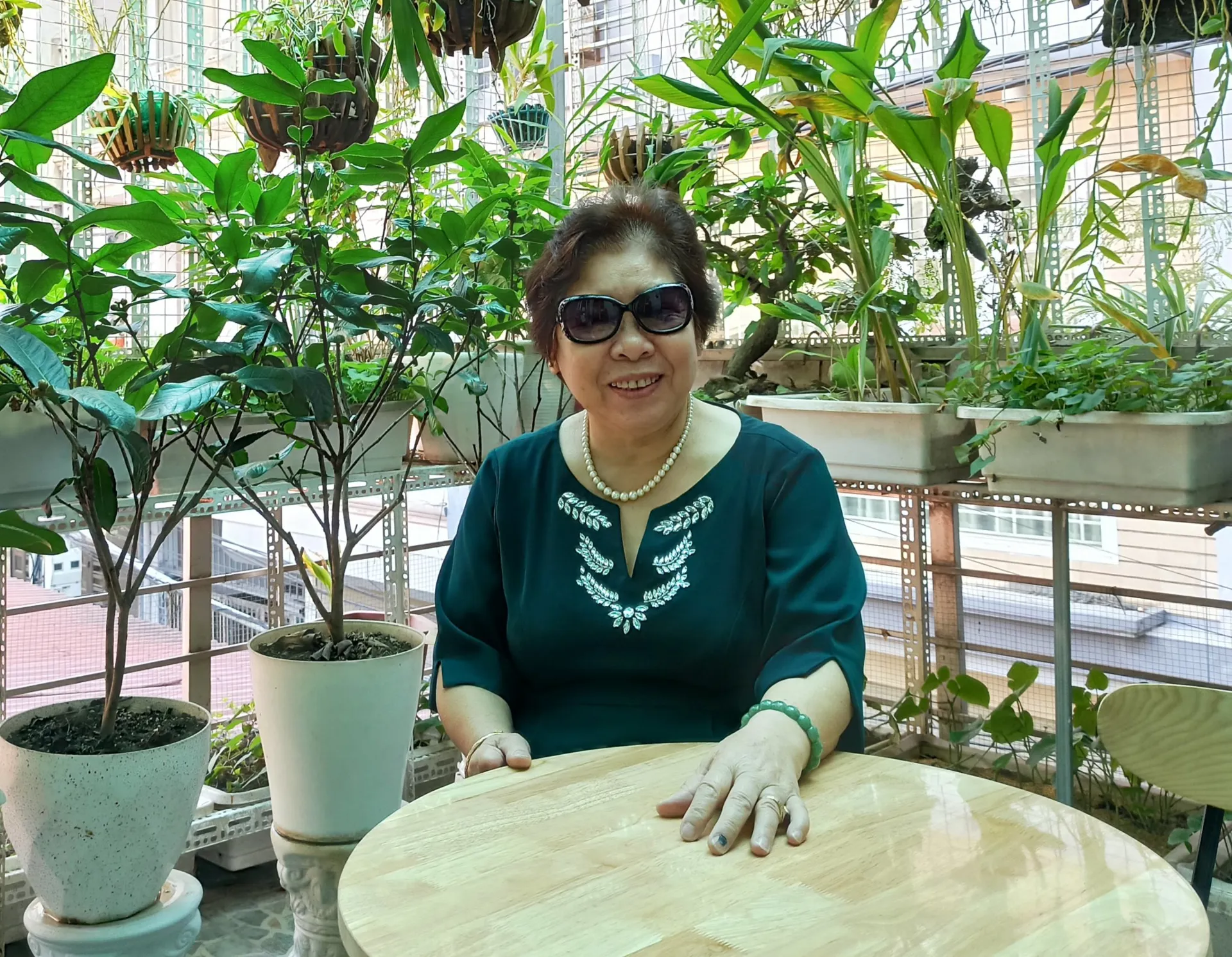
Hanoi teacher devotes life to teach students in southern battlefield
Pham Thi Hai Am realizes that the more thorny and challenging the path to happiness is, the greater and more sustainable the value of joy will be.
Every time Pham Thi Hai Am looked at old photos she took with her comrades, tears welled up in her eyes as she recalled the hardships of the battlefield and missed her departed comrades.
| Pham Thi Hai Am is happy to see her comrades again through photos displayed at the National Archives Centre III. Photos: Tra My |
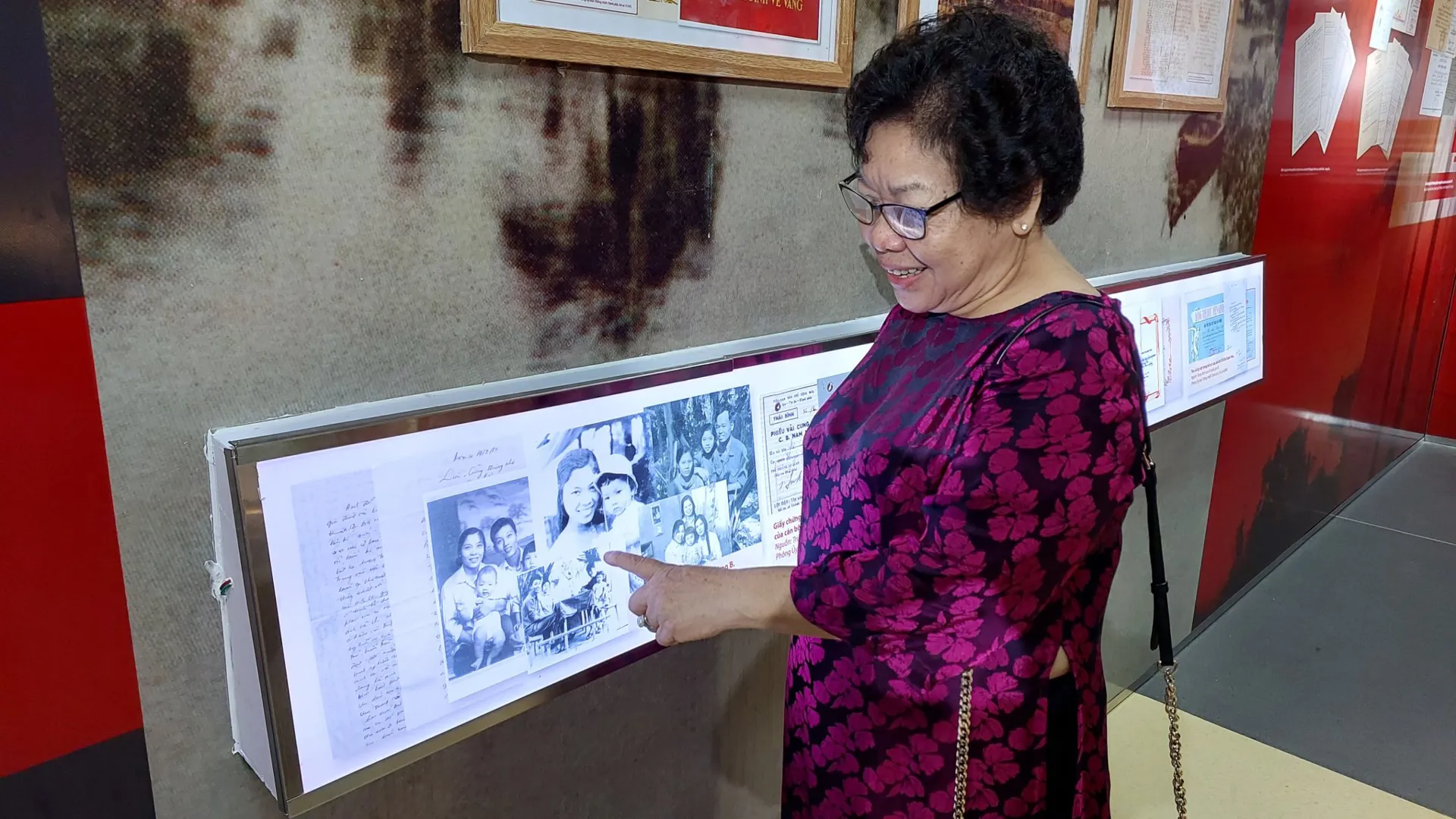
“Although shrapnel pieces are still stuck in my body, I am still luckier than many teammates because I come back alive,” she said.
Recently, she donated her memorabilia to the National Archives Centre III (Hanoi) in the hope that her story of war will forever be told to the next generation.
Unforgettable moments in life
In 1969, Pham Thi Hai Am left Hanoi and volunteered to enter the southern battlefield (battlefield B). Because of a special political mission, people going to battlefield B had to hide their identity and cut off all communications with the North.
The mission to go to battlefield B began in 1959. Hundreds of cadres, teachers, and journalists from the North secretly crossed the Truong Son mountain range to the South to fight in battle or perform the socioeconomic tasks in the liberated zones. To keep their mission secret, they changed their identity, cut off contact with their families, and left all documents and personal belongings to the Government Unification Committee.
At only 21 years old, right after graduation, young teacher Pham Thi Hai Am was the youngest member of the group of volunteers who went to Battlefield B on March 5, 1969.
“Before we left, we only knew that we were going to the South to open schools for the children there. Bidding farewell to parents, brothers, and sisters with no return date in sight, but we were determined to go," recalls Mrs. Am.
To go to the South, they trekked for six months through thick jungles and battled all kinds of ordeals Many people died along the way from malaria or being captured by the enemy.
They crossed the Truong Son not by their physical strength but by the iron will of the teachers. In the South, they opened classes and taught students in the shade of trees, in secret tunnels, amid enemy raids.
Although she was mentally prepared beforehand, Am could not yet imagine all the hardships on the southern battlefield. On the days of the enemy attacks, she hid in the forest, under the leaves of palm, waiting for the raids to end, and then returned to the village and mobilized students for class.
The wartime class lacked everything and had to be very flexible to avoid the search for the enemy.
It was hard, but they were still tenacious in doing their duty. Am recalled the moment when they were dumbfounded learning that Uncle Ho was gone.
“The whole country was in tears crying for Uncle, we also made white garlands decorated with green papaya to pay tribute to the national hero,” Am said in tears. They asked themselves when the country would be reunified and when they could return to their family.
With sorrow, they promised Uncle Ho that they would strive to soon reunify the country as he wanted.
Am continued her duties in the South West region and fell in love with police officer Ngo Van Quy. They married and had their first daughter in 1972.
In May 1974, an unexpected incident marked a turning point in her life. An explosive device exploded just over a meter away from Am. Pieces of metal stuck in many parts of her body. She was seriously injured in both knees and had to remain immobile for almost a month.
After that, she was sent to the North for further treatment, taking her along with her daughter while her husband remained on duty in the South. She returned to Hanoi at the end of March 1975.
| Old photos of teacher Pham Thi Hai Am are donated to the National Archives Centre III. |
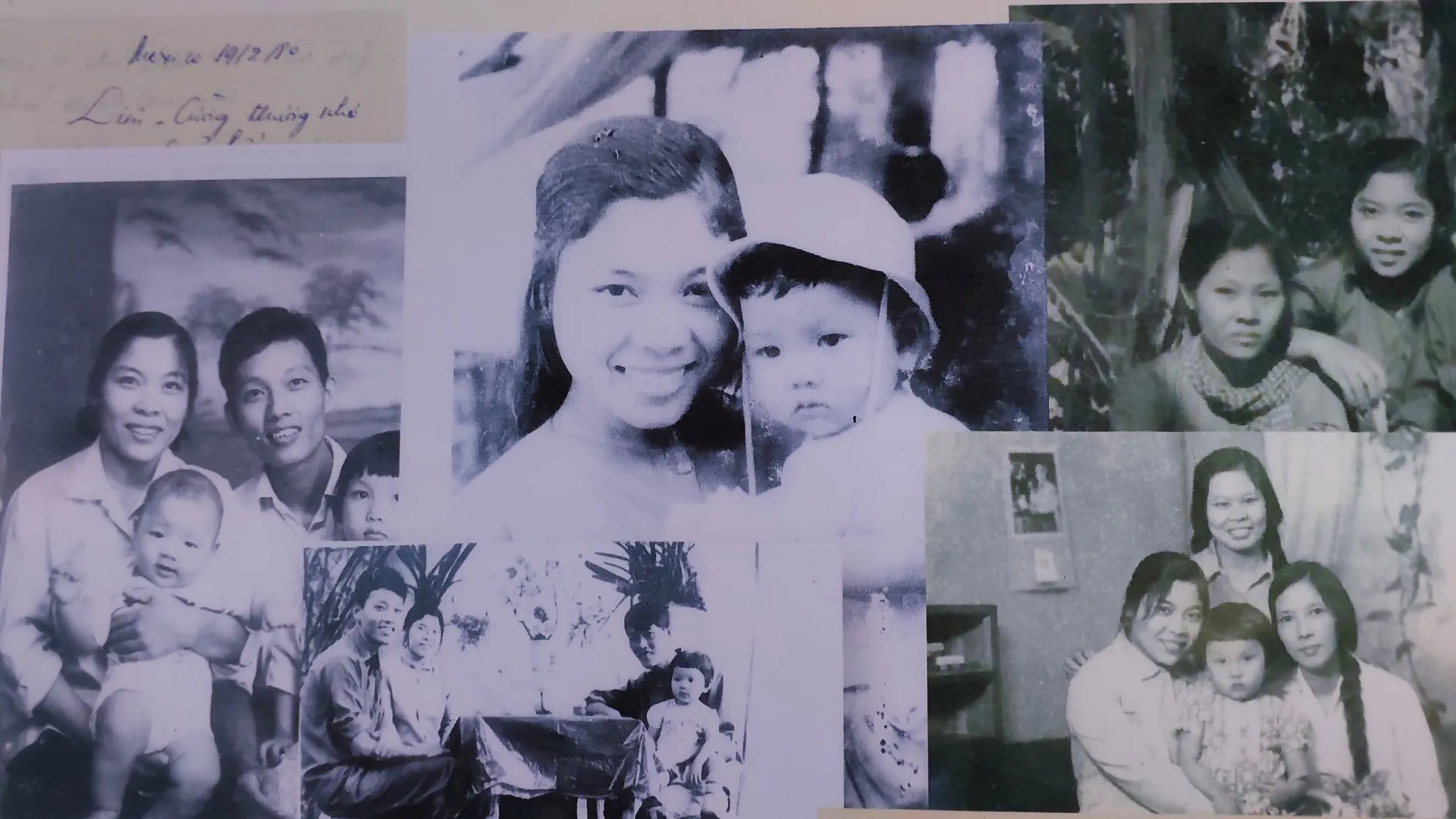
It isn't easy to describe her happiness of Am when she was reunited with her family members and relatives.
“For many years without me at home, my siblings did not dare to mention my name because they feared my parents would be sad. We hugged each other with joy,” she said emotionally.
On the first National Day, after the country was unified, Am and her family went to Thong Nhat (Reunification) Park to watch fireworks. It was the most glorious and brilliant moment of her life. The sound of fireworks made her heart sob. Suddenly, the explosion of bombs and bullets, the sound of students, and the warm Southern voice mixed with the sound of fireworks kept echoing in her mind.
“The feeling at that time is difficult to describe in words. I am happy because the country was now independent and free, and the fierce war was over, but the joy was not complete because my husband at that time was still in the South. We were reunited a year later. That was when I felt the happiness of living in peace,” she said.
Love story Based on the true story of her life, Pham Thi Hai Am wrote an autobiography and published it with the title Chuyen tinh thoi hoa lua (The love story in the time of fire and flowers).
|
| Pham Thi Hai Am at the moment. |