Hanoi to ban plastic use in downtown this October
The drive is part of an effort to ease problems raised in the city struggling with more than 1,400 tons of plastic waste generated daily.
THE HANOI TIMES — In a move to combat plastic pollution, Hanoi will begin piloting a ban on single-use plastics at cafés, restaurants, and drink stalls in the densely populated Belt Road No. 1 area this October.

International visitors enjoy Hanoi's cuisine. Photo: Duy Khanh/The Hanoi Times
Laying groundwork for greener future
It is a response to Directive No. 20 issued by Prime Minister Pham Minh Chinh on July 12, which outlines urgent environmental protection measures.
The directive instructs Hanoi to phase out single-use plastics in restaurants, hotels, and beverage shops inside Belt Road No. 1, a vital traffic corridor running through urban areas such as Tran Khat Chan, Nguyen Khoai, Dai Co Viet, Xa Dan, O Cho Dua, De La Thanh, and Hoang Cau.
Just days earlier, the Hanoi People’s Council approved a resolution detailing steps to reduce plastic consumption in production, commerce, and daily life.
Traditional wet markets are one of the city’s largest sources of single-use plastics, plastic bags, foam boxes, and disposable cups.
However, change is on the way. Starting January 1, 2027, markets and convenience stores will no longer be permitted to provide non-biodegradable plastic bags for free. A year later, on January 1, 2028, they must stop using and circulating all such materials, except for packaging goods.
“We use plastic bags because they’re convenient, and we don’t charge customers for them,” said a Dong Xuan Market vendor. “But if the city enforces a new policy, we’ll comply. Switching to paper boxes is doable.”
Hanoi’s hospitality sector is also shifting away from plastic. At a hotel in Cua Nam Ward, many single-use items, such as toothbrushes and water bottles, have already been replaced with eco-friendly alternatives.
According to the city’s resolution, hotels and tourist destinations will be required to stop using and distributing single-use plastic products by January 1, 2026.
“We’re replacing plastic bottles and brushes with sustainable materials,” said Nguyen Duc An, the food and beverage manager at the Muong Thanh Hotel. “By 2026, we’ll no longer use single-use plastics.”
Residents have also voiced support for the changes, even acknowledging the added cost. “Switching to paper cups and bags may increase expenses,” said Hanoi resident Nguyen Ngoc Mai. “But it’s a necessary step to protect the environment. I support the city’s roadmap.”
The new policies also extend to e-commerce. Online retailers will be required to minimize their use of plastic packaging and cushioning materials or collect and recycle them to prevent environmental leakage. Starting January 1, 2031, Vietnam will ban the production and import of all single-use plastic products unless they are certified with the Vietnam Eco-label.
Additionally, city agencies and government-affiliated organizations will be prohibited from using single-use plastics or non-biodegradable packaging in their daily operations, especially when handling food.

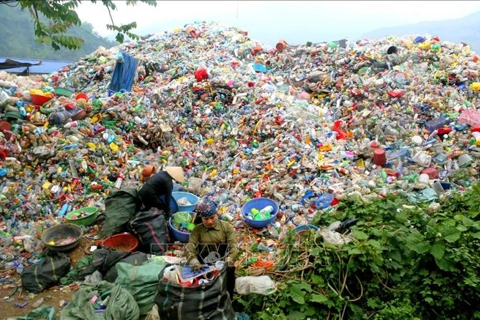
Xa Cau Village, located in Ung Hoa District, Hanoi, is well known for its plastic waste recycling craft. Photo: Quy Nguyen/The Hanoi Times
While the roadmap is ambitious, turning these policies into everyday practice will be challenging. Changing the behavior of both consumers and businesses requires more than just regulation; it requires deep changes in mindset, habits, and infrastructure.
Vu Quoc Tri, Secretary General of the Vietnam Tourism Association, stressed that financial constraints remain a major barrier: "In tourism, we rely heavily on plastic products to serve guests," he explained. "Transitioning away from plastic means replacing nearly everything, which requires significant investment."
"First, we need financial support. But the tourism sector is still recovering, and most businesses are small or micro-sized with scarce resources. Competing in today’s market is difficult enough; investing in green alternatives is an even greater challenge,” he added.
Tri also pointed to gaps in policy development and enforcement. “To truly encourage sustainable practices, we need consistent regulations and mechanisms that reward meaningful change,” he said.
National effort takes shape
Hanoi is not alone in this effort. Across Vietnam, cities and provinces are imposing similar bans and restrictions. Since 2019 and 2022, respectively, tourists have been prohibited from bringing plastic bags to the Cham Islands (Danang) and Co To Island (Quang Ninh). Six years ago, Ha Long Bay introduced a ban on single-use cups, straws, and bags.
In May of this year, a tourist boat was suspended for seven days after allowing passengers to use disposable plastics.
In Ho Chi Minh City, the Thanh An Commune and tourist areas in Can Gio have set goals to significantly reduce plastic use by 2030. Danang has also experimented with this policy. Three years ago, the Han Market encouraged vendors to use paper bags and collect clean plastic bags for reuse.
National regulations are tightening as well. According to Decree No. 08/2022, Vietnam will begin placing restrictions on the production and import of small, non-biodegradable plastic bags in 2026. The government aims to halt the production and import of all single-use plastics, including foam food containers and plastic bags, by 2030.
|
To help consumers identify recyclable materials, plastic products are labeled with numbers from 1 to 7, each of which has distinct properties and recycling challenges.
|