Hanoi to become northern hub for tourism growth
Hanoi serves as a gateway and transfer point for visitors to the Red River Delta provinces and the northern mountainous region.
The Ministry of Culture, Sports and Tourism has announced the "Cultural and Sports Facilities Network Planning" and the "Tourism System Planning for 2021-2030, with a Vision to 2045", both of which identify Hanoi as the tourism growth pole in the North.
According to Deputy Minister of Culture, Sports and Tourism Hoang Dao Cuong, Hanoi plays the role of gateway and transfer for visitors to the Red River Delta provinces and the northern mountainous region. Meanwhile, HCM City is identified as the national growth pole in the South, playing the role of the largest international gateway in Vietnam, and the central coast city of Danang, the national growth pole in the central region, playing the role of a gateway to attract visitors by air, sea and road.
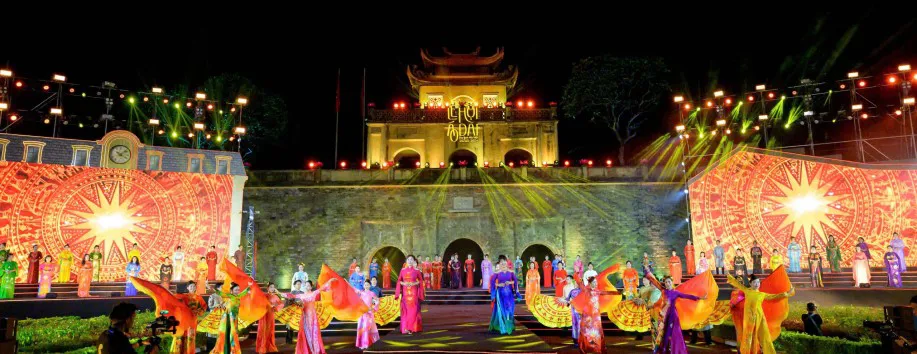
| Thang Long Imperial Citadel is an important relic of the capital. Photo: Hanoi.gov.vn |
The plans also emphasize the construction and establishment of eight tourism development areas to channel resources and maximize investment efficiency. In particular, in the North, they specify a dynamic tourism development area consisting of Hanoi-Haiphong-Quang Ninh-Ninh Binh, taking advantage of the Lao Cai-Hanoi-Haiphong-Quang Ninh economic corridor.
The tourism plan for the period 2021-2030, with a vision until 2045, establishes that tourism development will truly become a spearhead economic sector, in a professional, modern and in-depth direction; accounting for an increasingly high proportion in the GDP structure, creating a driving force to promote other industries and sectors.
The plans set the goal that by 2025, Vietnam will become an attractive destination with high tourism development capacity in the world; by 2030, tourism will truly become a spearhead economic sector, developing in the direction of green growth.
In 2025, Vietnam tourism aims to welcome 25-28 million international visitors and 130 million domestic visitors, maintain a domestic visitor growth rate of 8-9%/year, and directly contribute 8-9% to GDP. By 2030, Vietnam seeks to welcome 35 million international visitors, a growth rate of 13-15%/year, welcome 160 million domestic visitors, a domestic visitor growth rate of 4-5%/year, and directly contribute 13-14% to GDP.
The planning of the network of cultural and sports facilities for the period 2021-2030, with a vision up to 2045, intends to develop a synchronous, modern and unique national network of cultural facilities, with the aim of building a national image associated with absorbing the cultural quintessence of the times; ensuring the good implementation of the task of preserving and promoting the values and identity of the nation.
According to the plan, key cultural and sports centers will be established in major national and regional cities in Hanoi, Quang Ninh, Haiphong, Vinh, Danang, Hue, Quy Nhon, Buon Ma Thuot, HCM City and Cantho.
The plan sets the direction for the development of a national cultural network, including museum network; library network; cinema network; performing arts network; cultural and art exhibition network and network of cultural centers in the country and Vietnamese cultural centers abroad.
The Hanoi Department of Culture and Sports plans to invest more than VND14,200 billion (nearly US$592 million) in preserving and restoring relics in the area in 2021-2025. Hanoi also has a strategy to develop creative spaces in the future, especially in the area on both banks of the Red River.