Hanoi
Hanoi to build 18 bridges across the Hong River
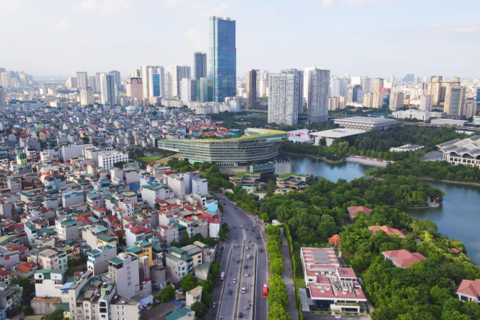
Under Hanoi’s Transportation Plan for 2030, with a vision towards 2050, travelling across the rivers of Hong, Duong, Day and Da will be made easier with more bridges. Particularly, 11 more bridges and an underwater tunnel crossing Hong River are being planned, along with the current seven bridges.
According to Hanoi’s Transportation Plan for 2030, with a vision towards 2050 revealed on July 30, developing public transportation is chosen the top priority in order to accommodate urbanisation and a booming population, which is expected to reach 7.9 million in 2020 and 9.2 million in 2030.
The city will build six new inner city railway routes beside the two routes of Cat Linh – Ha Dong and Nhon – Hanoi Railway Station, which are currently under construction. The network is expected to cover a total length of 300 km.
Buses will be another major means of public transport. In addition to developing regular bus services, Hanoi targets to have eight Bus Rapid Transit (BRT) routes, a high-quality bus transit system that delivers fast and comfortable services by 2030. The first BRT route connecting Kim Ma and Yen Nghia is already being built and expected to begin operations at the end of this year.
Inter-provincial coach stations will gradually be moved to the outskirts of the city, beyond Ring Road 3, to decrease traffic flow in downtown. They will be connected to downtown via the public transportation system. The current stations, which are located inside the city, like Gia Lam, Giap Bat and My Dinh, will be renovated and upgraded to serve inner city travel, according to the plan.
Director of Hanoi’s Department of Transport Vu Van Vien said these projects aim to increase the share of public transport in the city from the current low figure of about 10 percent to 30-35 percent by 2020. The figure is expected to reach 50 percent by 2030, and 70 percent after 2050.
Under the new master plan, Hanoi will also focus on completing the system of ring roads and elevated roads to ensure better connectivity with inner city roads.
Besides, travelling across the rivers of Hong, Duong, Day and Da will be made easier with more bridges. Particularly, 11 more bridges and an underwater tunnel crossing Hong River are being planned, in addition to the current seven bridges. Another five rail bridges will also be constructed across the river, including one to replace the old railway route of Long Bien Bridge. The new bridge and route will be built 75m upstream of Long Bien Bridge.
The plan also aims to create better connections between Hanoi and other provinces through new highways, such as the Hanoi – HCM City Highway, Hanoi - Hoa Binh Highway, Noi Bai - Ha Long Highway, Northeast - National Highway 5 and two inter-regional belts.
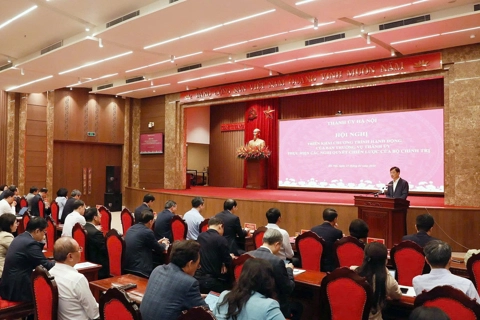
Speaking at the ceremony to announce the plan, Deputy Prime Minister Trinh Dinh Dung underscored its significance to not only the city’s socio-economic development, but also the Hong River Delta and the whole northern economic zone.
The Deputy Prime Minister said the Government would support Hanoi in carrying out the plan and create favourable policies and conditions for Hanoi to develop rapidly and effectively.
The city will build six new inner city railway routes beside the two routes of Cat Linh – Ha Dong and Nhon – Hanoi Railway Station, which are currently under construction. The network is expected to cover a total length of 300 km.
Buses will be another major means of public transport. In addition to developing regular bus services, Hanoi targets to have eight Bus Rapid Transit (BRT) routes, a high-quality bus transit system that delivers fast and comfortable services by 2030. The first BRT route connecting Kim Ma and Yen Nghia is already being built and expected to begin operations at the end of this year.

11 more bridges and an underwater tunnel crossing Hong River are being planned, in addition to the current seven bridges.
|
Director of Hanoi’s Department of Transport Vu Van Vien said these projects aim to increase the share of public transport in the city from the current low figure of about 10 percent to 30-35 percent by 2020. The figure is expected to reach 50 percent by 2030, and 70 percent after 2050.
Under the new master plan, Hanoi will also focus on completing the system of ring roads and elevated roads to ensure better connectivity with inner city roads.
Besides, travelling across the rivers of Hong, Duong, Day and Da will be made easier with more bridges. Particularly, 11 more bridges and an underwater tunnel crossing Hong River are being planned, in addition to the current seven bridges. Another five rail bridges will also be constructed across the river, including one to replace the old railway route of Long Bien Bridge. The new bridge and route will be built 75m upstream of Long Bien Bridge.
The plan also aims to create better connections between Hanoi and other provinces through new highways, such as the Hanoi – HCM City Highway, Hanoi - Hoa Binh Highway, Noi Bai - Ha Long Highway, Northeast - National Highway 5 and two inter-regional belts.
Speaking at the ceremony to announce the plan, Deputy Prime Minister Trinh Dinh Dung underscored its significance to not only the city’s socio-economic development, but also the Hong River Delta and the whole northern economic zone.
The Deputy Prime Minister said the Government would support Hanoi in carrying out the plan and create favourable policies and conditions for Hanoi to develop rapidly and effectively.