Hanoi to clear 231 makeshift markets to restore urban order
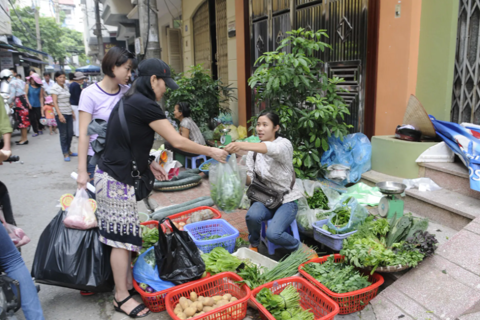
Hanoi has unveiled a phased roadmap to dismantle 231 makeshift markets citywide, aiming to improve traffic safety, environmental sanitation and food safety while gradually relocating vendors into formal markets under a long-term urban management strategy.
THE HANOI TIMES — Hanoi plans to clear all 231 makeshift markets as part of a comprehensive effort to restore urban order, improve traffic safety, protect the environment and ensure food safety, according to the city’s latest plan.
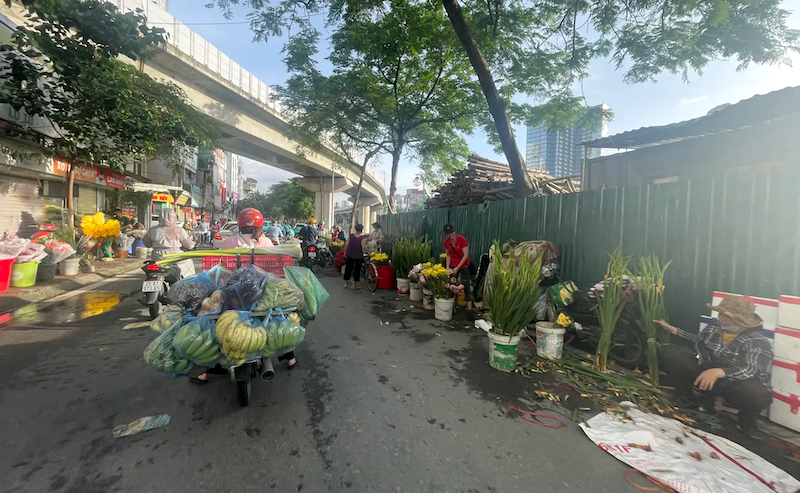
Vendors sell flowers on Giap Nhat Street, Hanoi. Photo: Van Nhi/The Hanoi Times
Following a citywide review, these makeshift markets have been classified into four groups, each with a specific clearance timeline.
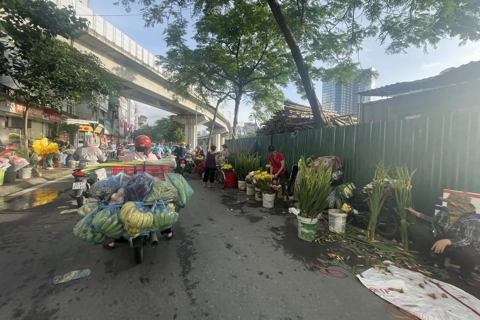
Group 1 includes markets that encroach on roads and sidewalks and are considered traffic and urban-order hotspots. These must be dismantled by January 30, 2026.
Group 2 consists of markets with fewer than 50 vendors and is scheduled for clearance by June 30, 2026.
Group 3 covers markets with between 50 and 100 vendors and must be resolved by December 30, 2026.
Group 4 includes long-standing, large-scale markets with more than 100 vendors, which are to be cleared by June 30, 2027.
To safeguard livelihoods, the city has instructed wards and communes to review the current operation of formal markets, assess occupancy rates and infrastructure and develop plans to relocate vendors from makeshift markets into officially recognized markets where space is still available.
At the same time, Hanoi will invest in building new markets and upgrading existing ones under its 2026-2030 market development and management plan, with priority given to areas that currently lack adequate market facilities.
Local authorities will bear full responsibility for implementing the clearances under the “six-clear” principle, which emphasizes clear responsibilities, timelines, methods, coordination, outcomes and accountability.
This includes mobilizing relevant forces to conduct public outreach, dialogue and commitments with vendors, while encouraging residents to shift their shopping habits toward formal markets.
After the clearances, localities are required to maintain regular patrols and inspections, station enforcement personnel, install road markings and prohibition signs and apply technology-based solutions to prevent the re-emergence of makeshift markets.
Hanoi has set similar goals to eliminate makeshift markets since the early 2000s, often integrating them into campaigns to restore urban order.
However, hundreds still persist in many wards and communes, occupying roads and sidewalks, disrupting traffic, polluting the environment and undermining the city’s appearance. This reality has prompted Hanoi to adopt a more comprehensive and long-term approach.
According to the Hanoi Department of Industry and Trade, the city currently has 457 markets, classified from Grade 1 to Grade 3. However, traditional markets meet only about 40% of shopping demand in inner-city districts and 70% in suburban areas.
As of the end of October 2025, Hanoi had 223 makeshift markets in 50 wards and communes.
Source: Plan No. 373/KH-UBND dated December 26, 2025