Removing makeshift markets – way for better Hanoi
The city is urged to fund markets, address land and asset issues, support land-use paperwork, deter illegal trading and promote traditional and modern retail.
THE HANOI TIMES — Eliminating all makeshift and temporary markets in 2025 is a priority task for Hanoi to transform into a civilized, modern, green, clean and beautiful city.
Known as unregulated trading spots, these markets run counter to the goal of building Hanoi into a civilized, modern, green, clean, and beautiful city, according to Le Quoc Phuong, former Deputy Director of the Ministry of Industry and Trade’s Center for Industry and Trade Information.
Indeed, makeshift markets occupy roadways and sidewalks, obstruct traffic, and spoil the city’s appearance, Phuong noted.
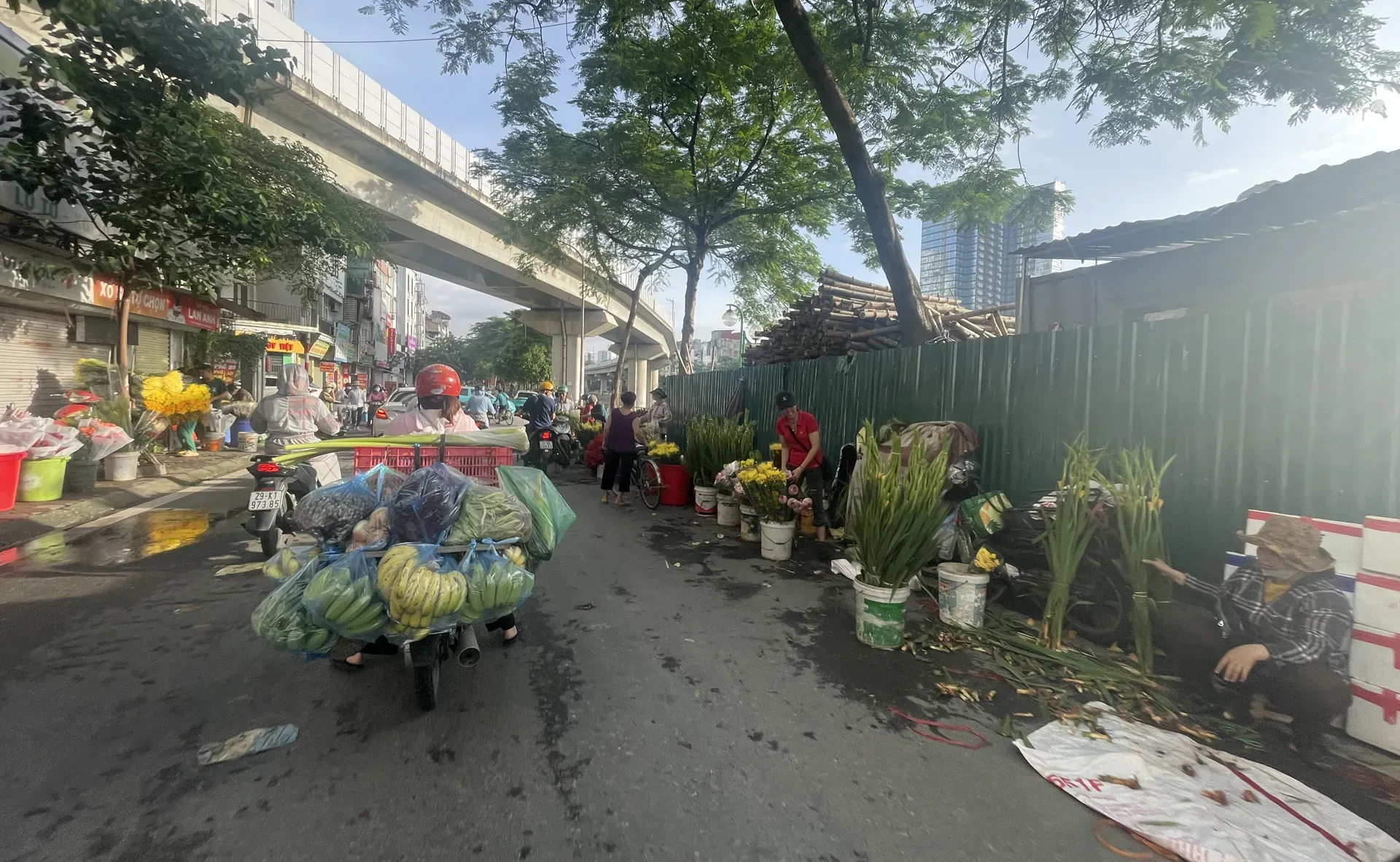
Vendors sell flowers on Giap Nhat Street, Hanoi. Photo: Van Nhi/The Hanoi Times
However, makeshift and temporary markets remain popular shopping spots for many Hanoians. The city is currently home to 85 such markets.
Phuong said that these markets are a livelihood for many because vendors can avoid traveling to designated markets and paying market fees.
“Many people are used to shopping at makeshift markets because it’s quick and convenient. They can stop their motorbike on the way home from work without having to park inside a properly-built market,” he added.
Tran Minh Trang, a resident of Van Mieu – Quoc Tu Giam Ward, said that such markets often operate from early morning until night. “People can stop right on the sidewalk to bargain and buy food for convenience,” she said.
Nguyen Thu Hang, also from the same ward, often shops at temporary markets because she returns home late from work. “It takes me more time going into a traditional market, while the food quality at the makeshift market is not much different from that in traditional markets and supermarkets,” she said.
Architect Tran Huy Anh, a standing member of the Hanoi Architects Association, noted that Hanoi has close ties with rural areas, especially in supplying fresh produce, meat and fish.
“It’s hard to control unregulated markets regarding product in terms of quality and origin, which can lead to counterfeit goods and food poisoning caused by dishonest traders,” he said.
“Moreover, the drive for quick access to buyers results in sidewalks and streets being taken over, compromising traffic safety, street appearance, and environmental hygiene,” he added.
According to Anh, many people prefer makeshift markets due to poor planning. “The construction of new markets have often failed to consider traffic flow, supply-demand balance, and residents’ shopping habits,” he said.
Busy local markets like Hang Da, Cua Nam, and Cho Mo, which used to be very convenient for daily trade, have been converted into supermarkets and commercial properties.
At these new sites, vendors are relocated to less favorable positions, such as basements, and have to pay fees that exceed their modest profits. As a result, they leave the markets and sell on the sidewalks.
From an administrative management perspective, Vu Thi Ngoc Hien, Vice Chairwoman of the Duong Noi Ward People’s Committee, said that local authorities often encourage vendors at makeshift and temporary markets to follow the city’s policies.
Maintaining urban order and traffic safety remains ineffective because violations reoccur after each enforcement round, she said. “Ensuring clear roads and sidewalks is only a temporary solution, as it is difficult to address the livelihood needs of small traders,” Hien added.
Offering another perspective, Phung Ngoc Son, Chairman of the Dai Mo Ward People’s Committee, said that although market construction is partly funded by the state budget, implementation faces many obstacles, including land prices and rental fees.
Transitioning to new market management models also faces issues related to investment, construction, and land lease certification, he said.
Balanced solutions needed
Removing makeshift and temporary markets is necessary to ensure food safety, urban aesthetics, environmental hygiene, and traffic safety in Hanoi.
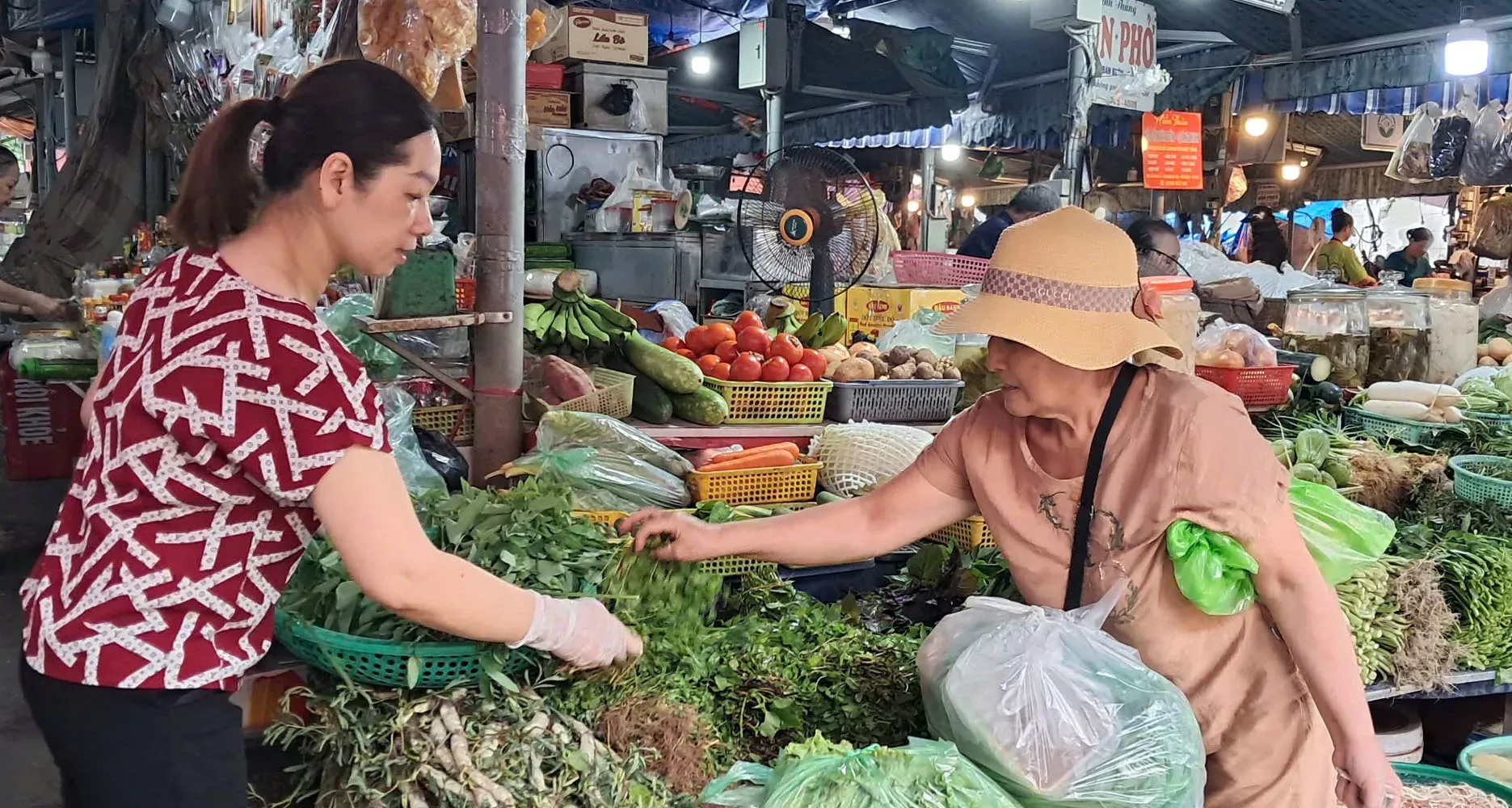
A vegetable stall inside a well-planned market in Hanoi. Photo: Hoai Nam/The Hanoi Times
However, the city should consider different approaches to protect the interests of vendors, buyers, and managers.
Dao Ngoc Nghiem, Vice Chairman of the Vietnam Urban Planning and Development Association, said that Hanoi lacks a well-designed network of public and commercial markets in wards and communes. This has led to the emergence of makeshift and temporary markets.
Nghiem recommended that Hanoi develop policies to attract private investment in building and upgrading markets to serve all social groups, especially middle- and low-income residents, thereby eliminating makeshift and temporary markets.
Vo Nguyen Phong, Director of the Hanoi Department of Industry and Trade, proposed that the municipal People’s Committee adopt policies to mobilize private resources for market development, enabling vendors to operate inside formal markets.
He also suggested that the Ministry of Finance provide regulations on rent exemptions and reductions, and loan incentives for enterprises and cooperatives investing in, managing, and operating markets. “This would lower initial costs, allowing market operators to set reasonable service fees and ensure social welfare and stability,” he said.
Phong also said the city should allocate public investment funds for markets to meet development targets and criteria, resolve land rent issues, maintain checkpoints at cleared sites to prevent spontaneous trading from returning, and promote public awareness of shopping at traditional markets and modern convenience stores instead of spontaneous trading spots.
According to the Hanoi Department of Industry and Trade, the city has nearly 460 markets of various types, many of which are deteriorating. In 2025, Hanoi plans to build and renovate 105 markets. By early July 2025, the city completed the renovation and upgrade of 41 markets, 29 others were under construction and expected to finish within the year, while authorities planned to start construction of 15 markets in 2025 for completion in 2026.