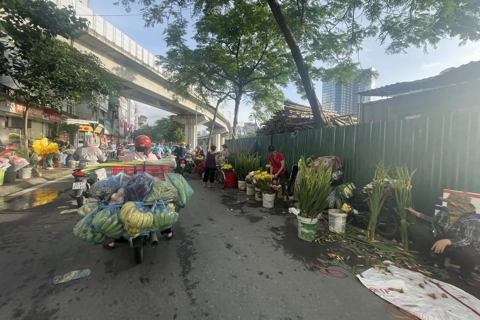
Hanoi to phase out makeshift markets under new community market plan
Upgrading and constructing new traditional markets would address local demand and provide a practical solution to reduce and eventually eliminate makeshift markets.
THE HANOI TIMES — Hanoi is drawing up a list of new community markets for its investment plan and calling for private investment to replace makeshift and temporary markets.
Chairwoman of the Vietnam Retailers Association Tran Thi Phuong Lan said the move is a sustainable way to address ongoing violations, since traditional markets remain an essential part of daily life and a key cultural space for local communities.
“The core issue is restructuring community markets, from planning and infrastructure to business costs, so they become clean, convenient and appealing enough to draw residents and vendors away from makeshift markets,” she added.
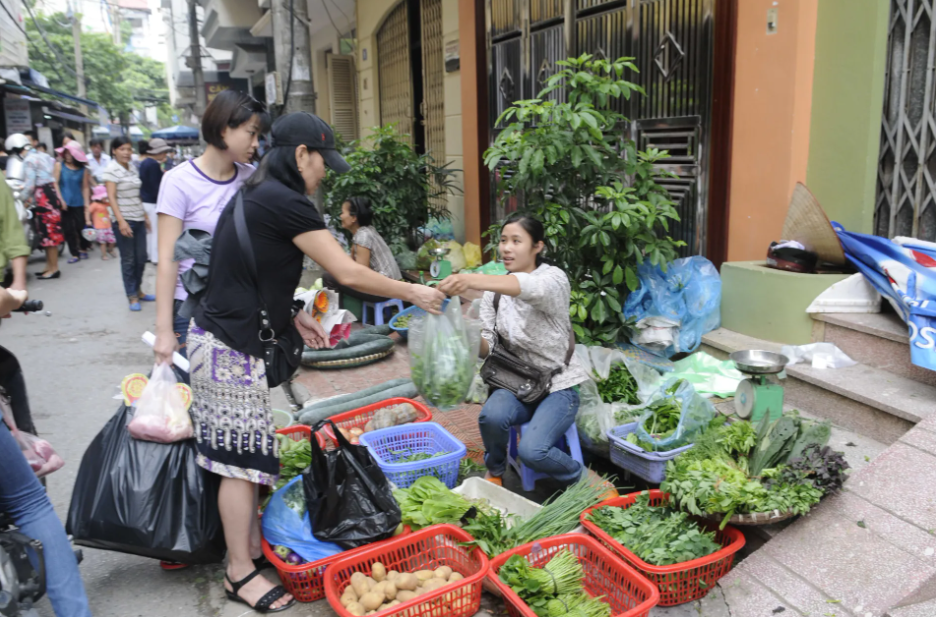
A makeshift market in Nam Thanh Cong, Hanoi. Photo: Thanh Hai/The Hanoi Times
Unable to meet local demand
According to the Hanoi Department of Industry and Trade, the city now has 457 markets across three classification levels.
These traditional markets supply about 40% of consumer demand in urban districts and about 70% in suburban areas.
Many are deteriorating, which discourages shoppers and pushes them toward makeshift curbside markets that spill onto sidewalks and alleys.
As of September 2025 Hanoi had 251 makeshift markets in 55 wards and communes. In October authorities cleared 28 spontaneous trading spots in seven localities including Giang Vo, Khuong Dinh, Chuong My, Phuc Son, Son Dong, Hat Mon and Quoc Oai. By the end of October 2025 a total of 223 makeshift markets remained in 50 localities.
Deputy Director of the Hanoi Department of Industry and Trade Nguyen Kieu Oanh said local authorities are responsible for removing markets that violate planning rules, clearing spontaneous trading points and maintaining public order.
Director of the Hanoi Department of Industry and Trade Vo Nguyen Phong explained that makeshift markets persist because many existing community markets do not meet local demand while informal markets have been operating for 20 to 30 years.
Rapid urbanization and strong population growth have increased daily consumption needs, which has fueled the spread of curbside markets in densely populated areas.
Hanoi’s efforts to attract private investment for new market construction have faced challenges, making it difficult to meet local demand. Many vendors also avoid formal markets because rental fees remain high.
At the same time shoppers are not fully accustomed to buying from supermarkets or convenience stores and often prefer quick curbside purchases, which makes clearance efforts more difficult and allows makeshift markets to thrive.
More attractive traditional markets needed
Traditional markets serve as cultural anchors and essential community spaces while remaining a major source of consumer goods, supplying about 60% of daily necessities through wholesale and traditional retail markets.
Upgrading and building new traditional markets would meet local needs and offer a practical way to reduce and eventually eliminate makeshift markets.
Lan from the Vietnam Retailers Association adds that traditional markets play an irreplaceable role in community life.
“To attract shoppers, markets must be redesigned with clear planning standards, trained staff and organized supply chains. Renovation must also be accompanied by stronger management inside and outside market premises,” Lan said.
She added investment should be significant enough to make traditional markets attractive for both daily shoppers and tourists.
Former Deputy Director of the Domestic Market Department Le Viet Nga agreed, noting that in many countries tourists visit local markets rather than supermarkets.
She noted market development should recognize different types of markets including tourist markets, community markets and wholesale markets.
“With better facilities and business conditions, traditional markets can remain an essential channel for consumption and a strong draw for visitors,” Nga continued.
Former Deputy Director of the Industry and Trade Information Center Le Quoc Phuong said that to address makeshift markets authorities must pair strict clearance with rapid development of modern markets, outlets and wholesale facilities.
He suggested waiving rental fees for a certain period to encourage vendors to relocate. Only when legal markets are clean, convenient and affordable will vendors leave makeshift and temporary markets, he noted.
For the policy to work, Director of the Institute for Brand and Competition Strategy Vo Tri Thanh recommended that Hanoi select investors with strong financial capacity, modern technology and reliable business practices.
Thanh said project designs should minimize disruptions to vendor practices and should not force abrupt changes to consumer habits. He also suggested converting surplus public buildings after administrative mergers into community markets to reduce the emergence of makeshift markets.
To accelerate this effort, Vice Chairman of the Hanoi People’s Committee Nguyen Manh Quyen has instructed the Department of Industry and Trade to review and compile a full list of new community markets needed in districts where shortages persist and include them in the 2026 construction plan.
The department will also work with the Department of Finance to guide local authorities on incentives that encourage shoppers to return to formal markets and support vendors who relocate. Those incentives may include free parking and reasonable service fees.
“Local authorities are responsible for clearing remaining makeshift and temporary markets and linking clearance with the development of community markets according to the city’s planning,” said Quyen.
Market operating rules must strengthen accountability between vendors and market management teams, particularly regarding food origin, product labeling and food safety. Large markets should consider adding quick testing facilities, he noted.
“Makeshift markets can only be cleared if replacement community markets are built. If private capital is not available, local authorities will be required to allocate state budget funding,” Quyen noted.