Hanoi to expand underground space by 2030
The core of Hanoi's future underground public spaces will be metro stations for the urban railway network.
Hanoi has planned to increase the construction of underground areas in 20 districts by 2030, according to Tran Quang Tuyen, Deputy Director of Hanoi's Department of Planning and Architecture.
Citing statistics from the Hanoi Department of Transportation, he said the city's underground transportation infrastructure accounts for only about 12% of the total.
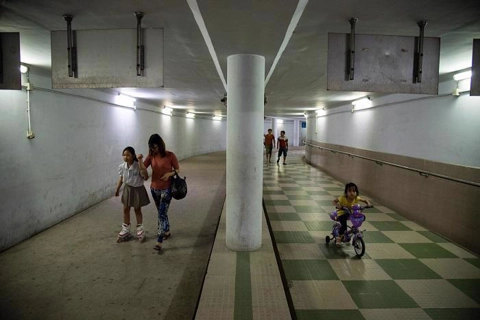
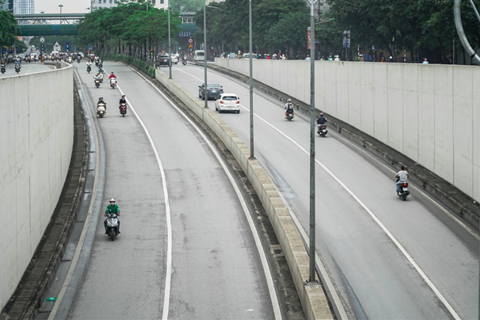
Hanoi has been using underground space to build transportation infrastructure in recent years, but the results are still scattered and modest. The city's earliest completed underground projects are a few short underpasses such as Thanh Xuan, Le Van Luong, Tran Duy Hung, or pedestrian tunnels through Pham Hung and Nguyen Trai.
Major cities around the world have made good use of underground space for transportation, including subways, underground parking lots, underground roads, and tunnels under rivers or mountains.
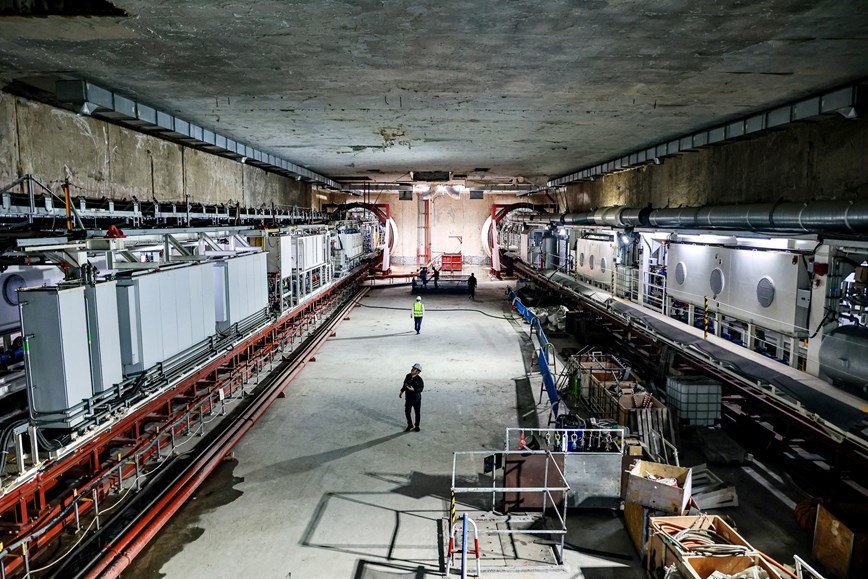
"Technically, the construction of underground highways is feasible in Hanoi. We haven't focused on using underground space for roads and haven't made a thorough plan for it, and that's the problem," Tuyen told The Hanoi Times.Workers during the construction of the S9 subway station of the Nhon-Hanoi Railway Station subway line. Photo: Hanoi Metropolitan Railway Administration Board |
He added that to expand underground, it is necessary to amend Hanoi's construction master plan, which will help speed up the development of urban subterranean spaces in the capital.
"The plan is to build underground public spaces within 500 meters of walking distance from high-rise buildings, commercial centers, fitness centers, squares and stadiums," the deputy director went on.
Hanoi is the first locality in the country to complete the master plan on underground construction space in its downtown. The city has also determined to develop urban areas in line with the transit-oriented development (TOD), so exploiting underground space is even more necessary, contributing to increasing the area for public transport to optimally exploit urban land funds.
Effective use of underground urban space will help the capital improve the ecological environment, significantly reduce urban pollution, and enhance economic and social benefits, Tuyen stressed.
It is expected that 79 public underground parking garages will be built in nine downtown districts, covering a total area of 107 hectares. The garages will be built in three- to five-level basements for shopping malls and service centers.
Underground stations for the metro network will form the nucleus of future underground public spaces covering more than 2,100 hectares.
However, the construction of underground works in the Old Town will be minimized.
Nguyen Cong Giang from Hanoi University of Architecture told Vietnam's Government Portal that the development of urban underground space is a necessary criterion to measure the level of modernization of Hanoi and an inevitable trend of urban development, the capital city faces challenges in its management and use.
"It is necessary to develop a planning policy framework and clear legal principles that define the ownership and use of underground space, set depth limits appropriate for each development purpose, and ensure compatibility between different uses," Giang said.
He added that with the support of technology, underground space planning can reach a high level of detail, helping Hanoi to effectively utilize this resource while ensuring harmony with the capital's cultural and historical values.
"Proper planning of urban underground space will speed up Hanoi's development and increase economic and social benefits. Therefore, urban underground spaces must be well developed and utilized so that the city can develop faster and better," Giang said.
Architect Tran Huy Anh, a member of the Hanoi Architects Association, told The Hanoi Times that, in addition to refining the system of regulations on management, ownership and technical specifications for underground works, it is also very important to prepare a source of capital to develop an underground space system.
"The construction and operation of underground works requires complex technology, techniques and equipment, so the cost is often much higher than that of above-ground works. Lack of funding would jeopardize the plans," Anh said.
Deputy Director Tran Quang Tuyen said that the Hanoi Department of Planning and Architecture will review and adjust the legal basis to ensure consistency regarding underground works.
"It is important to set up training and capacity-building programs to improve the state management of underground space and establish a unified apparatus for managing urban underground space," Tuyen said.
Tuyen said that the process of urban construction and development in the world always involves the use of underground space. "The use of underground space and the construction of underground works are the real needs of Hanoi today. It is a precious resource that needs appropriate policies for planning, construction and management."