Hanoi to host fireworks at 38 venues for New Year 2026 celebrations
The fireworks displays will welcome the New Year and the Lunar New Year 2026, combining traditional pyrotechnics with modern light-show technologies to deliver visually dynamic celebrations across the capital.
THE HANOI TIMES — Hanoi plans to host fireworks at 38 venues for New Year 2026 celebrations, with five locations set for displays on January 1 and 31 sites designated for the Lunar New Year (Tet holiday) on February 17.
The schedule and final plan will be submitted to the municipal Party Committee for approval based on prevailing conditions.
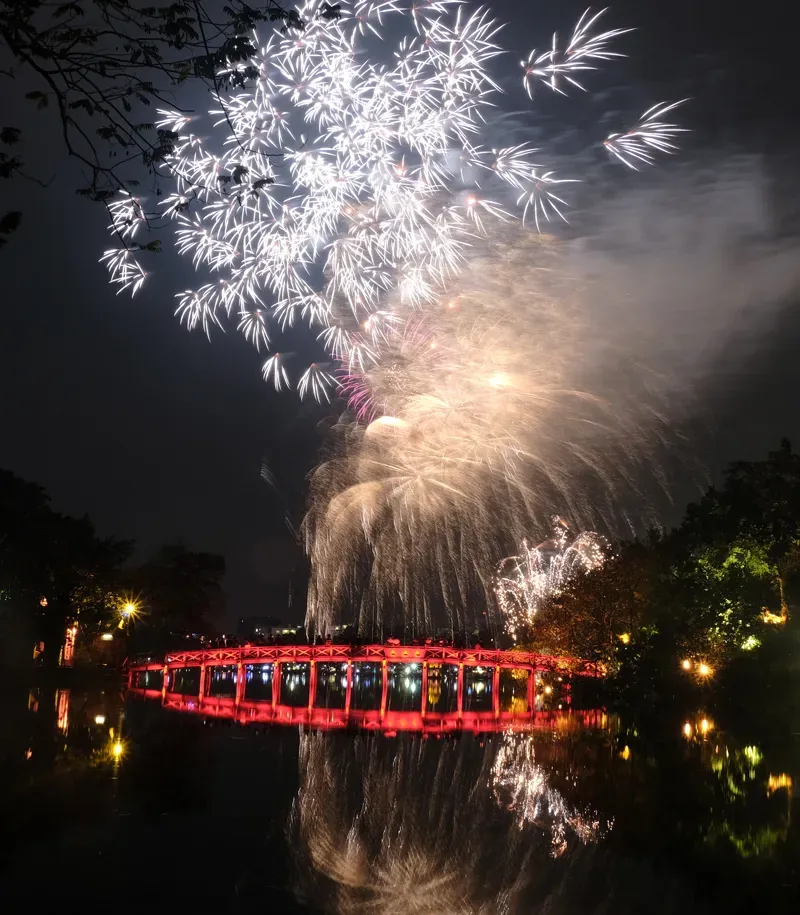
A spectacular fireworks display lights up Hanoi’s iconic Hoan Kiem Lake. Photo: Pham Hung/The Hanoi Times
According to the city's authorities, the New Year’s Eve fireworks will follow a new approach, emphasizing larger scale and higher quality displays.
Five main locations will host six firing sites combining high-altitude, low-altitude, and pyrotechnic effects, with shows running from 11:45 PM to midnight on January 1.
The sites include two locations in Hoan Kiem Ward, in front of the Hanoi Moi Newspaper office and the Hanoi Post Office, along with Thong Nhat Park in Hai Ba Trung Ward, the F1 racetrack area in Tu Liem Ward, Lac Long Quan flower garden in Tay Ho Ward and Van Quan Lake in Ha Dong Ward.
Hanoi is also preparing a Countdown 2026 celebration at Dong Kinh Nghia Thuc Square and across the Hoan Kiem Lake pedestrian area, where music, lighting and large crowds will mark the final moments of the year.
Under the theme “Countdown 2026 - Opening Real Connections,” the program aims to highlight the capital’s spirit of innovation and community while presenting Hanoi as a modern, culturally rich and welcoming destination.
For the Lunar New Year, fireworks are planned at 32 firing sites across 31 locations, including 11 sites with both high- and low-altitude displays and 21 with low-altitude shows.
Apart from fireworks, the city will roll out cultural and tourism events before and during Tet, keep heritage sites open to visitors, and introduce new tourism products showcasing traditional Tet values.