Hanoi to make bus service efficient
Hanoi's bus service is undergoing a major overhaul to encourage people to use public transport and leave their private vehicles at home.
Master Vu Hoang Chung, a transport expert from the Hanoi Metropolitan Railway Management Board (MRB) shared with The Hanoi Times how to improve the effectiveness of bus service and the direction of the capital's bus network in the coming time.
How do you assess the current bus network in the capital?
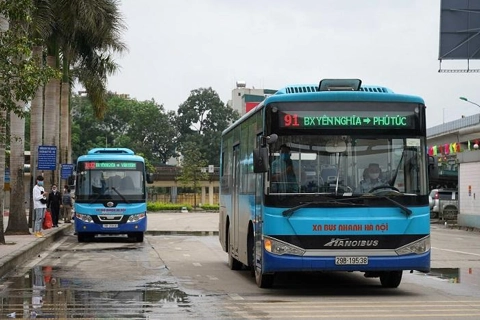
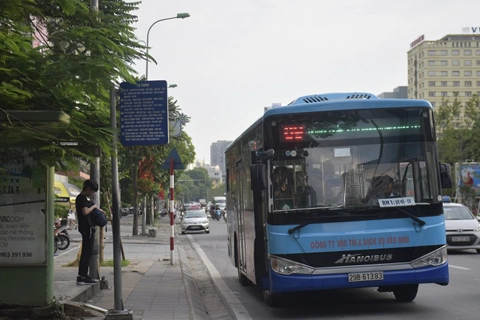
Over the past twenty years, Hanoi's bus network has been systematically upgraded and improved in quality. More and more people are turning to the bus for their commuting needs.
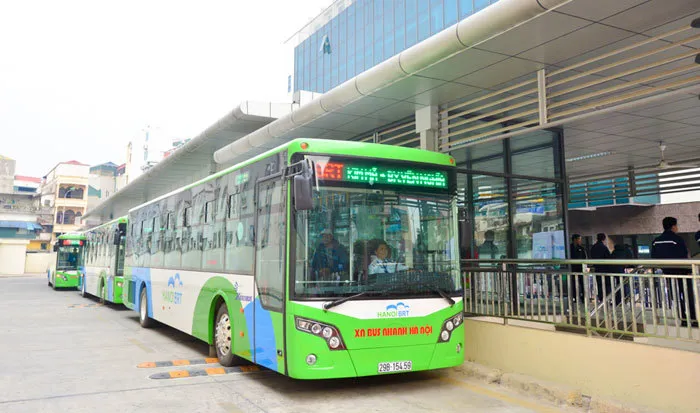
A Bus Rapid Transit (BRT) in Hanoi picks up passengers at Kim Ma station. Photo: Thanh Hai/The Hanoi Times |
Buses account for 20% of local mobility and are increasingly integrated into people's lives. This is a great achievement, an important condition that helps reduce private cars, traffic congestion and pollution.
However, Hanoi's bus network still needs major changes. If the city authorities can draw up a specific and accurate roadmap for the development of the bus network, it will undoubtedly ensure the efficiency and success of the bus as a key player in the public transport system.
Could you elaborate on the roadmap for bus network development?
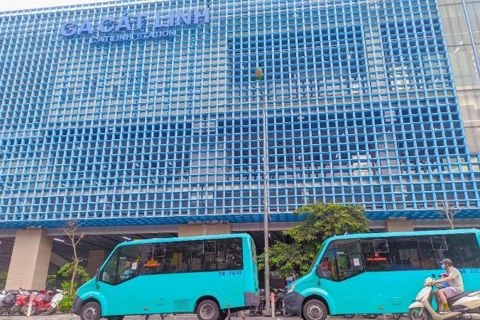
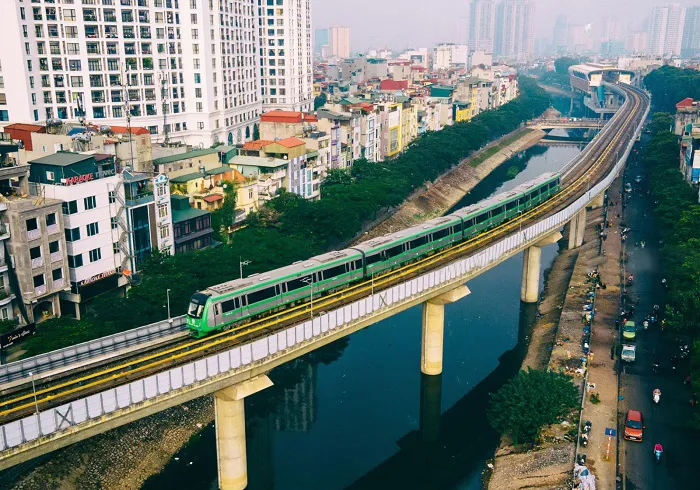
The public transport system of a metropolis like Hanoi must have a metro as its backbone, with buses playing a supporting role. Hanoi has already launched Metro Line 2A [Cat Linh-Ha Dong Railway Line] and is preparing to launch Line 3. The arrival of the light rail will help the city authorities shape the future of buses and build a more appropriate and effective network.
The 4.0 technology era offers great opportunities for bus modernization. In Hanoi, electronic ticket cards were introduced on 14 bus lines in November, followed by ten more in December. With convenient and useful electronic ticket cards, buses will be more attractive to people.
In addition, the Vietnamese government has asked Hanoi to implement a bus greening roadmap. Specifically, by 2035, new bus routes must be operated with clean energy vehicles, and by 2050, all new routes must be replaced with buses fueled by compressed natural gas (CNG). This is a very high requirement, but it is also an opportunity for Hanoi buses to have modern, high-quality vehicles to serve passengers.
Metro Line 2A [Cat Linh-Ha Dong Railway Line] in Hanoi. Photo: Hai Linh/The Hanoi Times |
How should the Hanoi Bus Service be modernized?
The Hanoi Department of Transport plans to hire a consultant to evaluate the operation of the bus network. The best development scenario for buses will be based on the evaluation, combined with an analysis of the role of buses in the current context of Hanoi's urban rail and public shared bicycles.
The city must invest more in buses, prioritizing separate lanes wherever possible while continuing to study the possibility of using fast, high-capacity buses.
Hanoi is expected to expand the bike-sharing network to enhance bus-to-bus connectivity. In particular, the city should develop a plan to attract investment in bus shelters to ensure the most convenient and comfortable place for people to access buses.
At the same time, transportation companies need to change the way they think about improving the quality of their public transportation services. Bus personnel should be trained and their skills improved, with a focus on providing the most attentive service to passengers.
What are the specific problems to be solved?
First, every bus operator must be aware of putting the community's interests first and be mindful of their mission to serve the community, thereby raising the awareness of bus staff to become friendlier and closer to the people and passengers.
Second, Hanoi should replace the old buses with new and high-quality vehicles, improve the application of science and technology, and bring maximum convenience to the people. It is also necessary to improve management methods and remuneration to better care for the lives of bus workers.
Thank you for your time!
In the first nine months of the year, the total revenue of the entire bus network reached an estimated VND410.2 billion (US$16.8 million). The network made about 5.45 million trips and carried 410 million passengers, an impressive increase of 57% year-on-year, reaching nearly 95% of the projected target. The Bus Rapid Transit (BRT) line alone carried about 3.4 million passengers. The Cat Linh-Ha Dong urban rail alone served about 7.2 million passengers, generating an estimated total revenue of VND55 billion ($2.26 million). |