Hanoi to raise household waste collection fees by seven times in 2026
Hanoi is set to gradually raise household waste collection fees, with a significant increase expected by 2026.
THE HANOI TIMES — Waste collection fees in Hanoi may rise sevenfold next year as the city tries to combat rising waste challenges and boost sustainability.
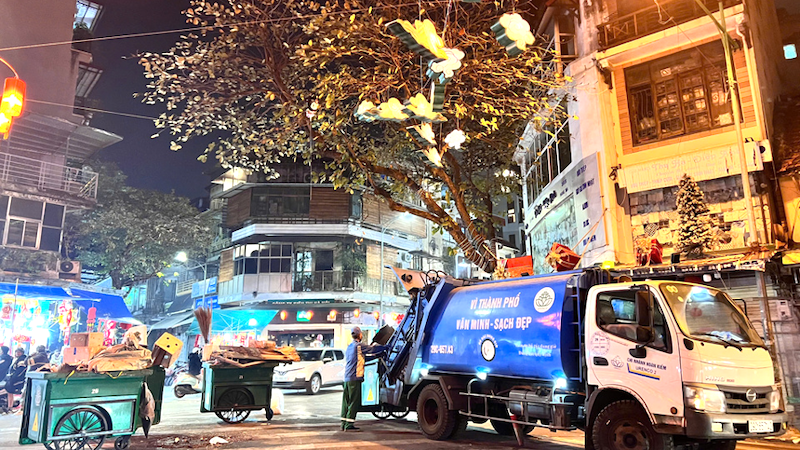
Waste collecting in Hanoi's Old Quarter. Photo: Kinh te & Do thi Newspaper
In a proposal, now open for public feedback, Hanoi plans to raise household waste collection fees across all wards to VND43,000 (US$1.6) per person per month in 2026.
For this year, the fee is expected to reach VND21,000 ($0.8) per person per month. Domestic waste is now collected for VND6,000 ($0.23) per person per month.
In rural communes, the fee is projected to increase to VND10,000 ($0.38) per person per month in 2025, and VND23,000 ($0.88) in 2026 from the current VND3,000 ($0.11). For organizations, businesses, services, and industrial clusters, the proposed fee is VND1,175 ($0.04) per kilogram, calculated based on the actual amount of waste generated.
The proposal is part of Hanoi’s draft regulation on waste fees aimed at tackling rising waste challenges and boosting sustainability.
According to the Hanoi People's Committee, current fees do not fully reflect the actual costs of waste collection and treatment. The shortfall places a heavy burden on the city budget.
In 2024, Hanoi spent a total of VND2.3 trillion ($87.6 million) on waste collection and management, while the collection fees paid by residents were worth nearly VND570 billion ($21.6 million).
Hanoi’s fees are still much lower than those elsewhere such as Ho Chi Minh City, the northern city of Haiphong, the northern province of Hung Yen, and the central coastal city of Danang.
The city also cites Article No. 79 of the 2020 Environmental Protection Law, which requires households and individuals to pay waste fees based on the amount or volume of properly sorted waste.
The Hanoi Department of Agriculture and Environment reported that Hanoi generates an average of 7,500 tons of domestic waste each day.
Since December 2024, local authorities have stopped collecting domestic wastes during the day.
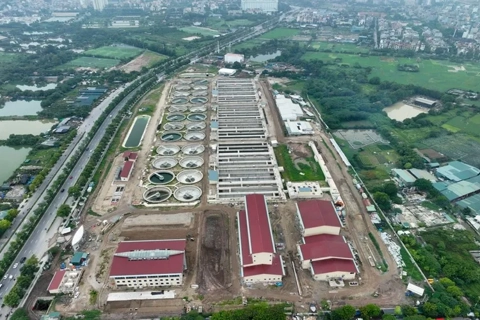
The city has put two waste-to-energy plants of Thien Y in Soc Son Commune and Seraphin in Tung Thien Commune into operation.
Together, the two plants are capable of processing more than 6,000 tons of domestic waste per day and generating 120MW of electricity.