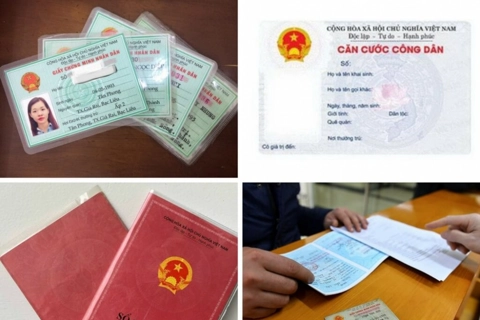
Hanoi to scrap its own conditions for residency registration
Despite recognizing the move would put great pressure on infrastructure, the Hanoi government has supported the removal of specific conditions for household registration in a big city.
Hanoi’s own conditions on residency registration will be removed to ensure the Vietnamese citizens' right to reside anywhere in their own country.
According to the city’s authorities, the move will reduce administrative procedures and be fairer to everybody, local media reported.
The Vietnamese parliament's Legal Committee has held a meeting with Hanoi’s government to inspect the enforcement of some provisions of the Law of Residence (amended) in the city.
The meeting aimed to assess the impact of two groundbreaking policies: scrapping household registration books and removing Hanoi’s conditions for residency registration. The two policies will create great favorable conditions for migrants to live in Hanoi. On the other hand, they cause concerns of urban infrastructure overload because of major influx of people from the countryside to the city.
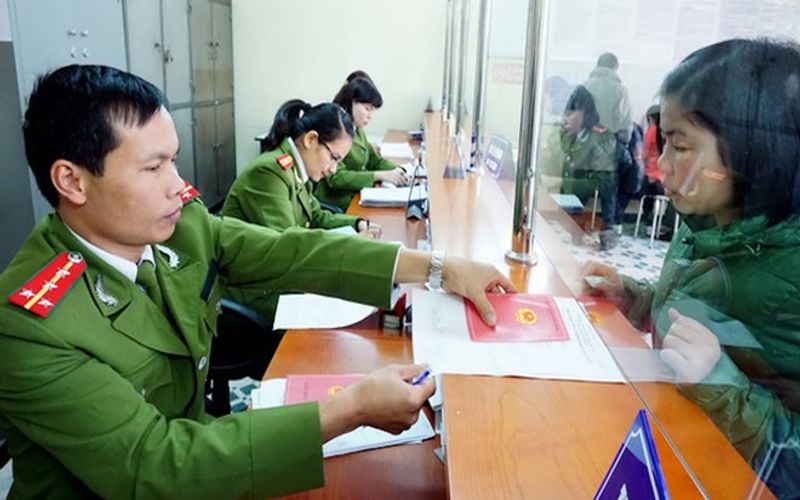
Migrant workers will enjoy many benefits if this policy is implemented. Photo: Ngoc Thang |
According to a report by the municipal People's Committee, Hanoi is currently the second most populous town in Vietnam, after Ho Chi Minh City, and also has the second highest population density nationwide, with an average of 2,398 people per square kilometer, 8.2 times higher than the national average.
As of June 30, 2020, Hanoi has 7.855 million people, of them around 6.744 million are permanent residents and about 1.1 million are living in temporary residency status.
Despite recognizing the move would put a lot of pressure on infrastructure, the Hanoi People's Committee has supported the removal of specific conditions for residency registration in a big city as they “only prevent citizens from being registered as permanent residents, and have not helped curb the rural - urban migration," said the report.
In anticipation of the potential population rise if the residency registration conditions are removed, Hanoi also proposed some measures on the expansion of health, education, transportation networks and housing development as well as the relocation of city dwellers to outlying districts.
Speaking to the media at the end of June, Lieutenant General Nguyen Ngoc Anh, director of the Department of Legal Administration Reform under the Ministry of Public Security, said that the conditions for household registration in big cities is unfair and infringe upon people's right of free residence and movement.
He also stated the ministry's viewpoint that no city or province should be allowed to apply its own residency registration conditions to ensure human rights, citizens' rights and be adaptive with the new situation.
To be registered as a permanent resident in Hanoi, a citizen must meet several conditions issued by the city such as three-year continual residence in the city and the minimum floor area.
The household registration and its certificate, or the book, “ho khau” in Vietnamese, has been in effect since the 1960s as an instrument of public security, economic planning, and control of migration. In the post-war period, the book was used as a means to ration food and allocate jobs under the then planned economy.
But following economic reforms in the late 1980s, Vietnam has adopted a socialist-oriented market economy and the “ho khau” has been kept to limit migration to booming cities, to no avail.
A report issued last year by the World Bank noted that 18% of the population in Hanoi lack a “ho khau”. This study shows that the “ho khau” system has created inequality of opportunity for Vietnamese citizens.
The book has come to signify Vietnam’s excessive red tape. It is required in most administrative procedures, including filing a birth certificate, going to school, and getting married, and can decide how easy it is for a person to find a job or buy a house or vehicle.
A person registered outside of Hanoi is not able to register a motorbike or a house under their own name in the city, for example.
In most cities and provinces, people can only become a public servant where they are registered as a permanent resident. And once they move, the procedures to erase their old address from the residency book and add the new one is extremely cumbersome.