Hanoi tourism seeks to address labor shortage
An efficient way to raise the quality of Vietnam's tourism services to international standards is to enhance the training of human resources in the tourism industry.
In the first six months of 2024, the total number of visitors to Hanoi is estimated to hit 14.05 million, including an estimated 3.14 million international tourists.
Many new forms of tourism have emerged, such as community tourism, night-time excursions and sports tourism.
This development also places qualitative and quantitative demands on human resources in tourism. In particular, Covid-19 has caused many workers in the tourism sector to switch to other occupations.
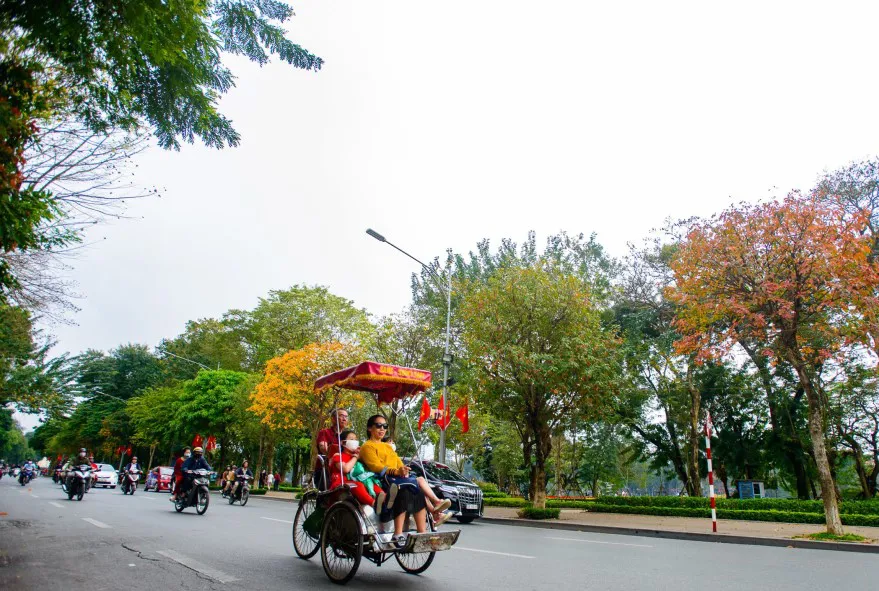
| Tourists in the Hoan Kiem Lake area of Hanoi. Photo: Khanh Huy/The Hanoi Times |
The hotel industry is currently experiencing a labor shortage, which many tourism experts attribute to Covid-19, that has resulted in 20-30% of the workforce leaving the industry. In some establishments, workers perform many tasks at once, such as being a driver and a bellboy, a receptionist and a customer service representative. Human resources in emerging tourism sectors often lack proper training.
In addition to the shortage of skilled labor in the tourism industry, the tourism market faces a more important problem: the disorientation and confusion of many tourism entrepreneurs (especially a group of small and micro enterprises). This means that business owners, who are important for creating jobs for professional human resources, also lack direction, vision, and the ability to rebuild their businesses.
Nhu Thi Ngan, General Director of Hanoi Tourism JSC, said the capital's tourism industry needs strategies to develop and improve its human resource base in the coming years, requiring all stakeholders' involvement, including regulators, educational institutions, businesses, professionals and employees.
According to Ngan, policies are also needed to support and encourage workers to return to the profession after the crisis caused by Covid-19, and to assist in the retraining of tourism workers. On-the-job training appropriate to the size, level and objectives of the business is required.
The tourism sector in Hanoi is currently planning more and more training programs on a variety of topics, including driving, community tourism services, accommodation management and more.
| Human resources in the tourism industry must be upgraded to international standards. Photo: Ngo Minh/The Hanoi Times |

Pham Hong Long, Dean of the Faculty of Tourism at the University of Social Sciences and Humanities at Hanoi National University, said the lack of international standards in the national tourism industry means schools struggle to develop suitable training models.
Long suggested that educational institutions adhere to international training accreditation regulations using the same criteria as the network of universities in Asia and Europe. In order to enable educational institutions to create high-quality training programs that satisfy industry demands, management organizations must synchronize the tourism industry with specific criteria.
Director of Hanoi Department of Tourism Dang Huong Giang said they have adopted many solutions to attract quality human resources and motivate them through activities to be enthusiastic and stay in the profession for a long time.
Measures include promoting international cooperation with foreign educational organizations; mobilizing resources to develop a quality workforce for Hanoi's tourism industry; and most importantly, strengthening the State-school-employer (business) link, in which the city strengthens cooperation between tourism educational institutions and businesses. Only then will the capital's tourism industry gradually strengthen its human resources and meet the growing needs of developing new trends.
Today's tourism workers not only need to be fluent in foreign languages, they also need to be proficient in technology and have the skills to produce products to high quality standards. Meanwhile, many students graduating from tourism faculties cannot even compete with students majoring in foreign languages due to their weak communication skills with foreigners.
Therefore, leading experts in the tourism industry agree that it is necessary to have separate standards in international human resource training so that training institutions have guidance to develop appropriate training methods.