Hanoi trains cyclo drivers to raise tourism standards
Hanoi is stepping up training for rickshaw drivers in its Old Quarter as part of efforts to improve services and strengthen the city’s tourism workforce.
THE HANOI TIMES — Hanoi has stepped up efforts to professionalize its iconic cyclo service, holding a two-day training conference for cyclo drivers on January 27–28 to improve tourism knowledge, legal compliance and traffic safety as the city seeks to enhance visitor experiences.
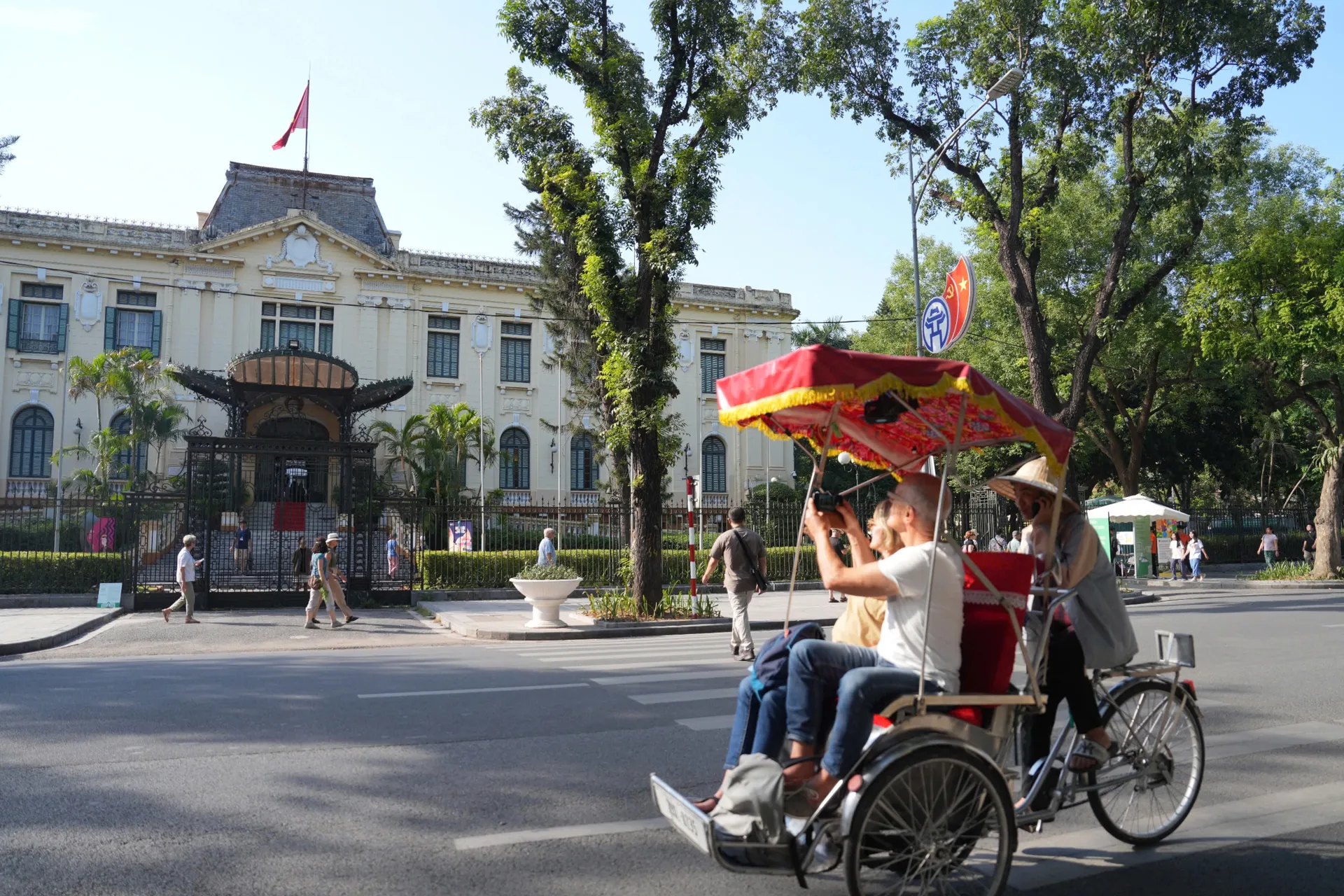
Riding a cyclo offers visitors a slow-paced way to explore Hanoi’s historic streets. Photo: Ngoc Tu/The Hanoi Times
Organized by the Hanoi Department of Tourism, the program brought together experts from Hanoi Open University and the city’s police department to train drivers in customer service, cultural communication and relevant regulations.
Participants were briefed on the Tourism Law, including their rights and obligations, common violations and penalties, as well as traffic safety rules, permitted operating routes and designated parking and stopping points.
The event brought together experts from Hanoi Open University and the city’s police department to provide instruction on customer service, cultural communication and relevant regulations.
Drivers were briefed on the Tourism Law, including their rights and obligations when serving visitors, as well as common violations and penalties.
The sessions also covered traffic safety rules, permitted operating routes for tourist cyclos, designated parking and stopping points and updated regulations on urban order.
Deputy Director of the Hanoi Department of Tourism Tran Trung Hieu said tourism has increasingly become a key pillar of the city’s economy, helping drive growth and promote the image of the capital.
As the sector expands, demand is rising for higher standards in tourism management and human resources, including cyclo drivers, who represent a culturally iconic mode of transport.
The training aims to improve professional skills, work discipline and service standards among drivers who interact directly with tourists, supporting Hanoi’s goal of a safe, orderly and hospitable destination.
Hieu said the program also focuses on traffic safety signage, typical violations and penalties to help drivers raise legal awareness, prevent violations and ensure safety for themselves, passengers and the community.
The cyclo has been part of Hanoi’s urban landscape since the early 20th century, originally serving as a common means of daily transport for errands such as shopping and dining.
While modern vehicles have largely replaced it for everyday travel, the cyclo remains a cultural fixture in the Old Quarter and a symbol of the city’s traditional street life.
Today, cyclos operate mainly as a tourism service, typically between 9 AM to 8 PM, offering visitors a slow-paced view of historic neighborhoods.
Morning routes, which often pass Quang Ba flower market and circle West Lake and Haon Kiem Lake, provide a glimpse of early-day commerce, with flower-laden bicycles moving through the streets and contributing to the area’s distinctive atmosphere.