Hanoi urged to adopt 'sponge city' model to mitigate flooding
When urban planning integrates this concept, every park, retention lake and canal can act as a “water buffer,” preventing system overload during heavy rains.
THE HANOI TIMES — Recent heavy rains and flooding across Hanoi have exposed the city’s vulnerabilities, prompting experts to call for a shift in urban planning, from resisting water to adapting and living with it, while upgrading drainage infrastructure to build long-term resilience.

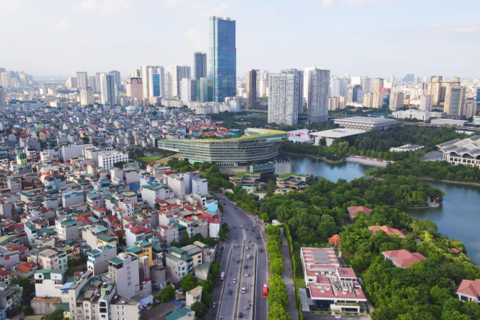
Rivers and lakes in Hanoi help drain water effectively during the rainy and stormy season. Photo: Pham Hung/The Hanoi Times
Challenges from rapid urbanization
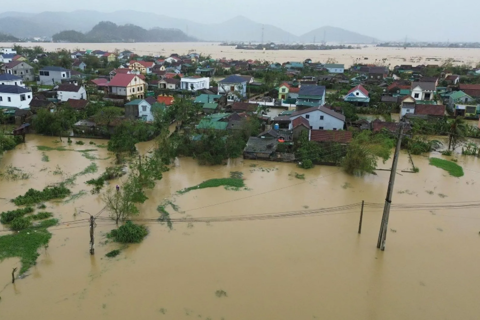
In September and October, Hanoi was hit by consecutive heavy rains that caused widespread flooding across many districts. According to the Hanoi Drainage Company, rainfall on the night of September 30 alone exceeded 300 millimeters in several locations, submerging streets and disrupting traffic.
Although flooding is not new to the city, each downpour brings the issue of urban inundation back into discussion.
Experts note that the problem lies not only in rainfall exceeding the system’s design capacity but also in long-standing shortcomings in urban planning and development.
A modern city cannot rely solely on drains, canals and pumping stations. When most surfaces are covered in concrete and rainwater has nowhere to seep, flooding after just a few hours of heavy rain is inevitable.
Rapid urbanization has also led to the shrinking of natural lakes, ponds and canals across Hanoi. Absorbent and semi-absorbent land has been replaced by impermeable surfaces and new urban areas are often built on elevated land while surrounding neighborhoods remain low-lying, causing localized flooding.
Former Director of the National Institute of Urban and Rural Planning Ngo Trung Hai said this is the result of fast-paced development without considering the natural systems on which the city depends.
“Hanoi cannot continue to “fight floods” after every rainstorm but must learn to live with water, minimize damage and integrate long-term strategies into its planning process,” said Hai.
With adaptive urban design inspired by the “sponge city” model adopted in many countries, extreme rainfall events need not become disasters.
Despite having many lakes, most of them are small with limited water retention capacity. Some are isolated and not connected to the city’s main drainage network, reducing their effectiveness.
Meanwhile, major rivers like To Lich, Nhue and Kim Nguu still face heavy drainage pressure. This highlights the need to synchronize urban and drainage planning to build long-term resilience.
Dr. Tran Van Mieu, Vice President of the Vietnam Association for Nature and Environment Protection, noted that 90% of climate change causes stem from human activity and only about 10% come from natural factors. For cities like Hanoi, urban flooding is largely due to the absence of consistent, practical solutions.
“Planning is key, especially the coordination between urban and transport planning and the inclusion of underground drainage systems,” Mieu noted.
According to Mieu, specific measures include designing integrated underground infrastructure where drainage pipes, fiber-optic cables, postal and telecommunications lines and water supply systems are planned together.
“Technical construction standards must ensure appropriate elevation levels for effective drainage, while natural watercourses within the city should be cleared and maintained,” Mieu said.
Increasing natural permeability through green spaces, parks and grass cover is equally important, he suggested.
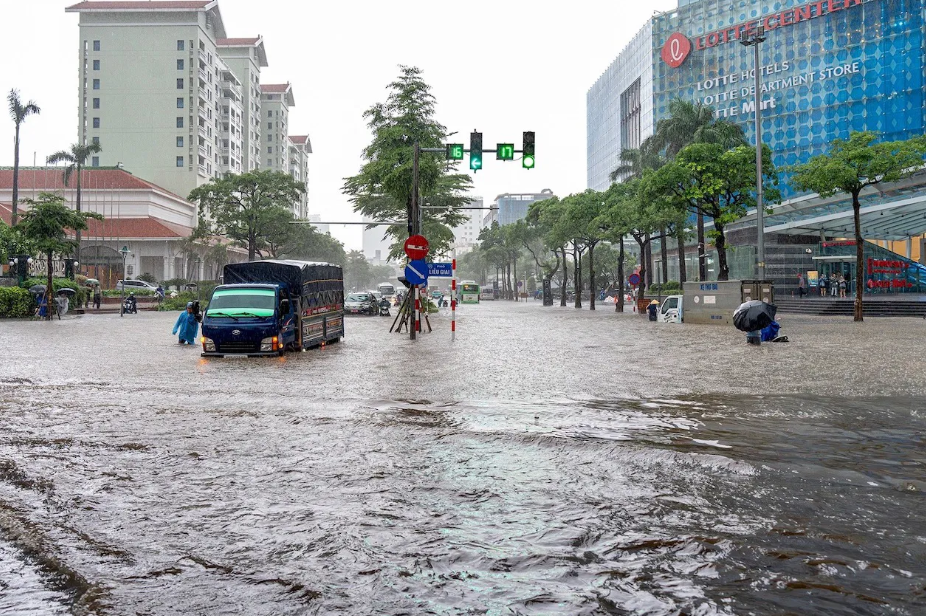
Heavy rain left Hanoi flooded from morning until late at night on September 30, 2025.
Living with water
In a tropical monsoon climate like Hanoi’s, heavy rains are unavoidable, so instead of merely focusing on flood prevention, experts recommend that the city adopt a “living with water” approach.
This approach treats water as a natural element of the urban environment, retained and managed through thoughtful design.
When urban planning integrates this concept, every park, retention lake and canal can act as a “water buffer,” preventing system overload during heavy rains. Experts emphasize that to end flooding,
Hanoi must first solve the issue of water retention before focusing on drainage. Without storage areas, even the largest pipes are only temporary fixes.
Many countries have succeeded by adopting this mindset. The Netherlands, with one-third of its land below sea level, lives with water through flexible dikes, retention lakes and temporary flood plazas. In Singapore, parks and public squares are designed to store rainwater while enhancing urban landscapes.
For Hanoi, “living with water” is not only a technical solution but also a vision for sustainable development. The city should regard water surfaces, green spaces, parks and natural depressions as vital infrastructure equal in importance to roads and electricity.
To make this vision a reality, Hanoi needs coordinated efforts from master planning to detailed management.
New urban areas must strictly comply with drainage basin zoning principles. Land leveling and elevation adjustments must be carefully assessed to prevent higher new developments from flooding surrounding neighborhoods.
Green and water surface ratios must meet planning standards and should not be reduced to increase construction density.
At the same time, the city should apply permeable materials and water-absorbing technologies in urban infrastructure.
Sidewalks, playgrounds and parking lots can use permeable tiles, while parks and squares can incorporate underground reservoirs to temporarily store rainwater and ease pressure on drainage systems. In the long term, Hanoi should complete its integrated drainage master plan that aligns with urban, transport and environmental planning.
By 2030, the system will be organized into eight main drainage basins connected to lakes, rivers and pumping stations. Once synchronized, each basin will be able to handle rainfall independently, reducing pressure on the central areas.
Effective management and maintenance are also crucial. Even the best infrastructure deteriorates without regular upkeep. Canals and drains should be cleared periodically, especially before the rainy season. Public awareness must also improve, with citizens playing an active role by avoiding littering and protecting the city’s drainage network.
|
"Hanoi generates more than one million cubic meters of domestic wastewater each day, yet less than 30% is properly treated. Many urban rivers and lakes are heavily polluted due to untreated wastewater being discharged directly into them. Meanwhile, the city receives an average annual rainfall of 1,600 to 1,800 millimeters, but most of it flows away, causing flooding instead of being reused. Treating and recycling wastewater could create multiple benefits, such as providing water for irrigation, street cleaning, replenishing retention lakes, or supporting industrial production. Many countries have successfully implemented wastewater reuse systems that both reduce pollution and conserve freshwater resources. Hanoi can adopt similar models by linking wastewater treatment with ecological landscape projects such as retention lakes, rain gardens and water parks. Developing green infrastructure, including ecological lakes, wetland parks and river corridors, would not only enhance water treatment and regulation but also improve urban landscapes and residents’ quality of life. This is an essential step toward building a modern city that grows in harmony with nature," Assoc. Prof. Dr. Doan Thu Ha, Director of the Institute of Water Supply, Sewerage and Environment Research. |