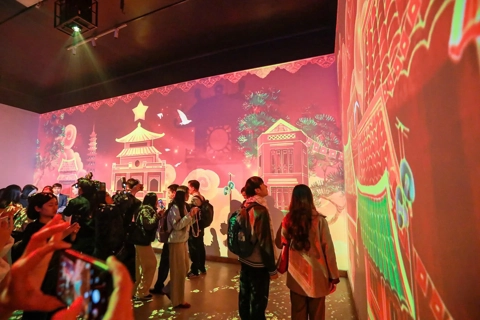
Hanoi uses light and technology to tell its heritage stories
By combining digital technology and contemporary art, the exhibition offers a new way to present Thang Long-Hanoi’s heritage, linking centuries of history with the perspectives and expectations of younger audiences.
THE HANOI TIMES — “Hanoi Radiant - Light and Heritage,” the ongoing digital exhibition organized by the Hanoi Department of Culture and Sports, uses light and technology to retell the capital’s thousand-year story to modernize the preservation and better the audience's experience.
The exhibition arrives at a moment when cities across Asia are grappling with the same question of how to keep cultural memory relevant in a digital-first era. Hanoi’s answer is experiential rather than archival. Instead of a linear walk through history, visitors enter a sequence of immersive environments that blur the lines between past, present and future.
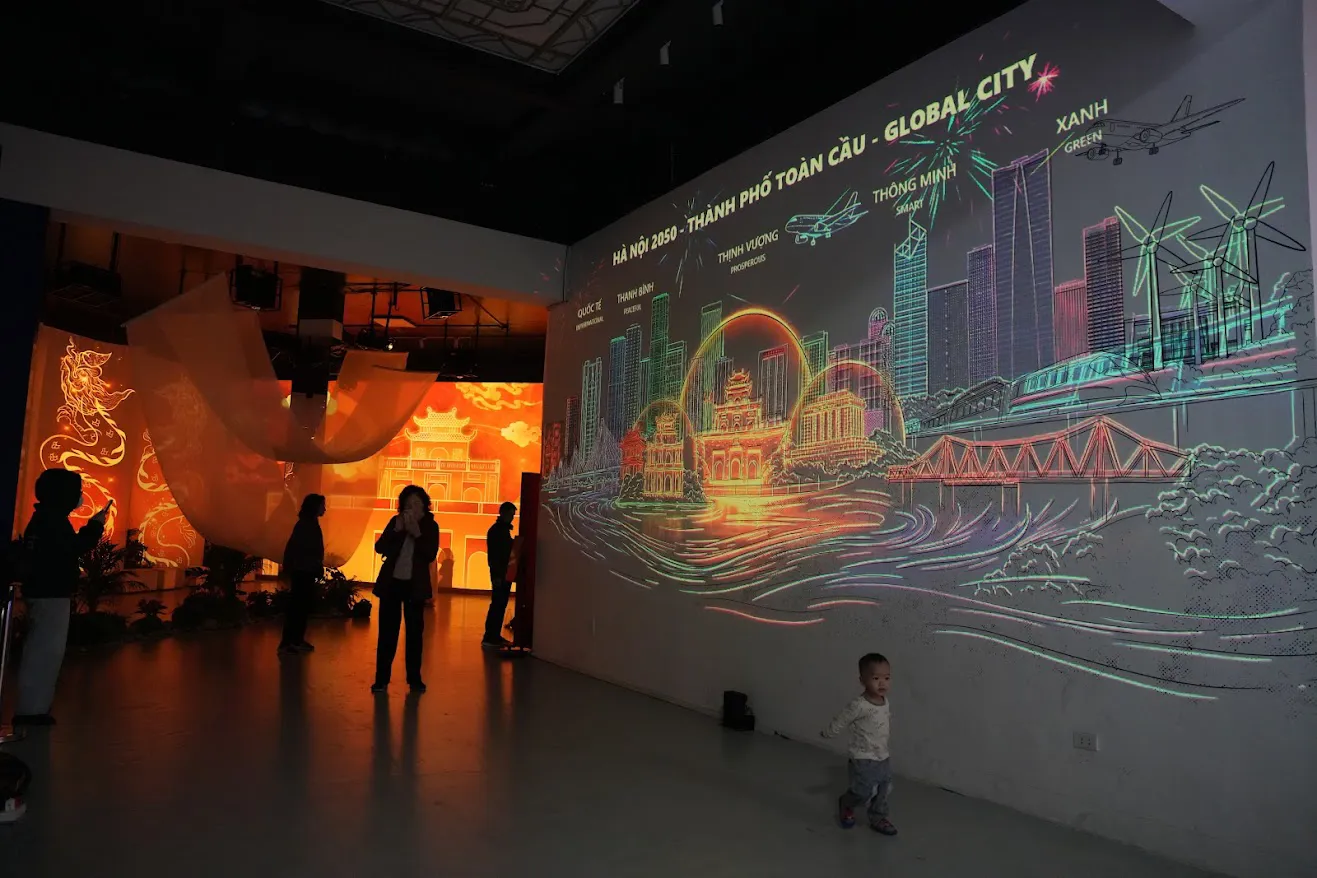
Light is the exhibition’s primary language to guide viewers across centuries of political, cultural and urban transformation through walls, suspended structures, and floors, stitching together fragments of imperial Thang Long, colonial Hanoi and the modern capital that continues to expand beyond its historic core.
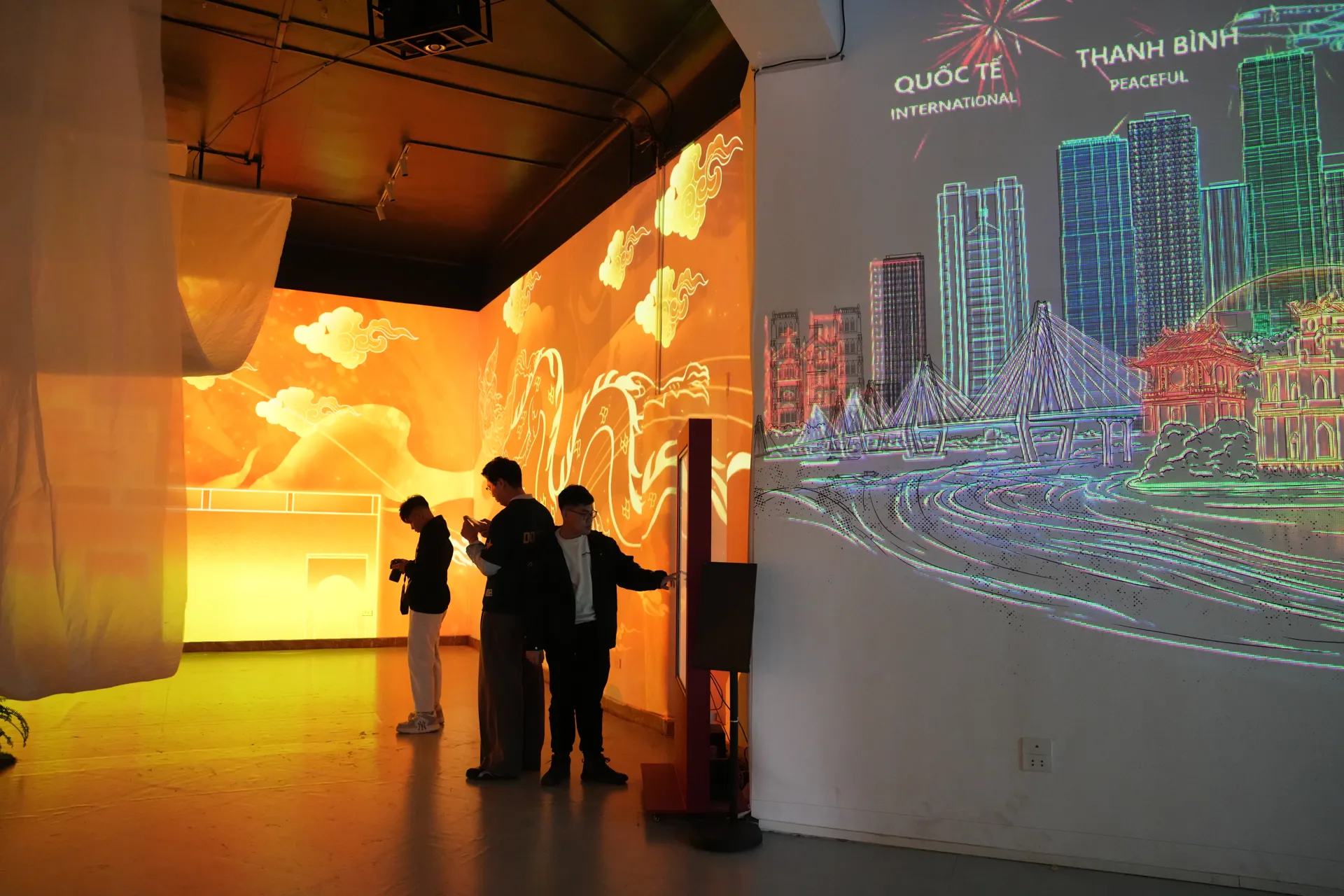
Light narrates Hanoi’s heritage at the “Hanoi Radiant - Light and Heritage” exhibition. Photos: Huy Pham/ The Hanoi Times
This LED kinetic performance area uses continuously moving structures to mirror the rhythm of urban life, presenting Hanoi as a city rooted in tradition while in constant transition.
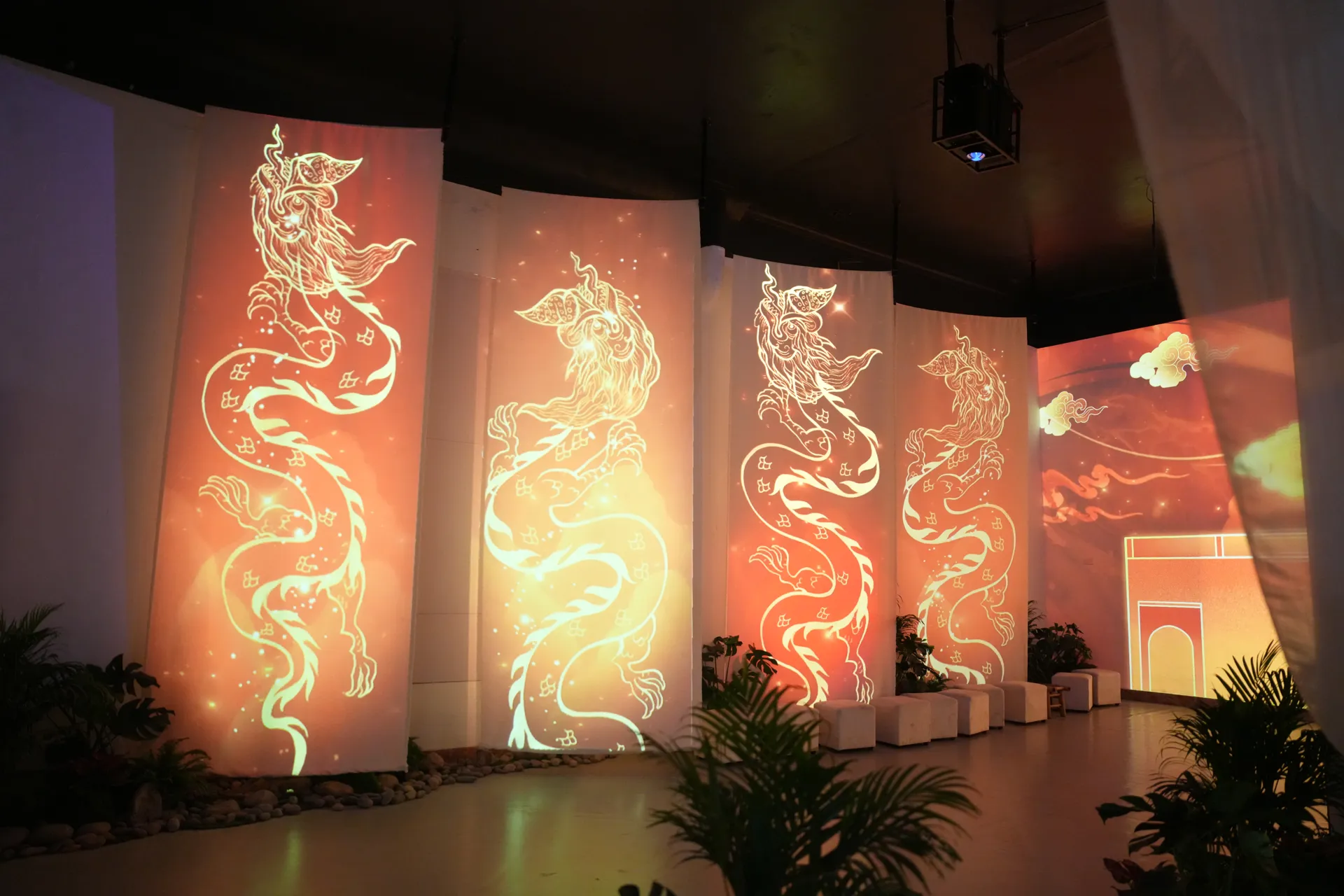
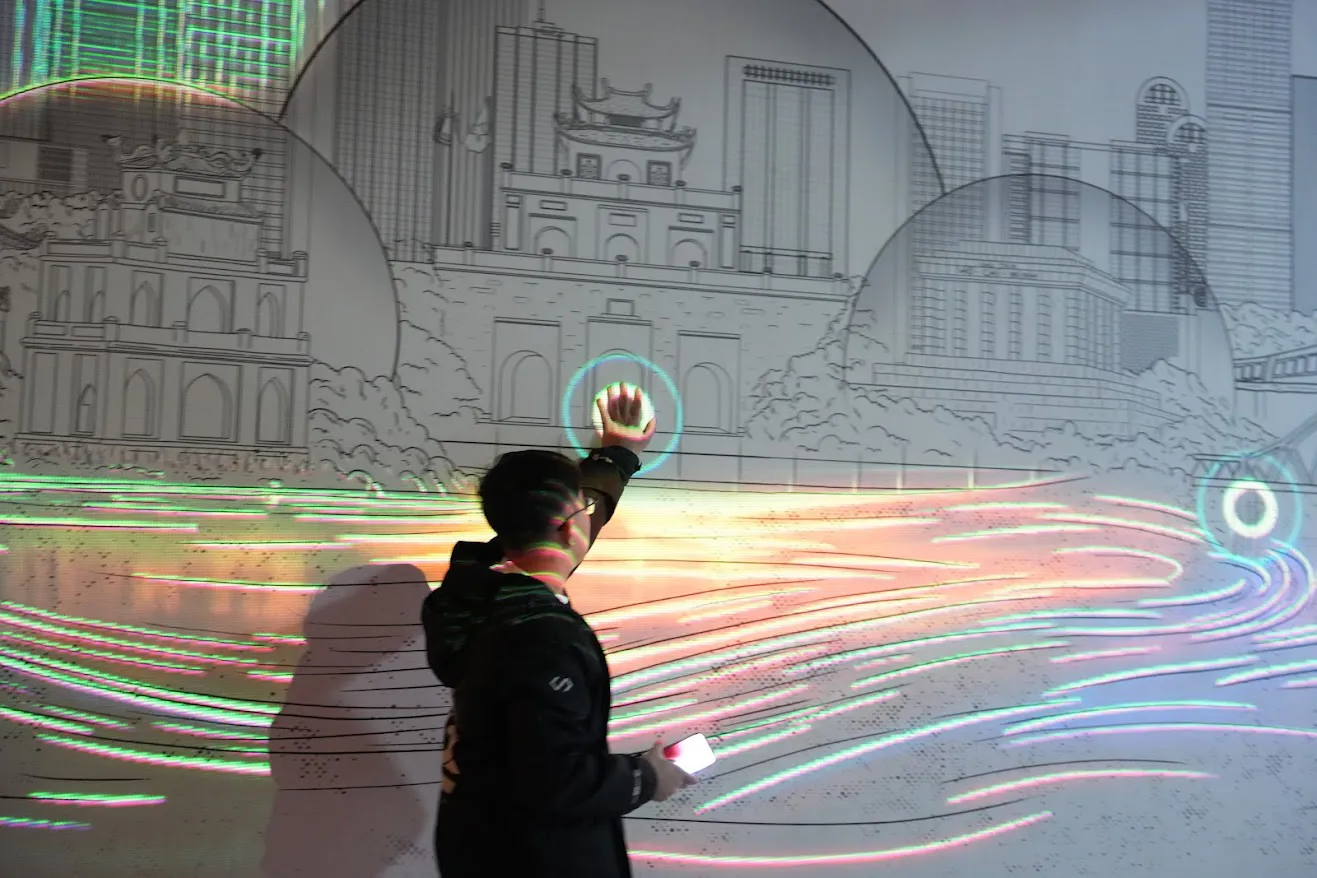
Using 3D projection, the exhibition reworks familiar heritage imagery into a more intuitive and immersive encounter with the past.
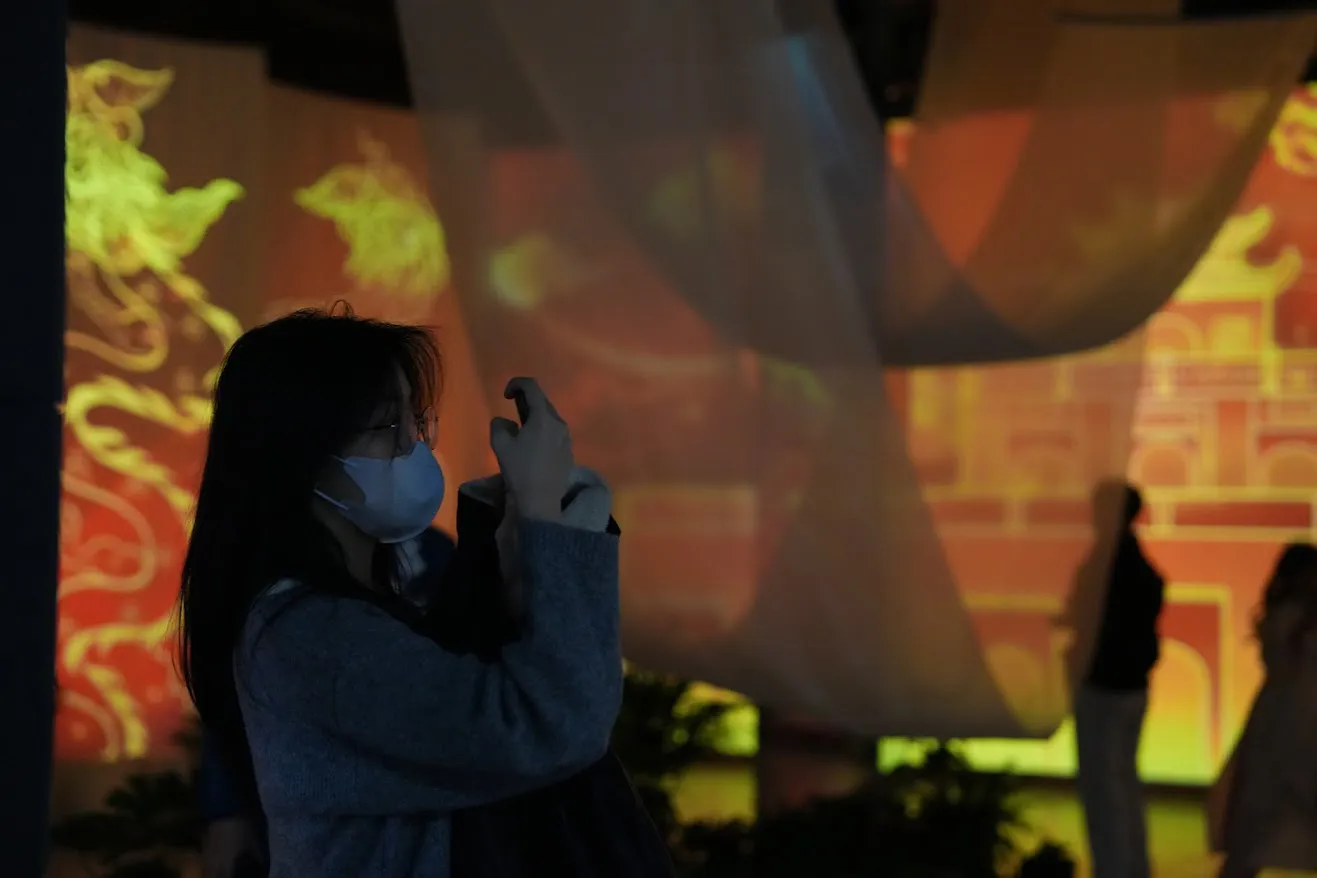
The exhibition traces Hanoi’s past through immersive spaces, positioning heritage as fluid, evolving and open to reinterpretation.
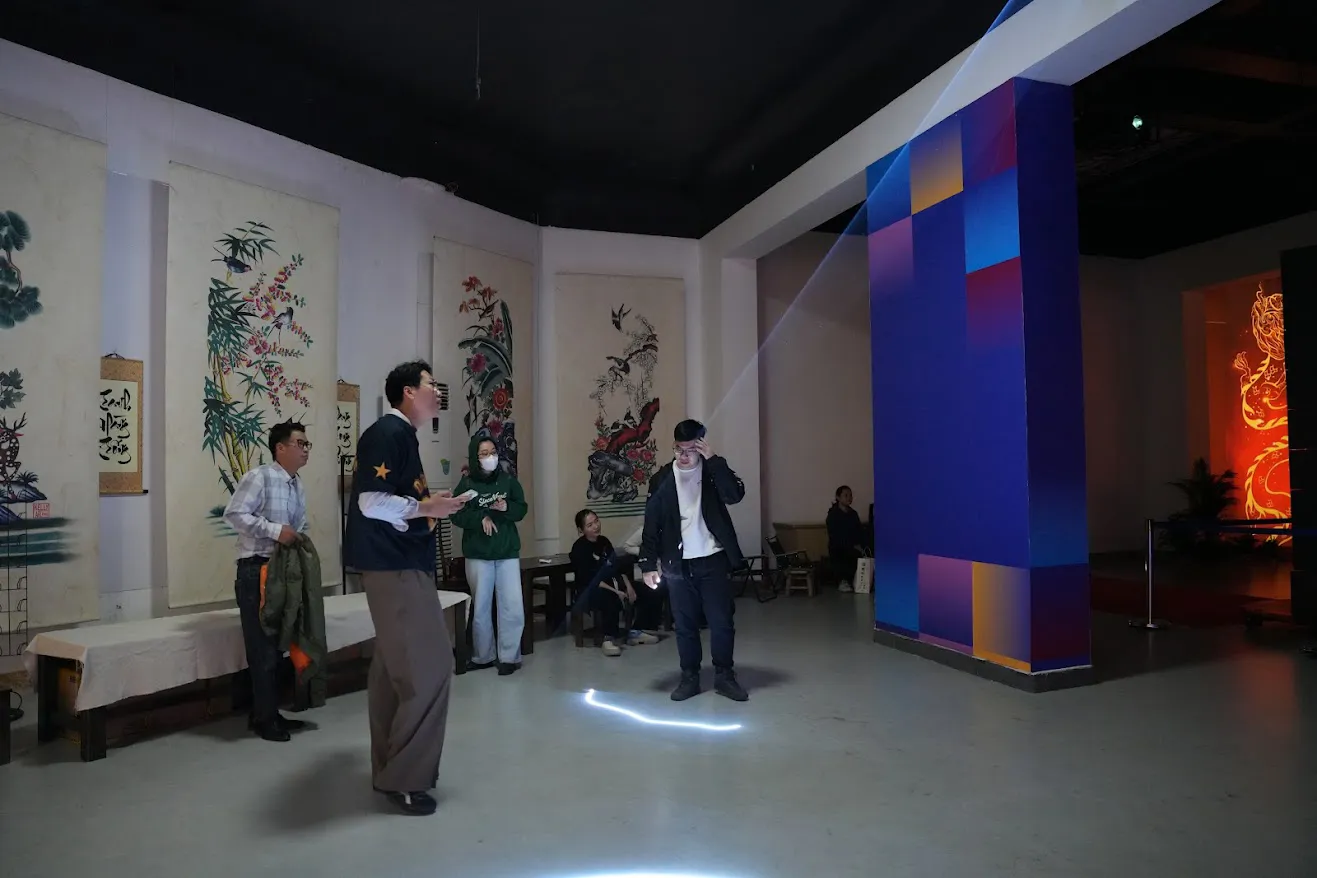
Another highlight is the exhibition’s fusion of digital technology with traditional heritage forms, including Hang Trong folk paintings associated with the cultural life of ancient Thang Long or today Hanoi.

Virtual reality immerses visitors in the recreated spaces of Hanoi’s heritage sites.
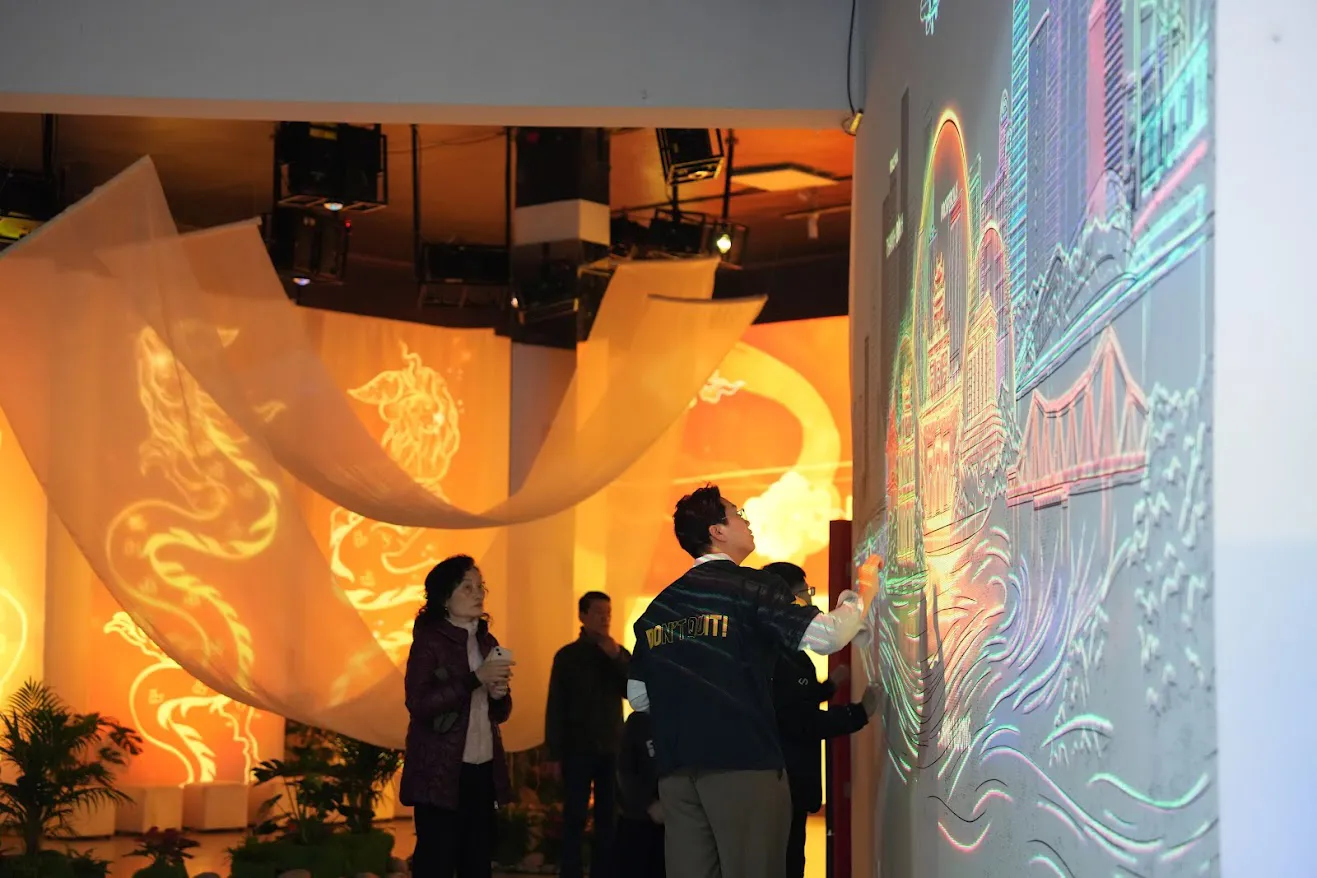
The free-of-charge digital exhibition aims to make heritage widely accessible.
“Hanoi Radiant - Light and Heritage” doesn’t replace traditional museums; it complements them, offering a sensory, interactive take on the city’s history.