14TH NATIONAL CONGRESS OF THE COMMUNIST PARTY OF VIETNAM
Log in
Life

Hanoi waives entry fees at heritage sites during Tet holiday

The free admission to 17 historical and cultural sites during the Lunar New Year holiday is part of a broader program to promote tourism and showcase the capital’s heritage.

THE HANOI TIMES Hanoi has waived entrance fees at 17 key historical and cultural sites during the Lunar New Year holiday to spur tourism demand and reinforce the capital’s positioning as a leading heritage destination at the start of Vietnam’s peak travel season.
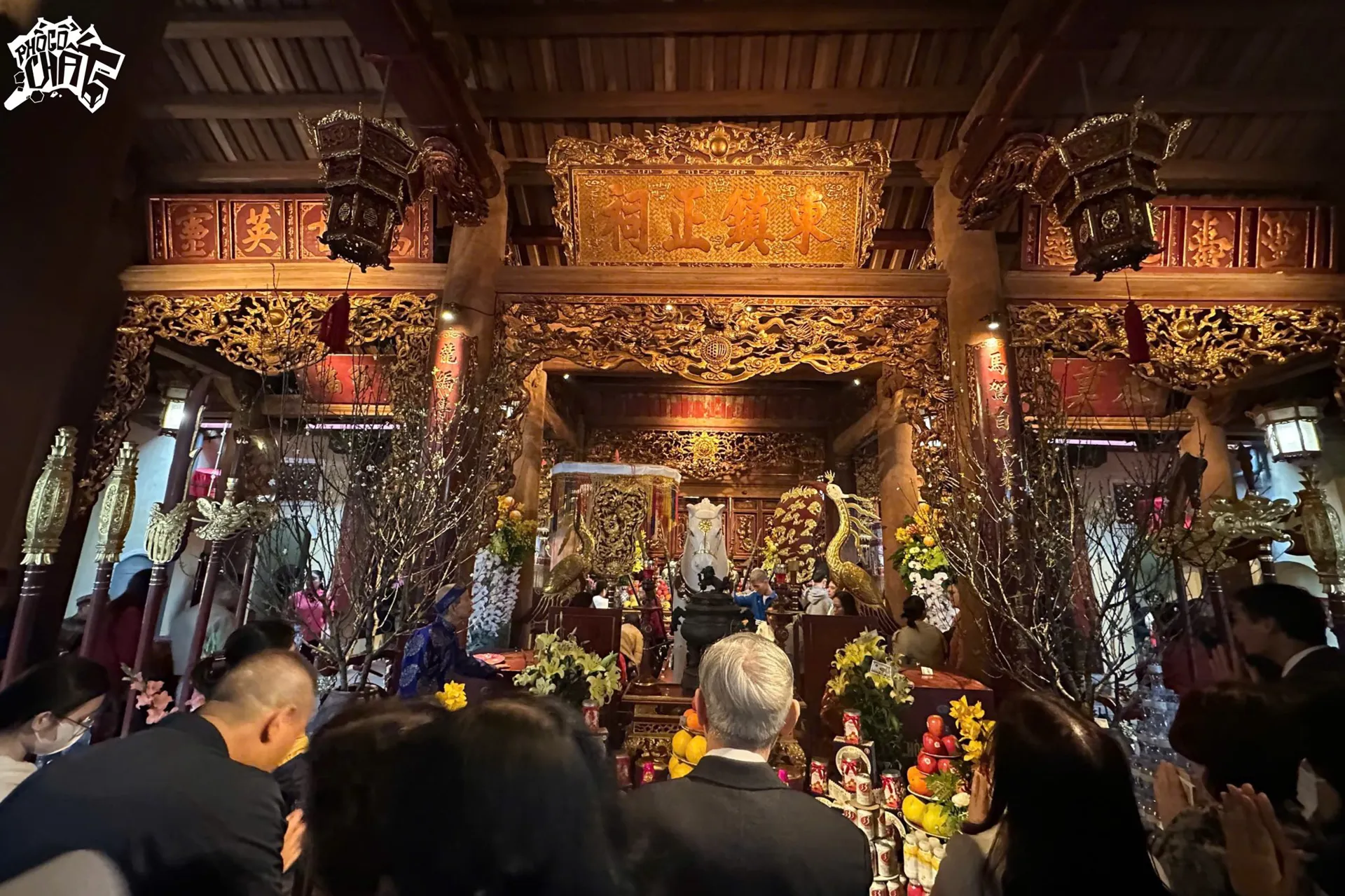
Visitors gather at Bach Ma Temple, one of the four sacred temples traditionally regarded as guardians of the ancient Thang Long Imperial Citadel. Photo: Pho Co Chat

The initiative, led by the city’s Department of Culture and Sports, running from February 20 to 22 - the fourth to sixth days of the first lunar month in the Year of the Horse.

The fee waiver applies to major landmarks and cultural venues managed by the city, including the Thang Long Imperial Citadel, the Temple of Literature, Ngoc Son Temple, Hoa Lo Prison and the Co Loa Relic Site.

Also included are the Huong Son Scenic Area, the Hanoi Museum, Bach Ma Temple, Kim Ngan Communal House, Quan De Temple, the Hanoi Old Quarter Cultural Exchange Center, Quan Thanh Temple, Duong Lam Ancient Village, Thay Pagoda and Tay Phuong Pagoda, among others.

City officials said the move is designed to expand public access to cultural assets, enhance traditional education and strengthen Hanoi’s appeal as a heritage tourism destination.

Authorities are also expanding the scale and scope of Lunar New Year programming, with increased investment in experiential, immersive and revenue-generating activities. Organizers plan to feature traditional craft products, intangible cultural heritage showcases and live performances of folk arts, alongside hands-on activities for visitors.
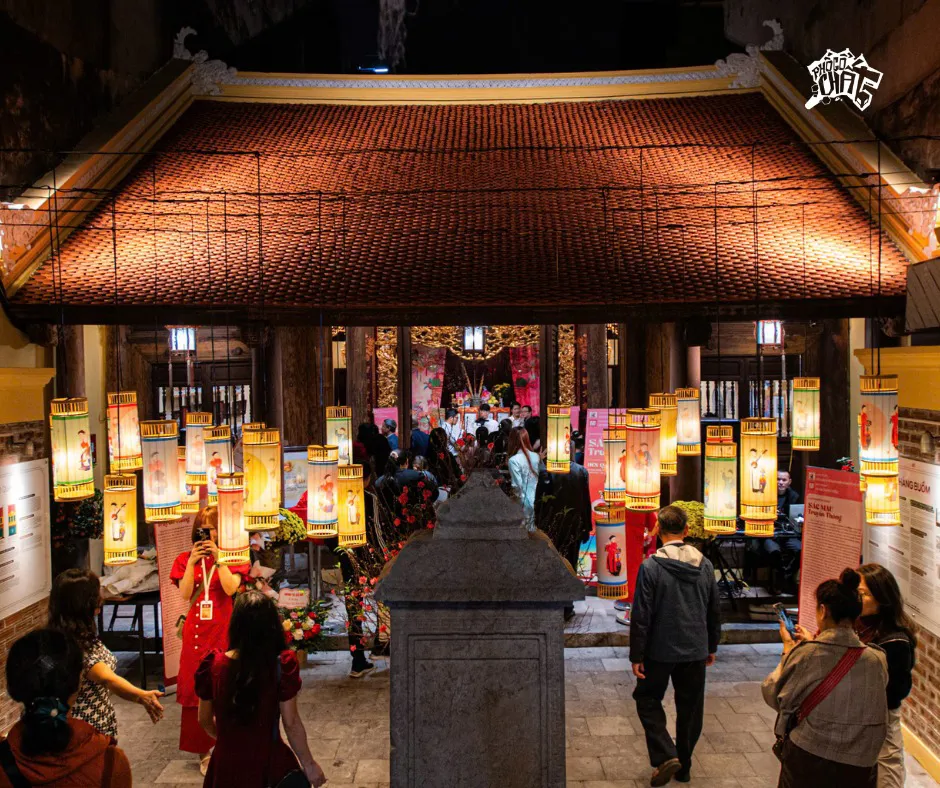
The interior of Quan De Temple lit up by a lantern exhibition. Photo: Pho Co Chat

At the Heritage House at 87 Ma May Street, an exhibition will recreate a traditional Hanoi family’s Tet living space. The Temple of Literature will host the Spring Calligraphy Festival, offering calligraphy writing and cultural performances. The Thang Long Imperial Citadel will stage reenactments of year-end and New Year ceremonies, as well as water puppetry and traditional theater performances.

The Hanoi Museum is set to unveil a special exhibition titled “Long Ma Khai Van” to mark the start of the new year.

New tourism products tied to the holiday include a tour linking Ngoc Son Temple with the capital’s Four Guardian Temples, a heritage train route passing five historic city gates and expanded cultural programming around Hoan Kiem Lake.

The city hopes the fee exemptions and expanded festivities will draw both residents and tourists, boosting visitor flows during one of Vietnam’s peak travel periods.
Reactions:
Share:
Trending
Most Viewed
Related news
How young Vietnamese make a shift in Tet celebrations

How young Vietnamese make a shift in Tet celebrations

19 Feb, 10:53

Today’s Tet has evolved beyond its traditional form, reflecting the changing needs and lifestyles of young Vietnamese and becoming not only a time for family reunions but also a valuable opportunity to rest, recharge and explore life.

Hanoi prioritizes safety in Tet 2026 tourism drive

Hanoi prioritizes safety in Tet 2026 tourism drive

18 Feb, 12:40

As the Year of the Horse begins, Hanoi leads with tighter oversight and price controls, betting that a safer holiday will anchor its push to turn the Lunar New Year into a sustainable tourism draw.

To Lich River’s revival reshapes Hanoi urban life

To Lich River’s revival reshapes Hanoi urban life

The transformation of the To Lich River goes beyond environmental restoration, reflecting Hanoi’s broader drive to build a cleaner, more livable and better-connected city.

Festival gathers ethnic communities in Hanoi for three-day cultural showcase

Festival gathers ethnic communities in Hanoi for three-day cultural showcase

The 2026 “Spring Colors Across the Nation” festival brings together hundreds of artisans and community representatives, highlighting living traditions from across Vietnam while reinforcing efforts to preserve cultural heritage in a rapidly modernizing society.

Culture at the core: A new governance mindset for Hanoi

Culture at the core: A new governance mindset for Hanoi

Vietnam’s capital is placing culture at the heart of policymaking and urban planning, positioning itself as a test case for Resolution 80’s vision of development driven not only by economic growth, but also by identity, social cohesion and human well-being.

Disguise and drums mark sacred rite in Hanoi village

Disguise and drums mark sacred rite in Hanoi village

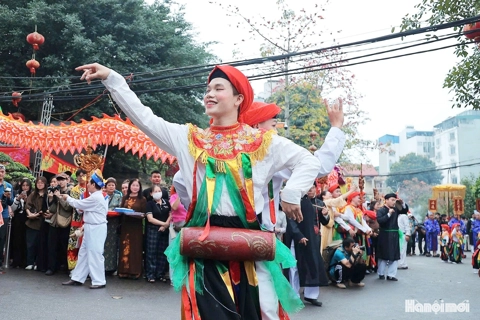
At Trieu Khuc’s annual spring celebration, young men in silk blouses and lotus bras perform a centuries-old dance born of wartime strategy and preserved as living heritage.

Hanoi tourism gains momentum in February, aims for 36 million visitors in 2026

Hanoi tourism gains momentum in February, aims for 36 million visitors in 2026

Vietnam’s capital has reported a 28.5% jump in monthly arrivals and rising tourism revenue, bolstering its ambition to make travel a key economic pillar this year.

Explore Van Phuc Village’s sacred water rite

Explore Van Phuc Village’s sacred water rite

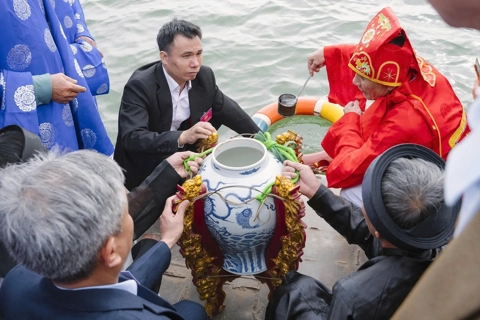
Each spring in Hanoi’s outskirt commune, villagers gather along the Red River to perform a centuries-old water offering ceremony, an enduring prayer for fertile fields, favorable weather and communal prosperity.

Hanoi's young men fuel centuries-old rice cooking tradition 

Hanoi's young men fuel centuries-old rice cooking tradition 

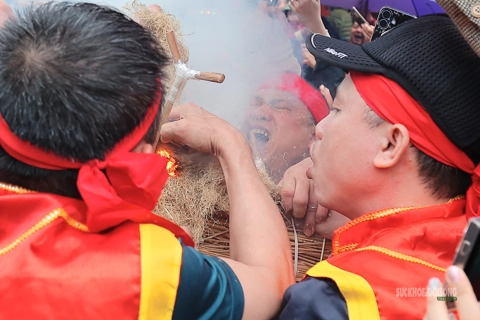
A centuries-old ritual, equal parts endurance and homage, keeps Thi Cam’s communal spirit alive each spring.

Northern Vietnam village parades ancient texts in tribute to scholarship

Northern Vietnam village parades ancient texts in tribute to scholarship

Residents of Duong Lieu Village in Xuan Hoa Commune on Hanoi’s outskirts marked the Lunar New Year of the Horse with a ritual that gently blends Confucian reverence with a strong sense of community identity.