Traditional Tet feasts through the nostalgia of Hanoians
The traditional Tet feast of Hanoi has long reflected the skill and resourcefulness of women, serving not merely as a meal but as a measure of care and devotion expressed through every carefully prepared dish.
THE HANOI TIMES — When Hanoians speak of Tet (the Lunar New Year), the conversation often turns to the traditional feast, long shaped by the refinement of women from old Thang Long.
For generations, the Tet tray is regarded as the culinary soul of the capital, where technique, patience and a keen sense of aesthetics converge in every carefully prepared dish.
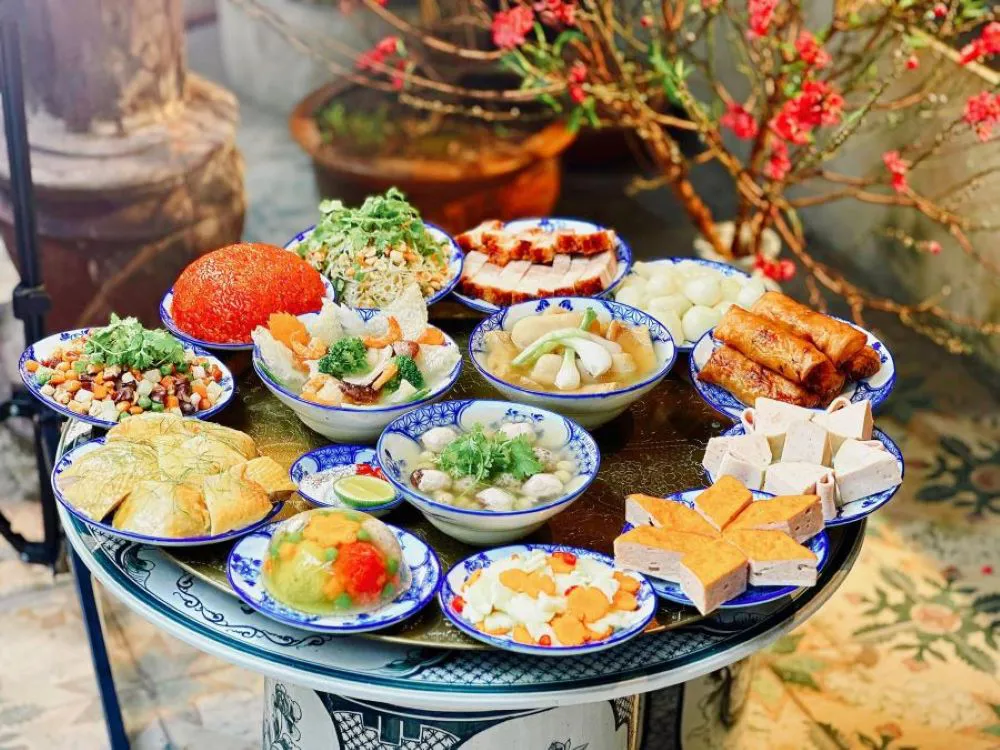
The colorful and flavorful traditional Tet feast prepared by Chef Nguyen Phuong Hai. Photo courtesy of the Chef
Yet as modern life gathers pace, the rhythm of Tet has shifted, and many of the elaborate rituals once central to the holiday are no longer fully observed, leaving today’s celebrations markedly different from those of decades past.
Culinary artist Anh Tuyet, a seventh-generation Hanoian devoted to preserving the city’s cuisine, recalls that Tet preparations once unfolded in three careful stages, including selecting ingredients, cooking with precision and presenting each dish with care, every step considered essential.
While offerings varied by household, certain dishes formed the backbone of the feast, including pork sausage, spring rolls, stewed meatballs and terrines.
A typical family tray featured four bowls and six plates, while more affluent households prepared additional dishes to signal abundance and completeness.
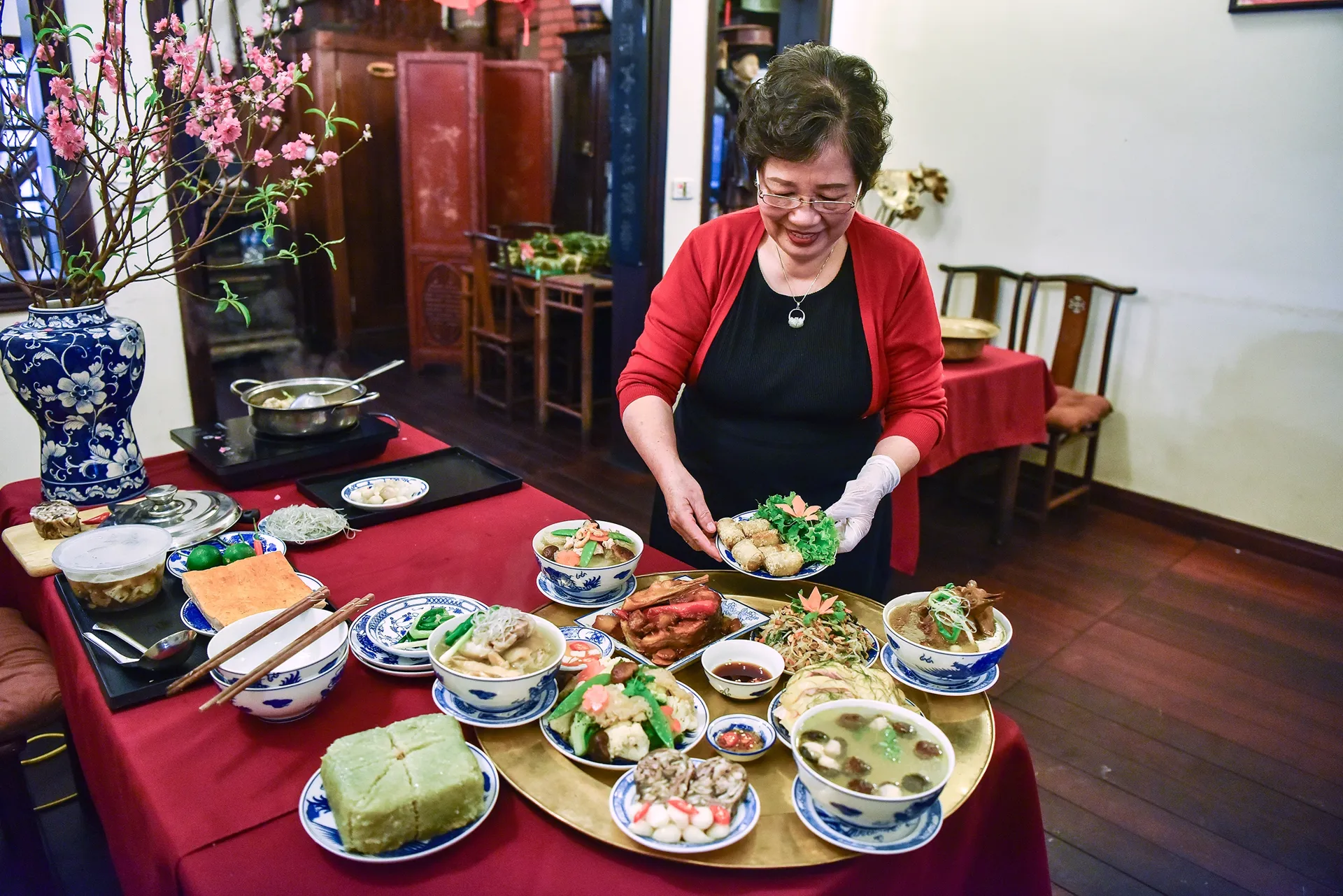
Culinary artisan Anh Tuyet and her elaborate Tet feast.
A traditional Tet feast invariably included dried bamboo shoots stewed with pork trotters, the shoots simmered until tender enough to absorb the rich broth without turning greasy and served with scallions and vermicelli.
Other staples required equal care: meatballs blended with shiitake mushrooms and pork, fragrant cinnamon sausage, and pork head terrine paired with pickled onions. The meal often ended with simple sweets such as lotus seed soup or braised mung bean pudding.
Additional dishes - jellied meat, braised carp with ginger, stir-fried dried squid and seasonal vegetables - completed the tray. Each demanded precise technique, from soaking and slicing squid to ensuring the jellied meat set clear and delicately seasoned, reflecting the meticulous standards of a traditional Hanoi kitchen.
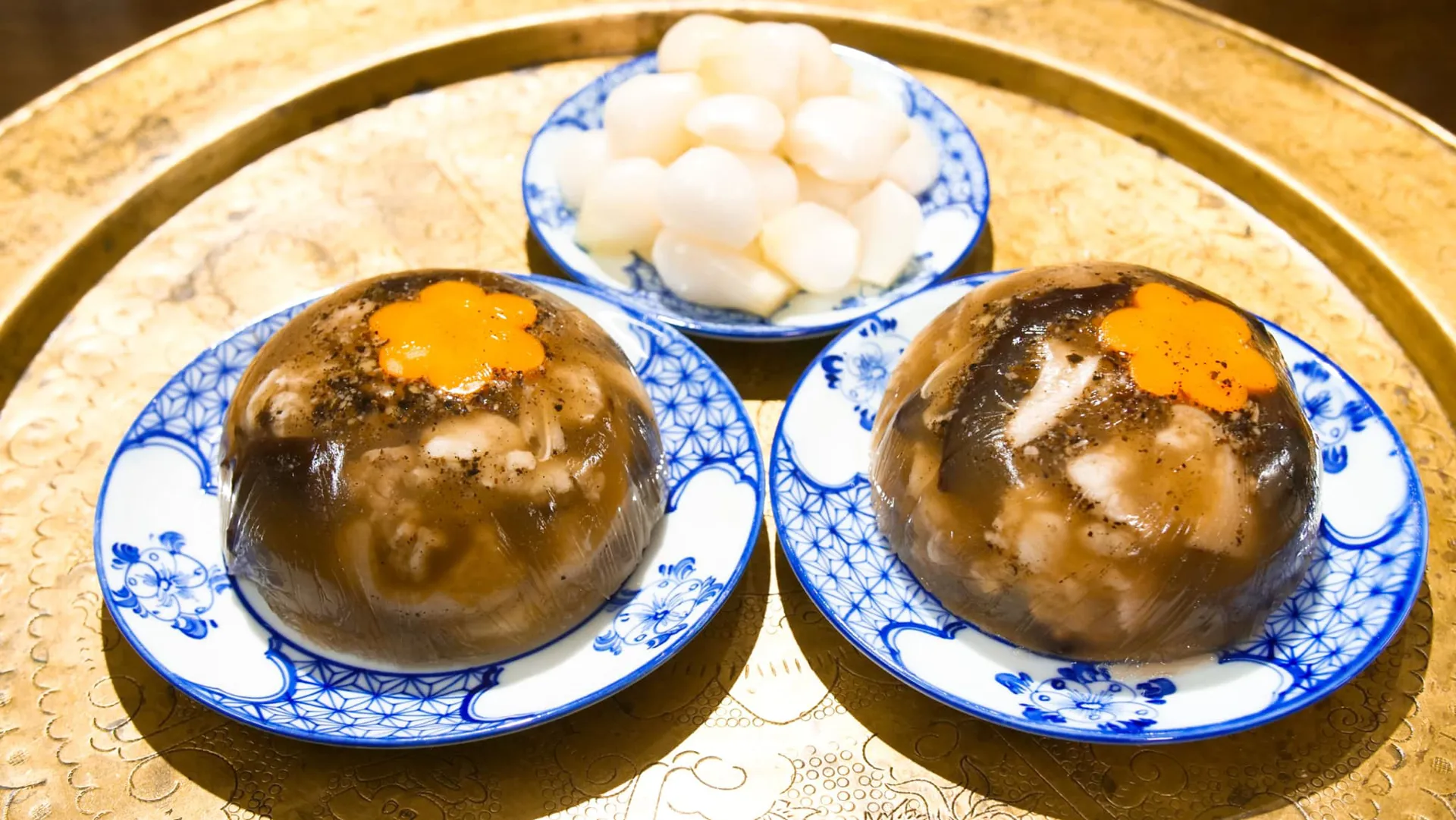
Thit dong (crystal meat jelly) prepared for a traditional Hanoi Tet feast. Photo: Phuong Hai
Even seemingly simple dishes demanded precision. Pineapple stir-fried with chicken gizzards had to be peeled and mixed carefully to preserve texture and balance, while desserts required equal discipline. Mung beans for sweet soup were soaked, mashed and stirred gently over low heat to achieve a light, cooling finish. Meanwhile, sticky rice with gac fruit had to be evenly mixed so the grains turned a bright, uniform red - never dark or patchy.
Such attention to detail once defined the Hanoi Tet feast.
Today, as life moves faster, many of these labor-intensive dishes have faded from family tables. Few households still braise carp with tea leaves or prepare dried squid by hand.
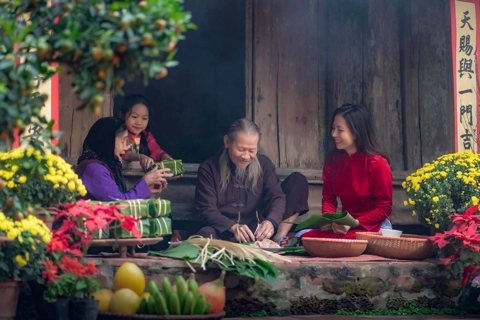
Yet for Hanh Huy, former chef of the Hanoi Hilton Hotel, the Tet tray remains a cherished tradition passed down through generations. Beyond the neatly arranged bowls and plates, it is the act of gathering - the family seated together at the start of a new year - that gives the feast its enduring meaning.
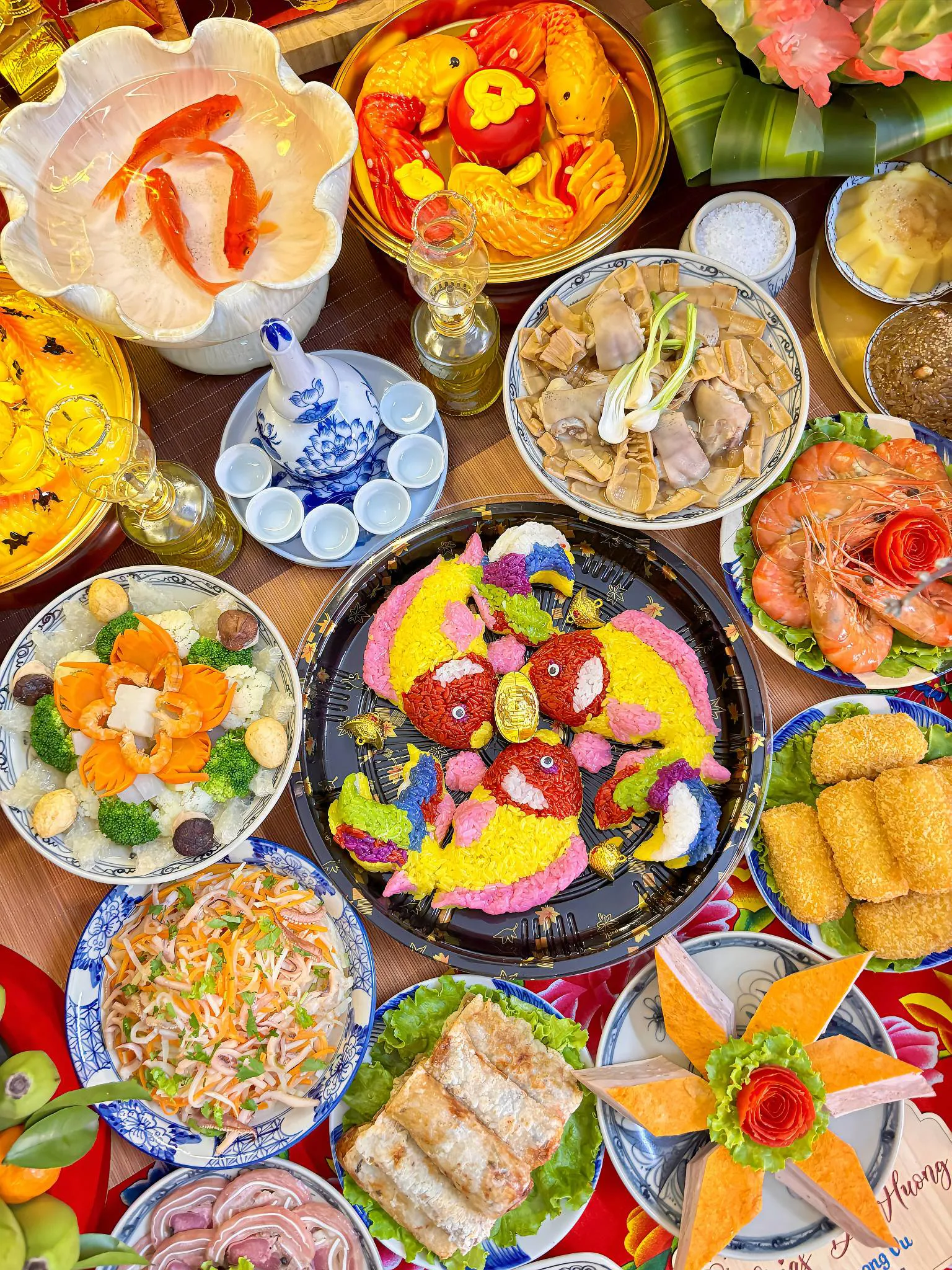
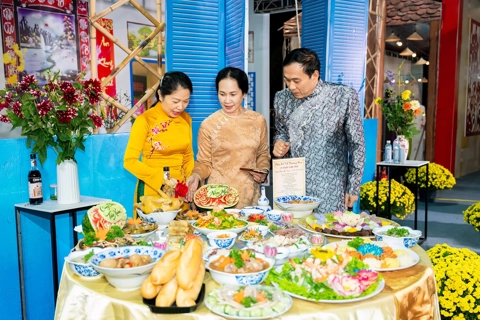
A more colorful and contemporary Tet feast today. Photo: Huong Vu
Drawing on her professional training, she prepares Tet dishes each year as gifts for friends and relatives, keeping familiar flavors while adapting them to suit younger tastes. Traditional spring rolls, for instance, are reworked with salmon, shrimp or asparagus, and alongside banh chung (sticky rice cake wrapped in dong leaves) she may serve a sushi-style variation made with purple sticky rice and tropical fruit - Vietnamese in spirit, but lighter in expression.
Despite such updates, the presentation remains firmly traditional. Boiled chicken is arranged whole before carving, pork sausage is sliced evenly and plated with care, and pickled vegetables are shaped into delicate garnishes. Colors must be balanced and the table never overcrowded.
For Hanh Huy, former chef of the Hanoi Hilton Hotel, canh bong (a light broth simmered with dried shrimp and shiitake mushrooms) remains a favorite, reflecting the subtlety and depth that define a classic Hanoi Tet meal.

A funkier Tet feast, blending Eastern tradition with Western touches. Photo: Huong Giang
However, for a younger generation, Tet is evolving.
Nguyen Minh Anh, 28, who works in marketing in Hanoi, says her family still prepares traditional dishes such as bamboo shoot soup and sticky rice with gac, but the table now also features steamed crab, grilled shrimp and salmon salad. Seafood, she says, feels lighter and more celebratory - a reflection of changing tastes and easier access to global ingredients. Some dishes are ordered rather than cooked at home, easing the burden of days-long preparation.
The shift is less a break with tradition than an adjustment to modern life. Familiar dishes still anchor the meal, while new additions reflect a more outward-looking Vietnam.
Though the scale and composition of the feast have changed, its essence endures. In Hanoi, the Tet table remains a link between generations, preserving culinary heritage even as it adapts, and above all, bringing families together at the start of a new year.