“Happy Tet 2026” turns tradition into a tourism showcase for Hanoi
Hanoi is positioning its Lunar New Year traditions as both cultural heritage and economic opportunity.
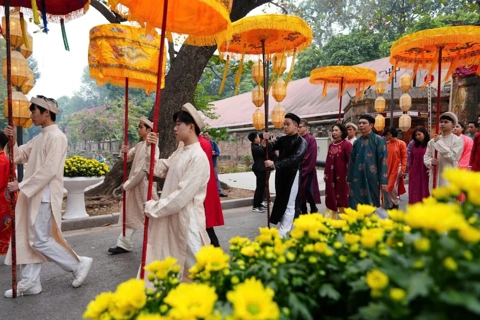
THE HANOI TIMES — The “Happy Tet 2026 - Tet is Happiness” program, held at the Thang Long Imperial Citadel, brought together long-standing Tet customs and modern presentation in an effort to transform tradition into a structured tourism product.
Organized by the Hanoi Department of Tourism, the five-day event concluded on February 9 after attracting more than 30,000 domestic and international visitors.
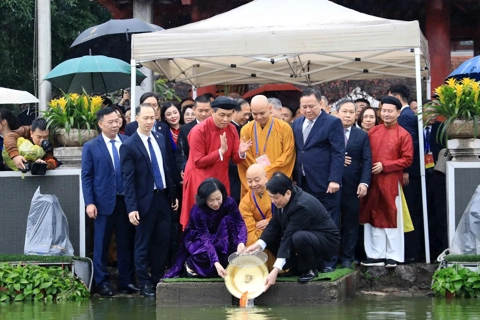
The annual festival strengthens Hanoi’s cultural brand, showcasing the capital’s heritage to both domestic and international audiences. Photo: Le Nam/ The Hanoi Times
Spanning more than 7,000 square meters, the space was designed to recreate the atmosphere of traditional Tet in Hanoi and across Vietnam’s regions.
Cultural exhibitions, culinary showcases and hands-on experiences were arranged to create what organizers described as a vibrant yet reverent celebration of the country’s most important holiday.
The program reflects Hanoi’s broader strategy of leveraging heritage assets to stimulate tourism at the start of the year.
Reviving folk traditions through experience
Among the highlights were the “Spring Market” spaces, which recreated the bustle of pre-Tet shopping. Peach blossoms, kumquat trees and yellow apricot flowers were displayed alongside Tet gift sets, handicrafts and products from traditional craft villages linked to tourism development.
The layout aimed to evoke not only commerce, but also the social atmosphere that precedes the Lunar New Year.
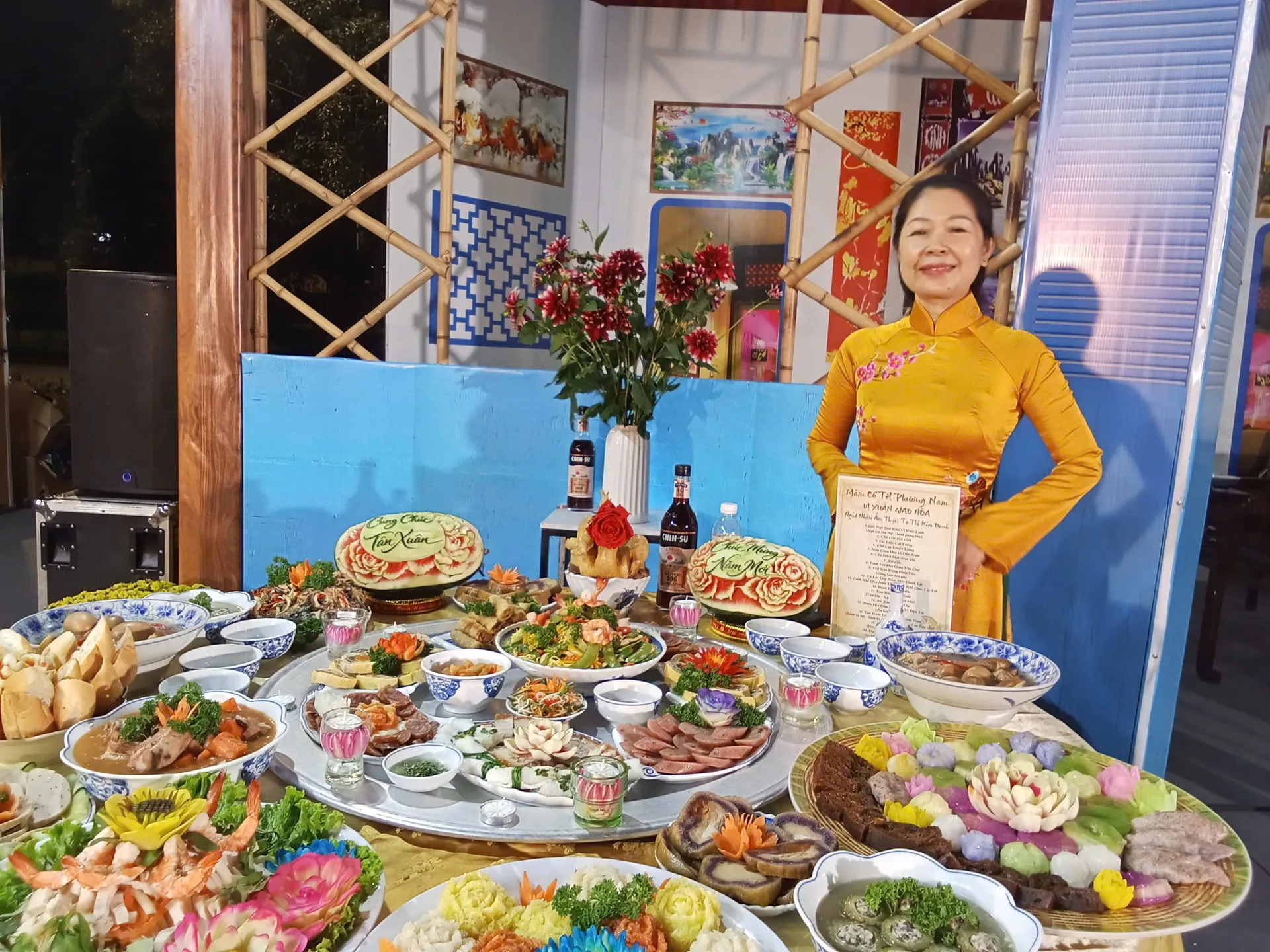
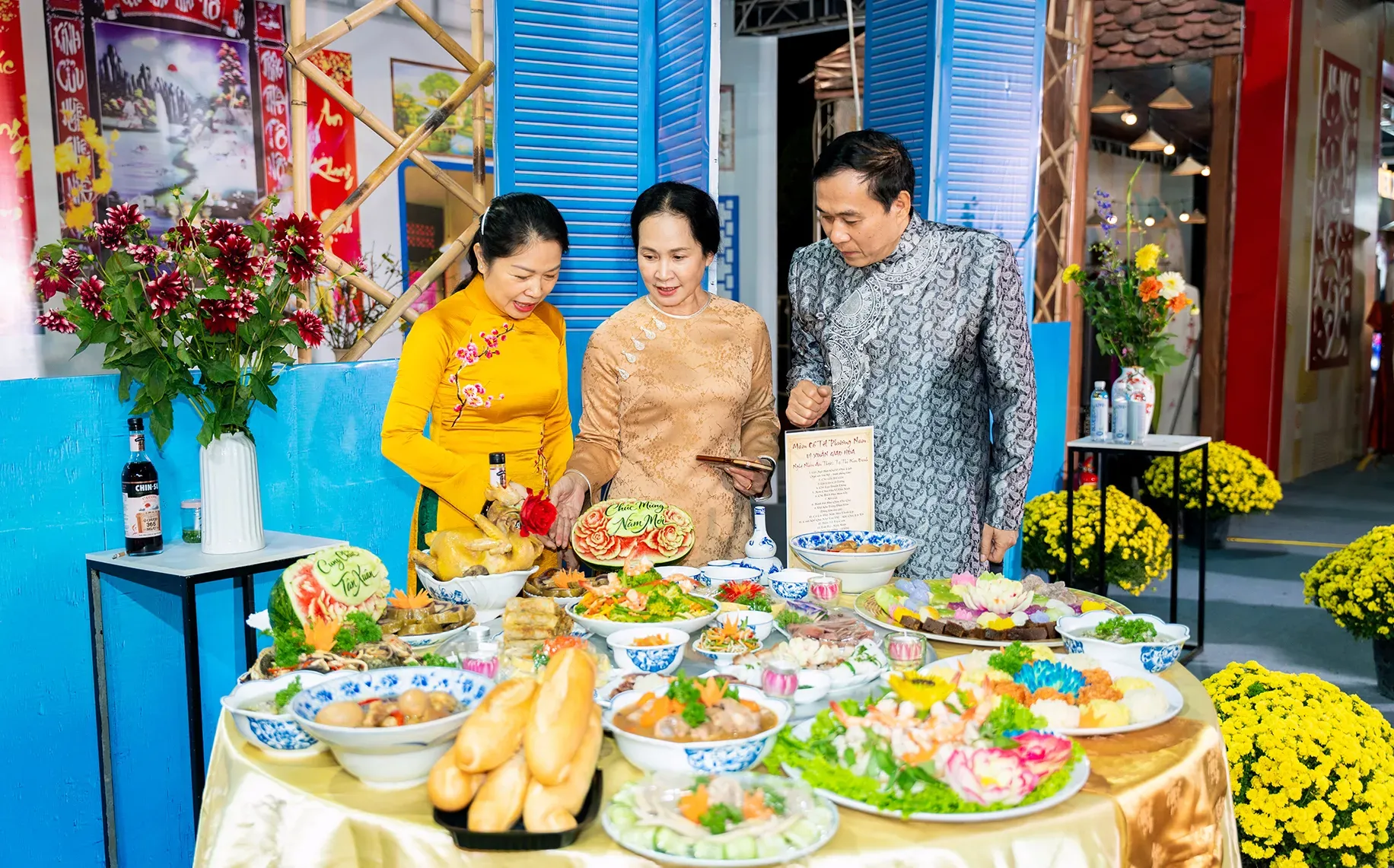
Culinary artisan Ta Thi Kinh Oanh from Ho Chi Minh City presented a traditional Southern Tet feast.
The “Taste of Tet” area introduced visitors to the culinary culture of old Hanoi and other regions. Culinary artisan Ta Thi Kinh Oanh from Ho Chi Minh City presented a traditional Southern Tet feast, emphasizing the symbolism embedded in each dish.
Braised pork with eggs, a staple of Southern households during Tet - represents abundance and completeness. Steamed snakehead fish with wood ear mushrooms and bitter melon soup were also featured.
Pork ribs stewed with beans is another familiar element of the Southern holiday table.
Rice vermicelli with roasted pork symbolizes prosperity and sufficiency. “No matter how difficult life has been throughout the year, this dish is a must-have for Tet,” Oanh said.
Other offerings included hundred-flower sausage, Saigon-style spring rolls, Chinese sausage, dried shrimp with pickled shallots and pickled vegetables served with braised pork, together forming what she described as the distinctive flavor of Southern Tet.
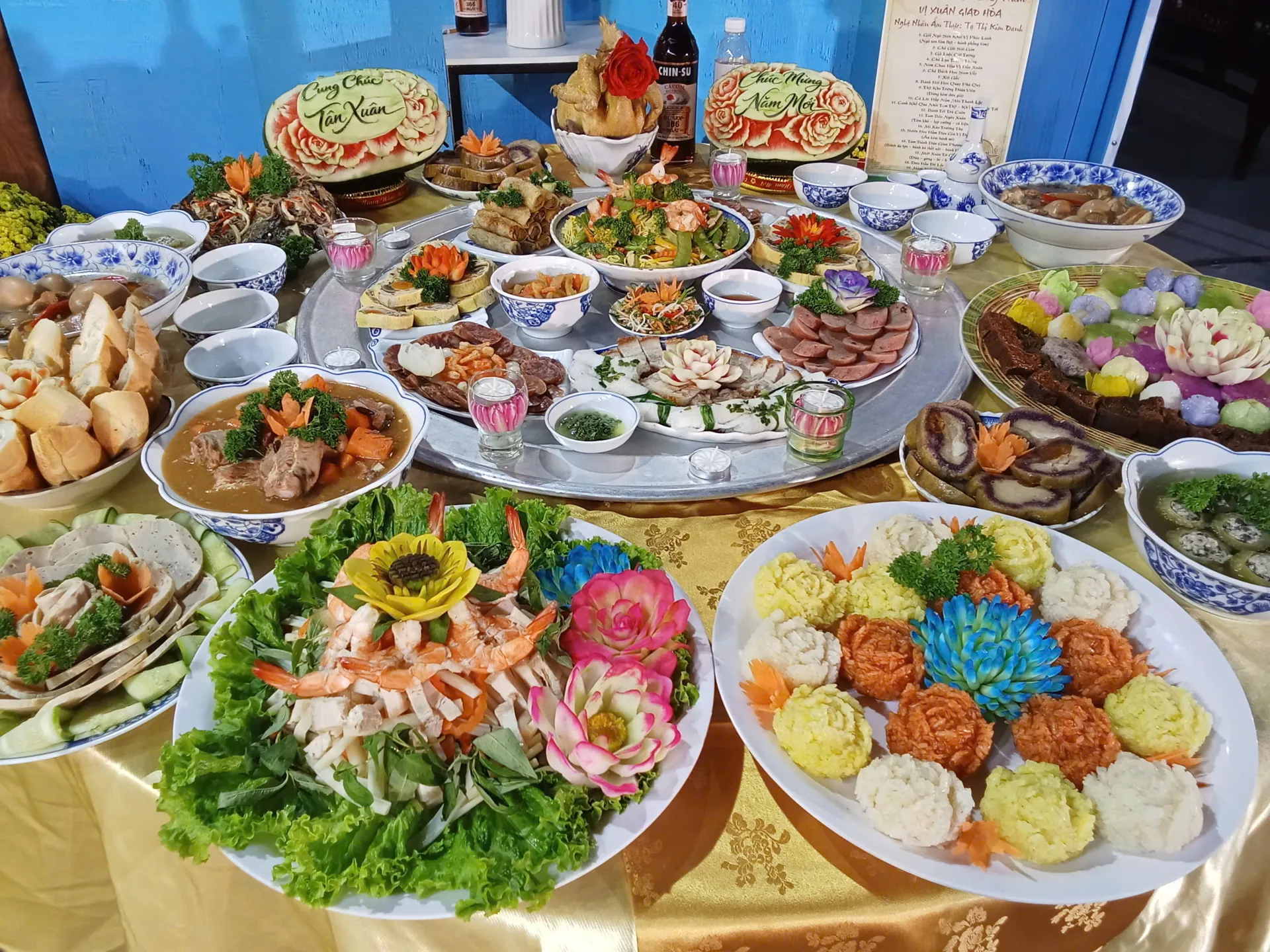
A traditional Southern Tet feast is showcased at the “Happy Tet 2026” festival. Photo: Jenna Duong/ The Hanoi Times
The feast extended beyond savory dishes. Lotus root salad and longevity noodles conveyed wishes for health and long life in the new year.
According to Oanh, the meal reflects a tradition observed across Southern Vietnam regardless of economic circumstances. Families may vary in means, but most strive to prepare a generous spread to mark the holiday.
Tet sweets were equally central. Pig skin cake, palm sugar cake and cassava cake highlighted the rich flavors of the Mekong Delta. Glutinous rice balls shaped like fruits symbolized prosperity and fulfillment.
A traditional platter of candied coconut, pumpkin, ginger, tamarind and melon seeds was arranged beside a branch of yellow apricot blossoms, an enduring symbol of Southern Tet.
Oanh noted that the generous presentation - “large plates, large bowls” - underscores the warmth and openness associated with the region’s cuisine.
“The Southern Tet feast is not only a gathering of food. It is a way to express wishes for peace, prosperity and love in the first days of the new year,” she shared with The Hanoi Times.
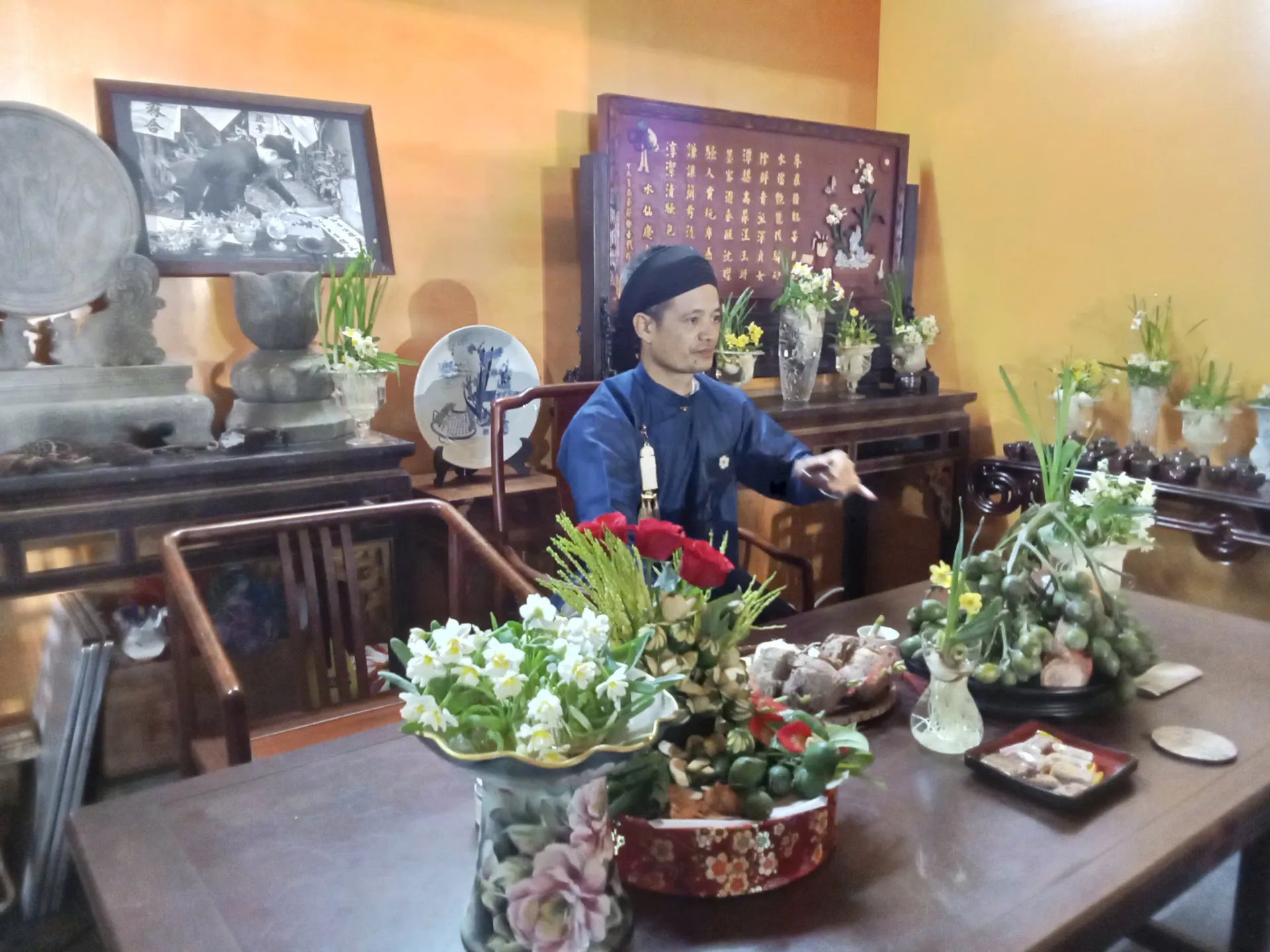
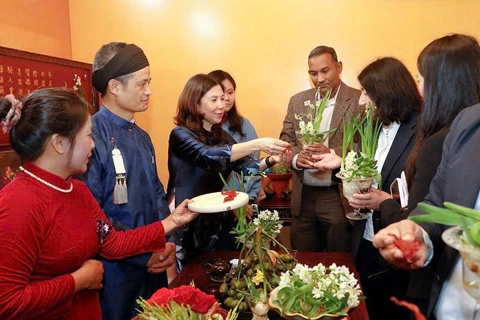
The narcissus exhibition space curated by artisan Dang Xuan Chien at the festival.
Beyond cuisine, the program spotlighted narcissus flowers, long regarded as a refined symbol of Tet in old Hanoi. Dang Xuan Chien, a local artisan who has practiced narcissus carving and cultivation for more than a decade, described it as once an elegant pastime of the capital’s intellectual and affluent families.
For many Hanoians, a bowl of narcissus displayed during Tet carries deep meaning. “The elders often said the narcissus has ‘the beauty of an immortal and the virtue of a gentleman,’” Chien said, referring to its association with purity and moral character.
Traditionally placed on ancestral altars as an offering or displayed in living rooms to welcome guests, a properly arranged bowl must satisfy five aesthetic criteria.
The roots should be pure white and slender; the leaves green, soft and naturally curved; the six white petals evenly spread around a golden center shaped like a jade cup.
The composition must be harmonious, often arranged with stones or decorative elements, and accompanied by a subtle fragrance.
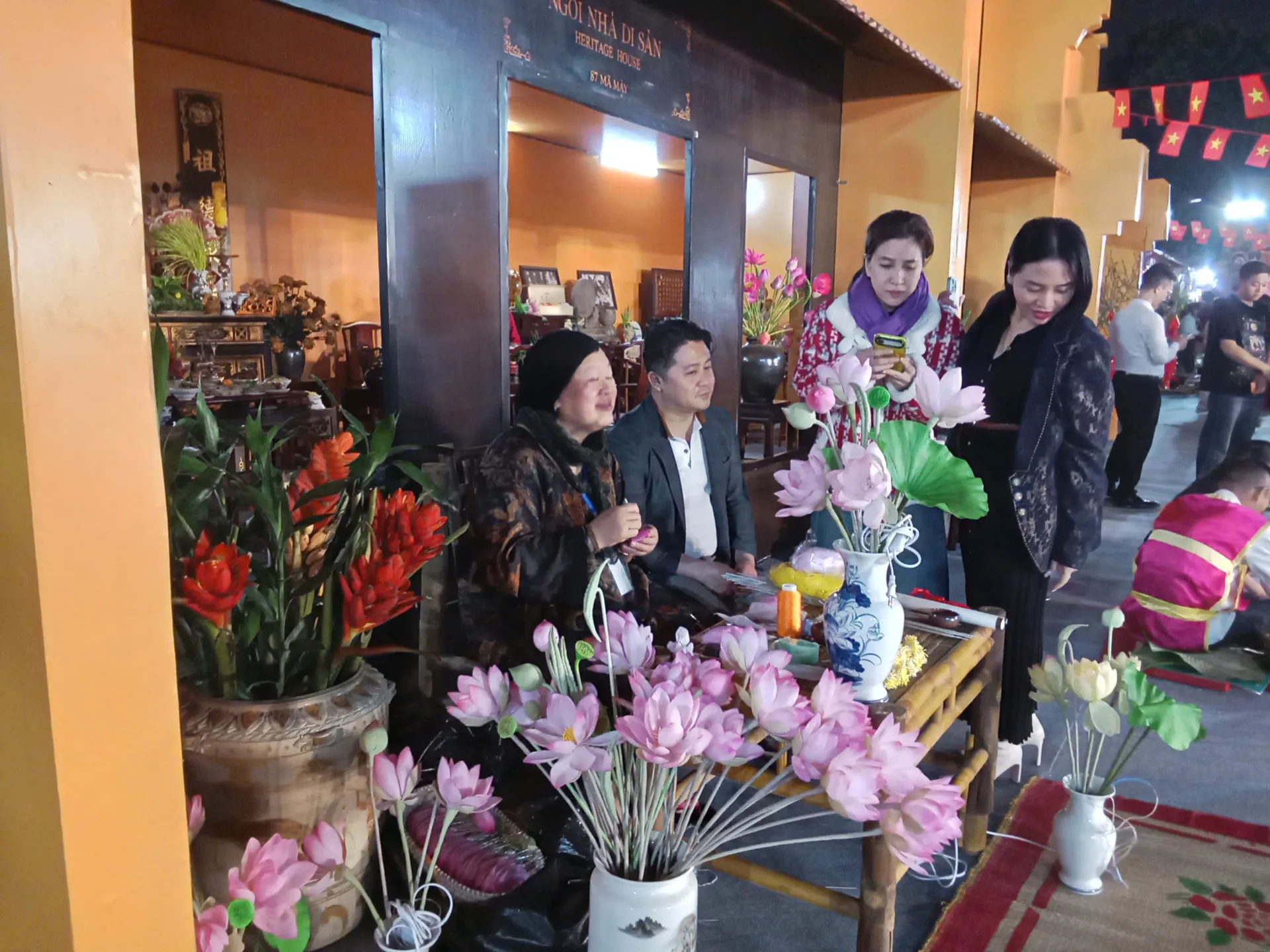
Tourists explore the traditional art of silk flower making from Hue at the festival.
The flower blooms for only 10 to 12 days and prefers cold weather, making Tet its primary season. The process begins well before flowering, requiring careful trimming and daily maintenance.
“The water used to care for the narcissus must be completely clean, without turbidity and without fertilizer,” Chien emphasized.
For him, the practice is less a hobby than a continuation of Hanoi’s cultural legacy.
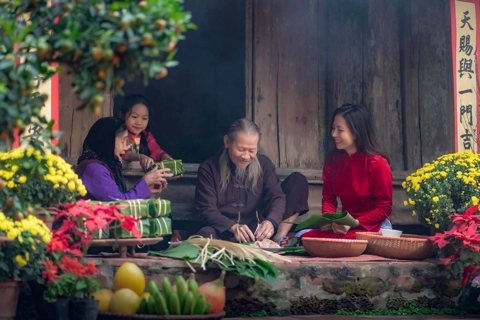
Visitors also participated in traditional activities such as wrapping banh chung (Vietnamese traditional sticky rice cake) and banh te (rice cake), practicing calligraphy and crafting bamboo flowers inspired by the Giong Festival at Soc Temple, adding an interactive dimension to the event.
Boosting tourism momentum in 2026
While rooted in heritage, the program also served as a platform for tourism promotion.
Nguyen Thi Van, General Director of Hanoi Tourism Corporation, said the event enabled businesses to introduce products and services to both residents and international visitors.
Companies promoted tours to key cultural sites, including the Temple of Literature and the Thang Long Imperial Citadel, as well as performances at the Thang Long Water Puppet Theatre.
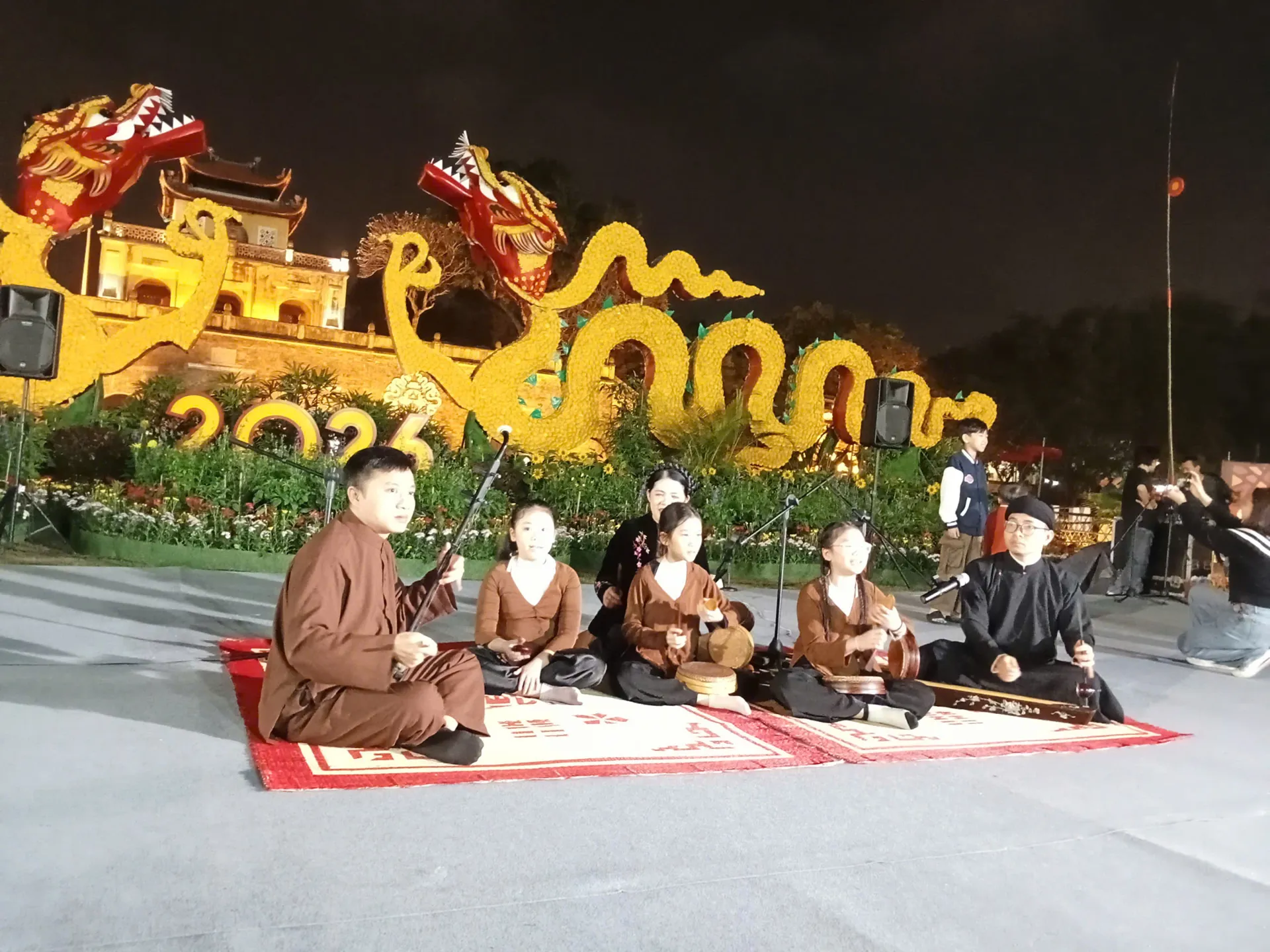
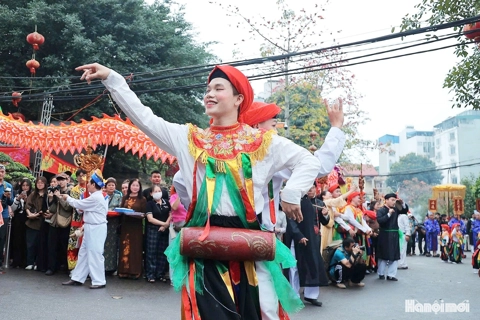
A Xam singing troupe performs traditional folk melodies, captivating visiting tourists.
Vietnam Jonathan Wallace Baker, Head of UNESCO’s Vietnam Office, said attending the event offered an immersive experience of Vietnamese Tet traditions. He cited the traditional offering table and iconic Hanoi dishes such as banh chung and pho as highlights.
Speaking at the closing ceremony, Nguyen Tran Quang, Deputy Director of the Hanoi Department of Tourism, described “Happy Tet 2026” as a focal point of the city’s Lunar New Year tourism promotion efforts.
Beyond attracting visitors, he said, the program aims to foster national pride, raise awareness of traditional cultural values and encourage sustainable, community-based tourism.
By curating tradition into a large-scale public event, Hanoi is reinforcing its image as a safe, friendly and culturally rich destination.
At the same time, the city is seeking to generate early momentum for tourism growth and broader socio-economic development in 2026.
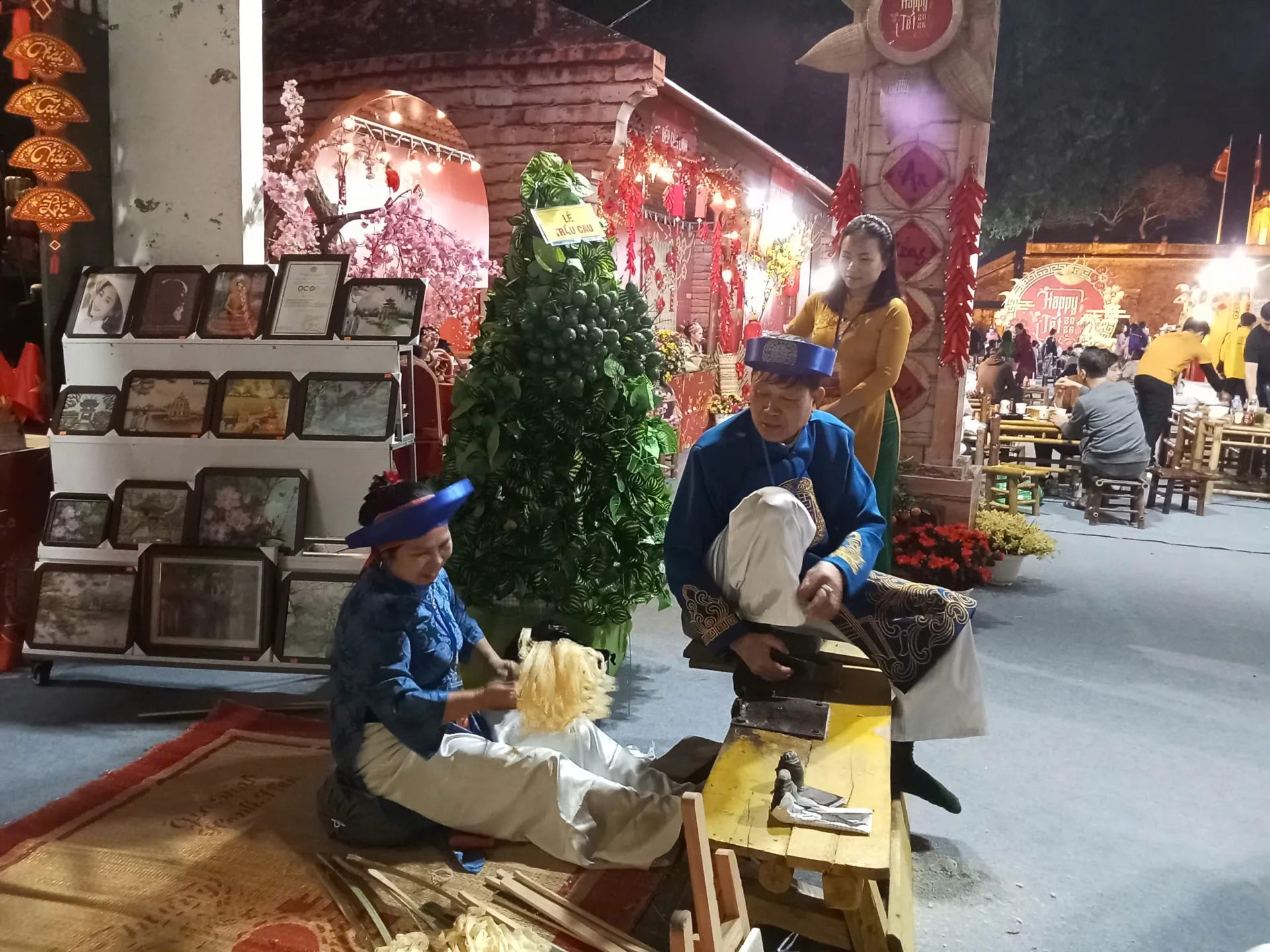
Artisan Pham Van Thanh and his wife, from Ve Linh Village in Soc Son Commune, Hanoi, demonstrate their distinctive bamboo flower–making craft at the festival.
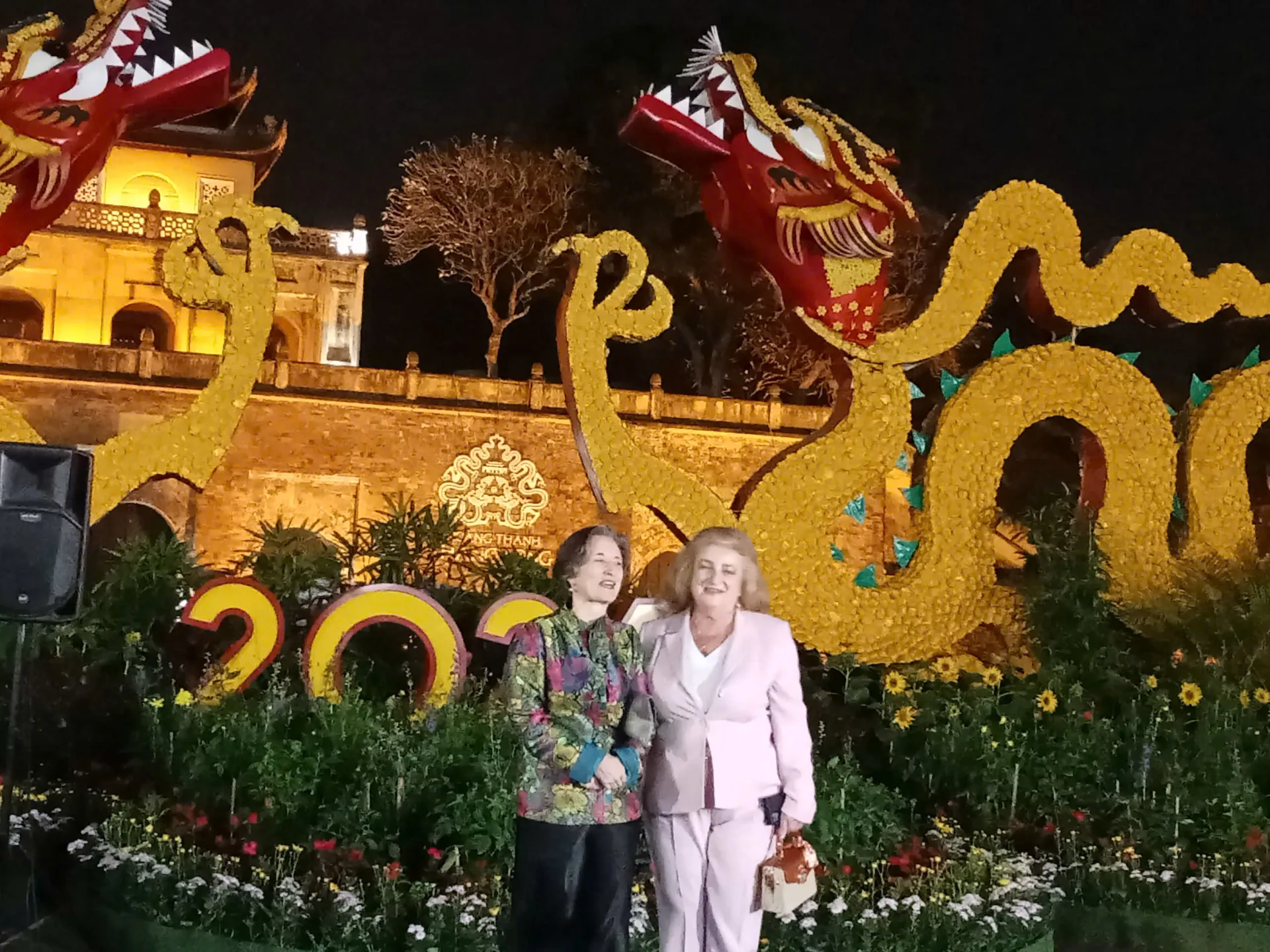
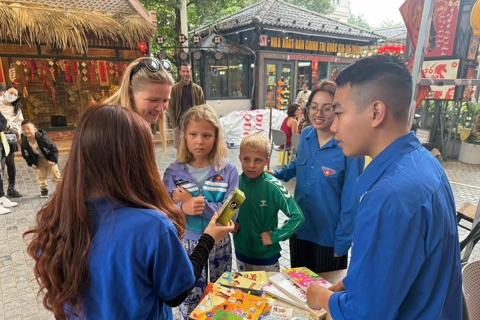
International visitors to Happy Tet 2026 Festival.
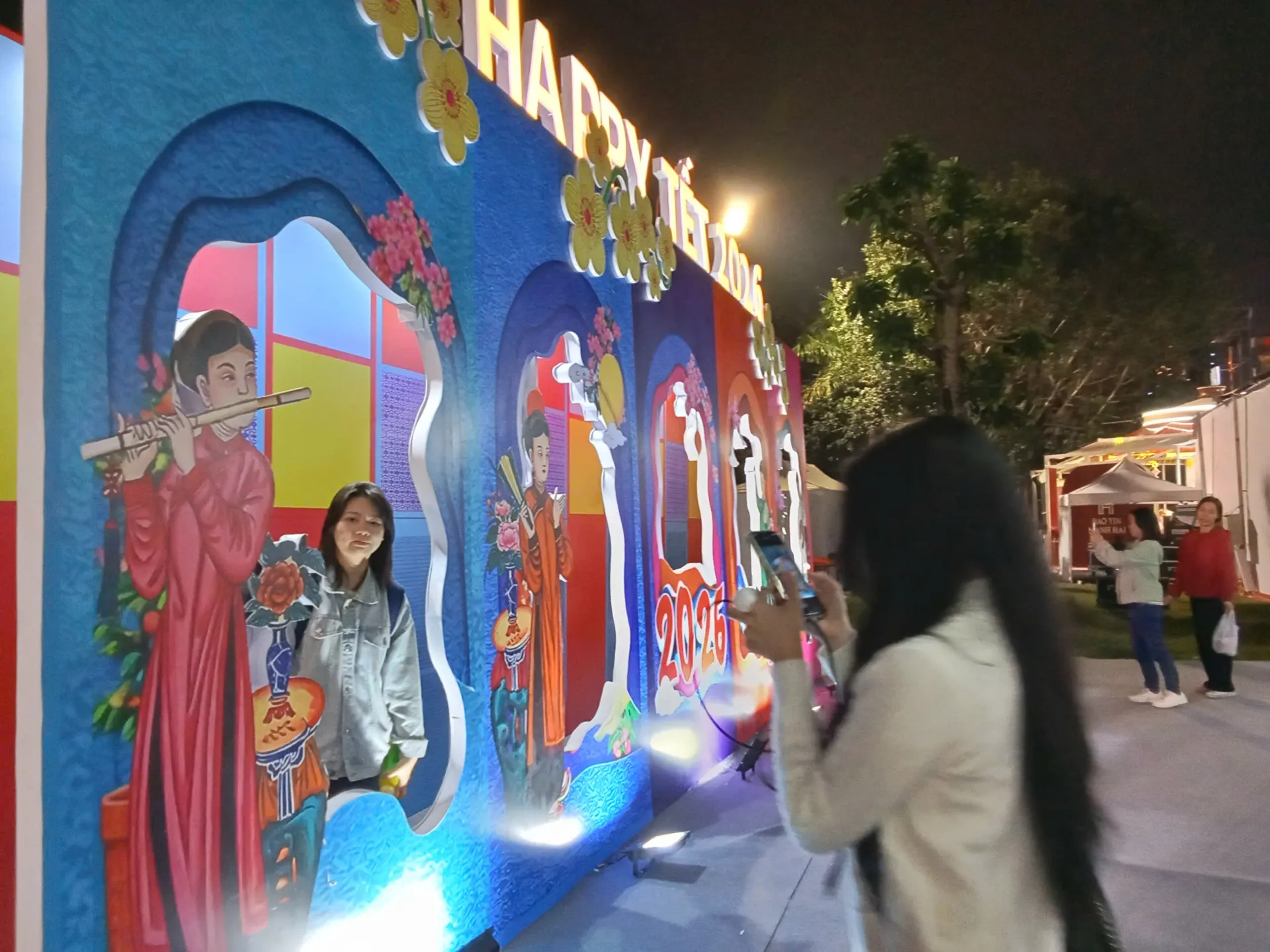
Young visitors pose for photos amid the festival’s vibrant, color-filled setting.