Log in
Hanoi

Hanoi wants to build second int’l airport in Thuong Tin

The project will develop urban areas around the new airport, including industrial zones, multimodal transportation, warehousing, and logistics systems.

The Hanoi authorities have proposed to the Ministry of Transport the planning of its second international airport in Thuong Tin, a suburban district located in the south of the capital city.

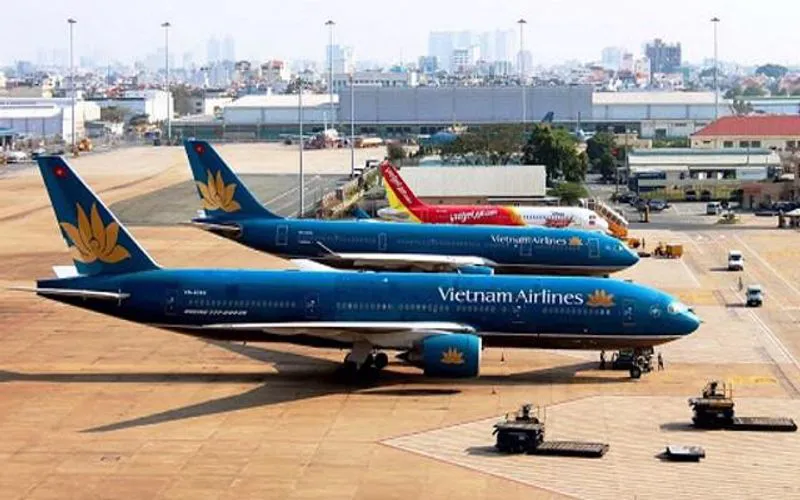
 Noi Bai International Airport in Hanoi is fast reaching full capacity. Photo: Hoa Thang/The Hanoi Times

According to the municipal authorities, this plan has many advantages, among them the short distance and the travel time between Thuong Tin and Hanoi’s downtown, convenient road connection between this site and Hanoi’s metropolitan area, and the easy access to the location by road, waterway, and railway.

The clearance of the 1,300-hectare airport construction site (similar to the size of Noi Bai International Airport with a capacity of 50 million passengers per year) is expected to be less troublesome than other public works as the area is mainly farmland.

The plan also contemplates developing supporting urban areas around the new airport (Phu Xuyen satellite town), industrial zones, multimodal transportation, warehousing, and logistics systems (Phu Xuyen District alone has about 1,039 hectares of industrial land).

With this airport, the total number of airports in Vietnam would rise to 26 for a combined throughput of 278 million passengers by 2030. At present, the country is home to 22 civil airports, including 10 international air hubs. Tan Son Nhat in Ho Chi Minh City and Noi Bai in Hanoi are the largest.

Nguyen Bach Tung, a former airport design researcher, told The Hanoi Times that many cities in the world with populations of 10-15 million have built two international airports, so Hanoi will need another one in the next few years.

He added that an airport in the southern part of the capital city will benefit surrounding localities like Ninh Binh province, an emerging tourist magnet.

The Covid-19 pandemic has been basically put under control in the world. Vietnam has entered a new phase in the pandemic response and has confidently welcomed international tourists since March 15 - the day marked a milestone as the country fully opens its doors to international tourism after a two-year interruption.

“I believe that demand for air travel in Vietnam in general and the capital city of Hanoi, in particular, will be rising consistently,” Tung stressed.
Reactions:
Share:
Trending
Most Viewed
Related news
Hanoi gears up for a vibrant 2026 Countdown

Hanoi gears up for a vibrant 2026 Countdown

With the energy of thousands gathering in Hanoi downtown, the Countdown 2026 promises to be an unforgettable way for people to welcome the New Year.

Hanoi launches AI-powered traffic control center for traffic violations

Hanoi launches AI-powered traffic control center for traffic violations

The system automatically detects common violations, significantly reducing the need for traffic police to be deployed directly on the streets while improving accuracy and transparency in traffic management.

Hanoi plans 10,000-hectare urban megacity with world-class stadium

Hanoi plans 10,000-hectare urban megacity with world-class stadium

The stadium’s design draws inspiration from Dong Son bronze drums and the Lac bird motif, symbolizing Vietnam’s aspiration to rise.

Hanoi greenlights Olympic sports city and Red River boulevard to drive next growth phase

Hanoi greenlights Olympic sports city and Red River boulevard to drive next growth phase

The approval of two landmark projects underscores Hanoi’s push to unlock new growth engines, reshape its urban structure and accelerate its ambition to become a green, smart and globally connected capital.

Hanoi targets 1,200 supporting industry firms by 2030

Hanoi targets 1,200 supporting industry firms by 2030

The city aims to enhance the competitiveness of the capital’s industrial sector by tightening cooperation with Vietnamese enterprises and multinational corporations operating in Vietnam.

Red River Boulevards shape Hanoi’s new growth axis

Red River Boulevards shape Hanoi’s new growth axis

The creation of a landscape boulevard can help Hanoi reconnect with its historic identity shaped by water and restore the river-based character that defined the city for centuries.

Hanoi moves to strengthen urban order and civility

Hanoi moves to strengthen urban order and civility

These include expanding public communication efforts, reorganizing and upgrading streets and sidewalks, maintaining a clean and orderly urban environment and carrying out strict inspections to address violations.

Hanoi honors 87 entities and buildings for using green energy

Hanoi honors 87 entities and buildings for using green energy

Enterprises adopted highly automated technologies in line with Industry 4.0 standards and all businesses in industrial parks, clusters, rural industries and craft villages will keep applying energy-efficient measures.