Hanoi’s craft villages strive to survive amid pandemic
Some businesses and production facilities in Hanoi’s craft villages have started selling their products on social networks and obtaining encouraging results.
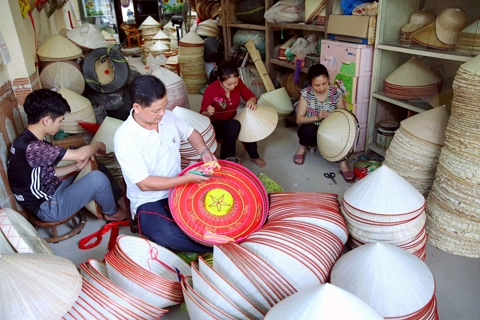
Despite facing many challenges due to the Covid-19 pandemic, craft villages in Hanoi have done their best to maintain production and preserve traditional trades.
The villages have adapted their products to consumers' tastes, innovated technology, diversified product displays, and expanded their markets through e-commerce channels. However, they have been still struggling and in need of more support from the municipal government.
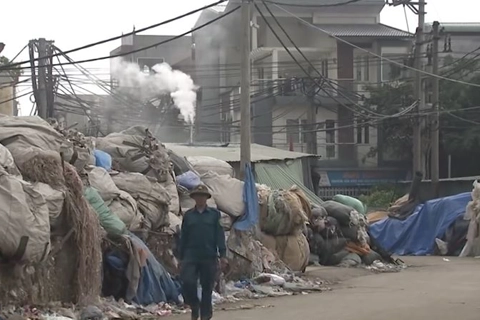
Bat Trang ceramics village in Hanoi’s outskirt district of Gia Lam is one of the most thriving craft villages in Hanoi, with about 700 households dedicating to pottery making. However, for the past 20 days, all production activities have been "frozen" due to Covid-19 infections, many villages in the commune are under lockdown to prevent the pandemic.
“What I am most worried about is the labor shortage after the pandemic. Due to a long break, some workers have found new jobs. Meanwhile, it takes one or two years to train a technical worker to become a skillful one," said Nguyen Manh Hung, an artisan in Bat Trang ceramics village.
Ha Thai lacquer village in Duyen Thai Commune in Hanoi’s outlying district of Thuong Tin is also in the same situation. The village's lacquer products have been known for their high quality and durability thanks to the skills and creativeness of craftsmen.
Not only enjoyed a firm foothold in the domestic market, but these enterprises have are also exporting 60% of the village’s products to France, the United States, and Spain. However, due to Covid-19, only six establishments remain operational.
Artisan Vu Huy Men's traditional lacquer painting workshop. Photo: Hanh Nguyen |
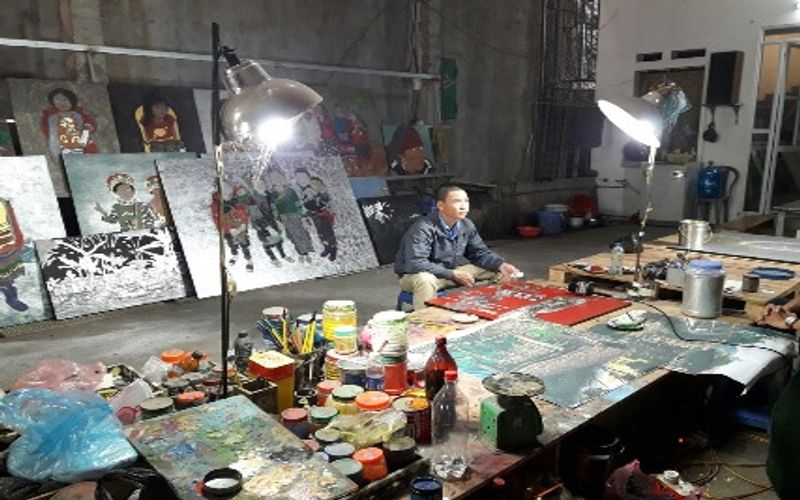
“Local households have still striven to overcome challenges, seeking more sales channels and maintaining production in this difficult condition,” Vu Huy Men, a local artisan told The Hanoi Times.
A similar situation was also reported in other traditional craft villages.
Nguyen Minh, an artisan making bamboo dragonflies in Thach Xa commune, Thach That District said the pandemic is taking a heavy toll on her family’s business.
"In the past, every month, my family sold thousands of bamboo dragonflies to the southern provinces, not to mention the local consumption through selling to tourists visiting Tay Phuong Pagoda. Now the market is almost frozen,” Minh said.
However, Minh said her family is still producing and packing the handicrafts carefully, waiting for the day when the pandemic is over and tourism revives.
Nguyen Van Trung, chairman of Phu Vinh craft village in Phu Nghia Commune, Chuong My District shared a similar situation.
"Phu Vinh village has a long-standing tradition of bamboo and rattan craft, before the Covid-19 pandemic, every month we exported dozens of containers of goods to the US and Japan,” Trung said.
Pham Khac Ha, chairman of the Van Phuc Silk Weaving Village Association in Ha Dong District, said that given the complicated evolution of Covid-19, complying with pandemic prevention and control measures along with going on with production and trade are big challenges for craft villages.
“To sustainably develop the craft villages, it was necessary to solve the issue of distribution under social distancing rules. Some businesses and production facilities have started selling their products on social networks and obtaining encouraging results,” Ha told The Hanoi Times.
Ha stressed that local authorities at all levels need to make preferential policies, create favorable conditions for craft villages to develop, especially in the post-Covid period.
Products of Bat Trang ceramics village in Hanoi’s outskirt district of Gia Lam. Photo: Gia Huy/VGP |

Specifically, they need support for the extension of preferential loans, the supply of raw materials for the production of craft villages, output support, and setting up associations with tourism agencies, Ha said.
Besides, State management agencies should build a common e-commerce page introducing handicrafts of craft villages with a view to promoting and marketing products while the Covid-19 pandemic is increasingly serious.
Ha added that the business households and enterprises in the craft villages should be creative and innovate the traditional business methods.
“In the trend of integration, enterprises must regularly change the design of their products, and actively improve products to satisfy domestic and foreign customers,” Ha noted.
With 1,350 traditional craft villages, focusing on traditional trades like lacquer, mosaic, embroidery, silk weaving, ceramics, bamboo, and rattan weaving, Hanoi is home to the largest number of craft villages and artisans in the country.
Ha Thi Vinh, chairwoman of the Hanoi Handicraft and Craft Village Association, suggested that municipal authorities facilitate the sustainable development of craft villages.
“Handicraft villages in Hanoi are trying to maintain the quality of their products while catching up with modern business practices to survive the Covid-19 pandemic,” Vinh told The Hanoi Times.
During the period of social distancing in Hanoi, trade movements between provinces have become hindered, making it very difficult to buy raw materials and the shipment of available goods as provincial boundaries are strictly controlled.
Vinh suggested that the municipal authorities should have a priority policy to loosen production regulations during the period of social distancing, so that craft villages could maintain normal operations; facilitate the granting of “green channels” for vehicles carrying goods and materials, and vaccinate craft villages workers so as to both fighting against the Covid-19 and ensuring production.
The chairwoman added that localities in the city need the support package to be quickly deployed in accordance with Resolution 68 of the Vietnamese government, to promptly support businesses and craft village workers during the difficult period.
Especially, they need the banks to keep easing the conditions for debt freezing, debt rescheduling, reducing the old debt interest rate, and considering lending at a lower preferential interest rate, Vinh said.